


Kalyan Roy: The Oxygen Delivery Paradox in Polycythaemia Vera
Kalyan Roy, Transfusion Medicine Specialist at Square Hospitals LTD, shared a post on LinkedIn:
“The Oxygen Delivery Paradox in Polycythaemia Vera (PV)
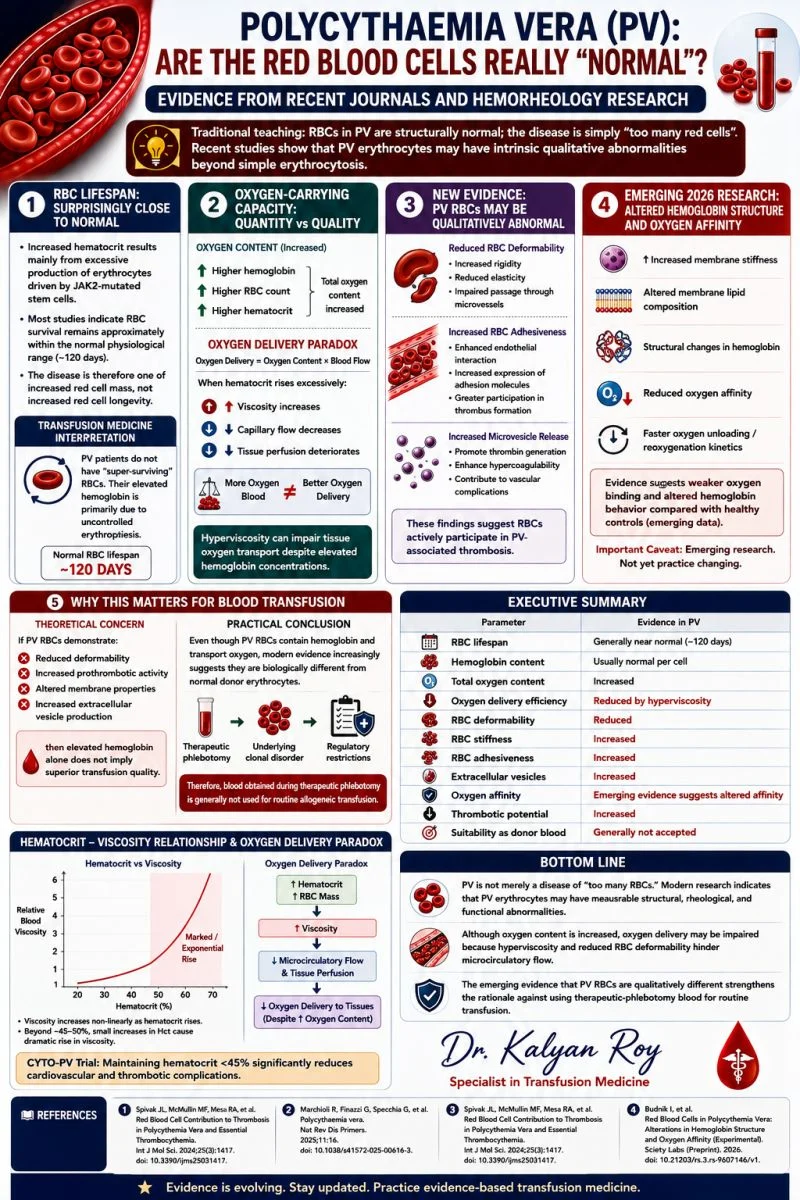
At first glance, a higher hematocrit appears beneficial because it increases red blood cell mass and total oxygen content. However, the physiology is more complex.
What Happens When Hematocrit Rises?
- Increased hematocrit or increased red blood cell mass
- Leads to Increased Blood Viscosity
- Which leads to Reduced microcirculatory blood flow
- Which results in Reduced tissue perfusion and oxygen delivery
- Leading to Increased endothelial activation
- Which increases The risk of arterial and venous thrombosis
Key Message
More RBCs mean More Oxygen Content
But not necessarily better oxygen delivery
As blood becomes more viscous, capillary flow and tissue perfusion decline. The result is a paradox where oxygen content rises while oxygen delivery to tissues may actually fall.
Clinical Relevance in PV
- Hyperviscosity is a major driver of symptoms and thrombosis.
- Maintaining hematocrit lower than 45% improves microcirculatory flow and reduces thrombotic complications.
- The goal of treatment is not simply to lower hematocrit, but to optimize tissue oxygen delivery and vascular health.
In Polycythaemia Vera, the problem is often not oxygen carrying capacity – it is impaired oxygen delivery due to hyperviscosity.”
Find more posts featuring Kalyan Roy on Hemostasis Today.
-
Sep 21, 2026, 15:56Anita Zaidi: Why Only 2% of Health Research and Development Goes to Women’s Conditions
-
Sep 21, 2026, 15:49Omid Khalafi: Gating Strategy and How Do We Decide Which Cells to Analyze
-
Sep 21, 2026, 15:44Levacetylleucine: A New Therapeutic Approach to Ataxia Telangiectasia
-
Sep 21, 2026, 15:40Andreas Tridimas: The Diagnostic Traps of Lipaemic Blood – Why a Normal Amylase Can Mislead You
-
Sep 21, 2026, 15:33Arsene Mekinian: Exploring Cardiac Involvement in Behçet’s Disease
-
Sep 21, 2026, 15:23Anis Mahjoubi: MRI Findings of Krukenberg Tumors
-
Sep 21, 2026, 15:08Fikreab Tesfaye Tefera: 10 Practical Take-Home Points for Diagnosing Iron Deficiency Anemia
-
Sep 21, 2026, 14:10Aswin K Mohan: Lessons from TRANSCON 2026 – Building Resilient Blood Supply Systems Before Crisis Hits
-
Sep 21, 2026, 14:00Vincent Lu: Beyond PT and aPTT – How Hemostasis Evolves Across a Lifetime