

Mostafa Hammam: Antibody Panels in Blood Bank Feeling Like a Chaotic Puzzle? Here is How to Master the Grid
Mostafa Hammam, Blood Bank Laboratory Technician at Specialized Medical Centers in Egypt, shared a post on LinkedIn:
“Antibody panels in Blood Bank feeling like a chaotic puzzle? Here is how to master the grid.
Solving antibody panels is one of the most critical skills in Blood Banking and a top topic on the ASCP exam.
It might look intimidating at first, but it all comes down to pattern recognition.
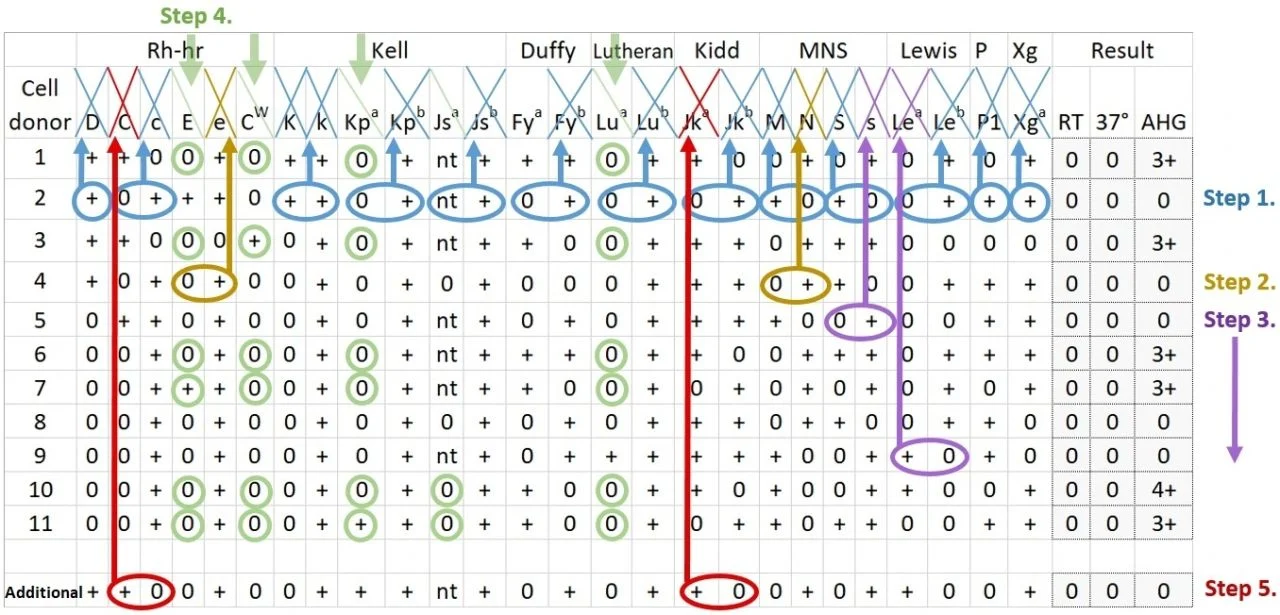
Here are the 4 fundamental steps to decode any antibody panel with confidence:
1. Rule Out on Negative Cells only
The Rule: You can only rule out an antibody if a cell expresses the antigen but produces a negative reaction.
Why? If the reaction is positive, you don’t know which specific antibody is causing it, so positive cells cannot be used for rule-outs.
2. Check the Phase of Reactivity
Immediate Spin (IS) / Room Temp: Usually indicates clinically insignificant cold-reacting IgM antibodies (e.g., Anti-M, Anti-N, Anti-P1, Anti-Lea/Leb).
37°C / AHG (Coombs) Phase: Indicates clinically significant IgG antibodies that can cause HTR or HDFN (e.g., Rh, Kell, Kidd, Duffy).
3. Evaluate Reaction Strengths
Single Strength (e.g., all 2+): Usually points to a single antibody.
Variable Strengths (e.g., 1+, 3+, 2+): Suggests dosage (homozygous vs. heterozygous expression) or multiple antibodies reacting together (especially in Kidd, Duffy, and MNS systems).
4. Confirm with Patient Antigen Typing (Phenotyping)
The Rule: A patient can only make an antibody against an antigen they lacks.
If the patient types negative for the antigen, they are capable of forming the corresponding antibody.
Antibody identification is basically detective work!
Compare reactivity phases, antigen profiles, and reaction consistency until the pattern fits.
Once the pattern fits, the antibody makes perfect sense!”
Stay updated with Hemostasis Today.
-
Sep 25, 2026, 17:13Sam Tsimikas: Lp(a) and Oxidized Phospholipids Link Lipoprotein Biology to Platelet Activation
-
Sep 25, 2026, 16:56Cindy Neunert: The Future of Personalized ITP Care
-
Sep 25, 2026, 16:26Gemma Postil: AI Tools in Modern Health Research
-
Sep 25, 2026, 16:01Mostafa Hammam: When aPTT Correction Is Not the End
-
Sep 25, 2026, 15:50Adam Boruchov: Registration Is Open For The 2026 New England Hematologic Diseases Symposium
-
Sep 25, 2026, 15:23Bringing Hope and Treatment Access to Morocco’s Hemophilia Community – World Federation of Hemophilia
-
Sep 25, 2026, 15:22Alejandro González Veliz: Targeting Atherosclerosis Before the First Event
-
Sep 25, 2026, 15:00Sarah Richardson: Finding Strength Through Bleeding Disorders Advocacy
-
Sep 25, 2026, 14:54James Fildes: Modeling Device Related Thrombosis in Multi Organ Systems