


Mallikarjuna Rao Dubisetty: Thalassemia Awareness – What Every Parent Should Know
Mallikarjuna Rao Dubisetty, Vice President Strategy and Execution (Healthcare and Life Sciences) at Helixbeat, shared a post on LinkedIn:
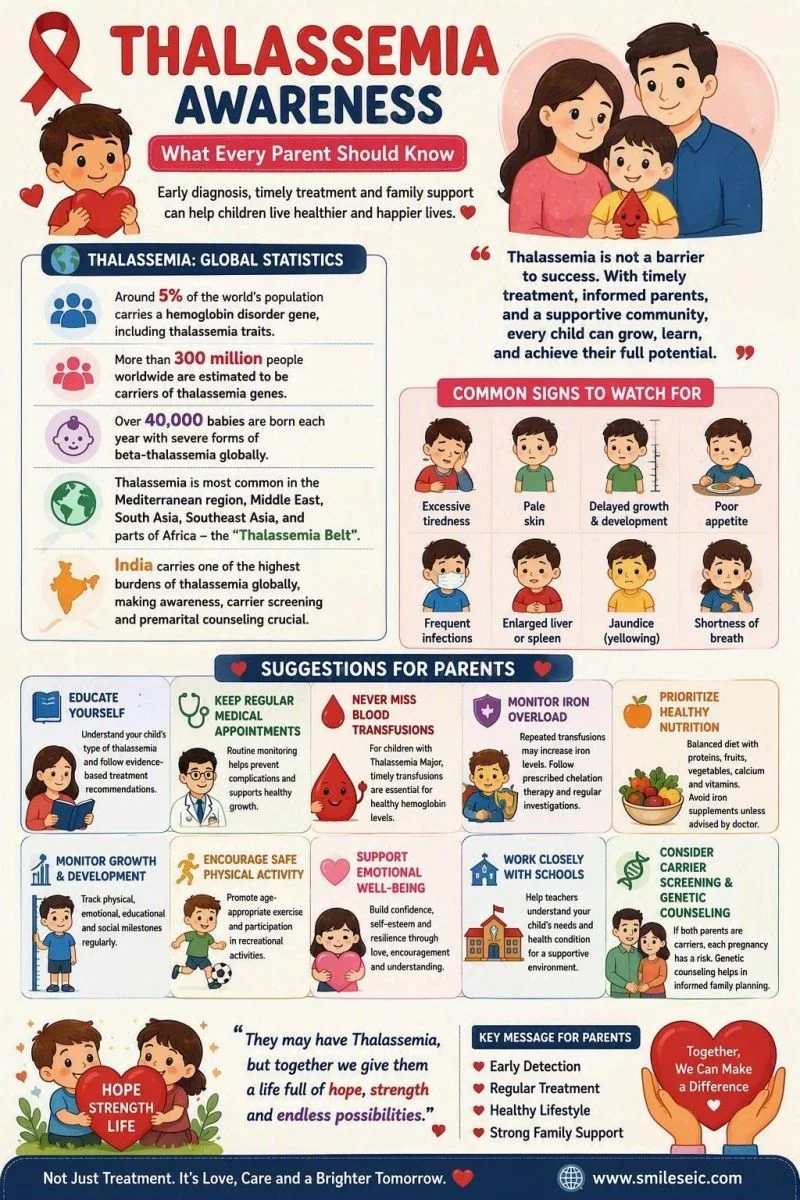
“Thalassemia Awareness: What Every Parent Should Know
Thalassemia is a genetic blood disorder that affects the body’s ability to produce healthy hemoglobin, resulting in anemia and reduced oxygen delivery to tissues and organs.
While the diagnosis can be challenging for families, early intervention, appropriate medical care, and strong family support can help children lead healthy, active, and fulfilling lives.
Did You Know?
Millions of people worldwide carry the thalassemia trait.
Thousands of children are born each year with severe forms of thalassemia that require lifelong medical care.
Thalassemia is more common in South Asia, the Middle East, Southeast Asia, the Mediterranean region, and parts of Africa.
Carrier screening and genetic counseling play a crucial role in preventing severe forms of thalassemia in future generations.
Common signs to watch for
- Persistent tiredness and weakness
- Pale skin
- Delayed growth and development
- Poor appetite
- Frequent infections
- Enlarged liver or spleen
- Yellowing of the eyes or skin (jaundice)
- Shortness of breath
Suggestions for Parents
Learn about the condition
Understanding your child’s diagnosis empowers you to make informed healthcare decisions.
Attend regular medical check-ups
Routine monitoring helps identify concerns early and supports better health outcomes.
Ensure timely treatments
Children requiring blood transfusions benefit from consistent treatment schedules and close medical supervision.
Monitor iron levels
Children receiving repeated transfusions may require regular monitoring and treatment to manage iron overload.
Promote healthy nutrition
A balanced diet rich in essential nutrients supports growth, energy, and overall well-being.
Track growth and development
Monitor physical, educational, social, and emotional milestones regularly.
Encourage physical activity
Appropriate exercise and active play can promote fitness, confidence, and social engagement.
Support emotional well-being
Children thrive when surrounded by encouragement, understanding, acceptance, and love.
Partner with schools
Work collaboratively with teachers and caregivers to ensure a supportive learning environment.
Consider genetic counseling
Families with a history of thalassemia can benefit from carrier screening and professional genetic guidance.
Key message for parents
- Early Detection
- Timely Treatment
- Healthy Lifestyle
- Emotional Support
- Regular Follow-up
Together, these steps can significantly improve the quality of life and future opportunities for children with thalassemia.
Thalassemia does not define a child’s future. With knowledge, timely care, and unwavering family support, every child can grow with confidence, achieve their dreams, and reach their full potential.
Every drop of care, every moment of support, and every act of love brings hope to a child living with Thalassemia.”
Stay updated with Hemostasis Today.
-
Oct 12, 2026, 17:39Annie Bauzon: Differentiating Direct and Indirect Coombs Tests in Hematology
-
Oct 12, 2026, 17:15Cedric Hermans: Identifying and Diagnosing Hemophilia Carriers and Affected Females
-
Oct 12, 2026, 17:01Bianca Rocca: Evaluating Factor XI Inhibition Lessons from LIBREXIA-ACS
-
Oct 12, 2026, 13:58Francisco Chacón-Lozsán: Catastrophic Antiphospholipid Syndrome A Rapidly Progressive Multiorgan Thrombotic Emergency
-
Oct 12, 2026, 12:50Nawsherwan Mohammad: Study Examines Thrombotic Events in Patients with Polycythemia Vera in Iraq
-
Oct 12, 2026, 12:30Chanakya Nayudu: Looking Beyond Blood Clots – Patient-Reported Outcomes in Antiphospholipid Syndrome
-
Oct 12, 2026, 12:12Jean-Jacques Kiladjian: Improving Treatment Strategies with JAK Inhibitors in Myelofibrosis
-
Oct 12, 2026, 12:04Chloe Homich: AABB Annual Meetings – Building Connections and Advancing Transfusion Medicine
-
Oct 12, 2026, 11:51Daniel Sop: Sickle Cell Research Takes Center Stage at ASCAT 2026