


Claudio Laudani: Left Atrial Appendage Closure vs Anticoagulation in AF
Claudio Laudani, Cardiologist at Autonomo, Former Postdoctoral Researcher at UF Health Jacksonville, shared a post on LinkedIn about a recent article he and his colleagues co-authored, published in JAMA Cardiology, adding:
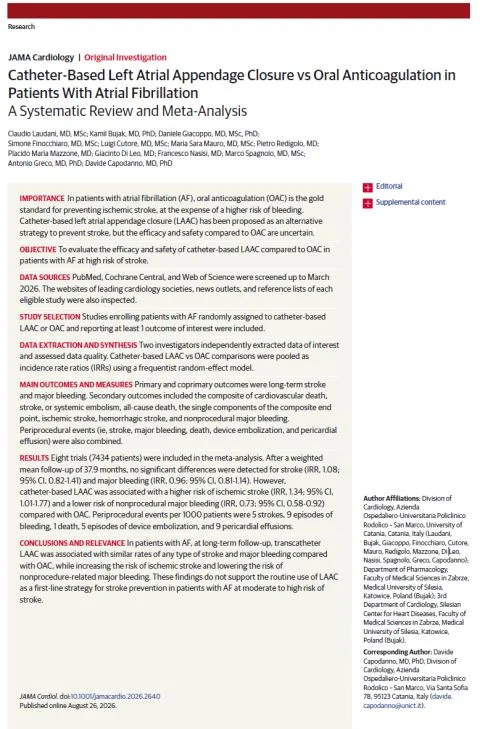
“In our systematic review and meta-analysis, published today on JAMA Cardiology, we aimed to assess the relative benefits of catheter-based left atrial appendage closure (LAAC) compared with oral anticoagulation (OAC).
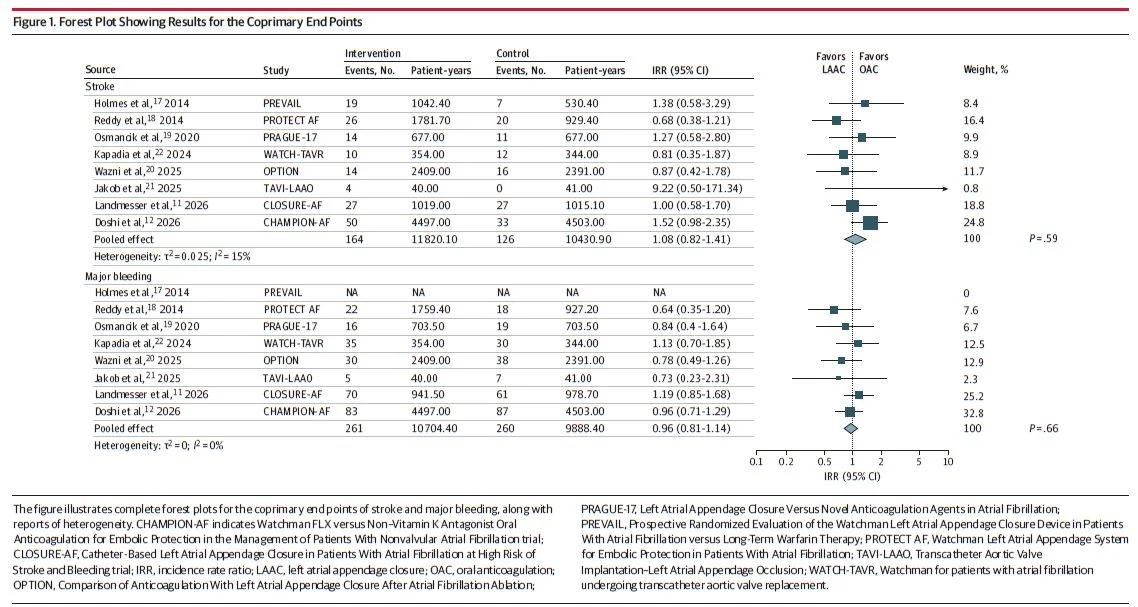
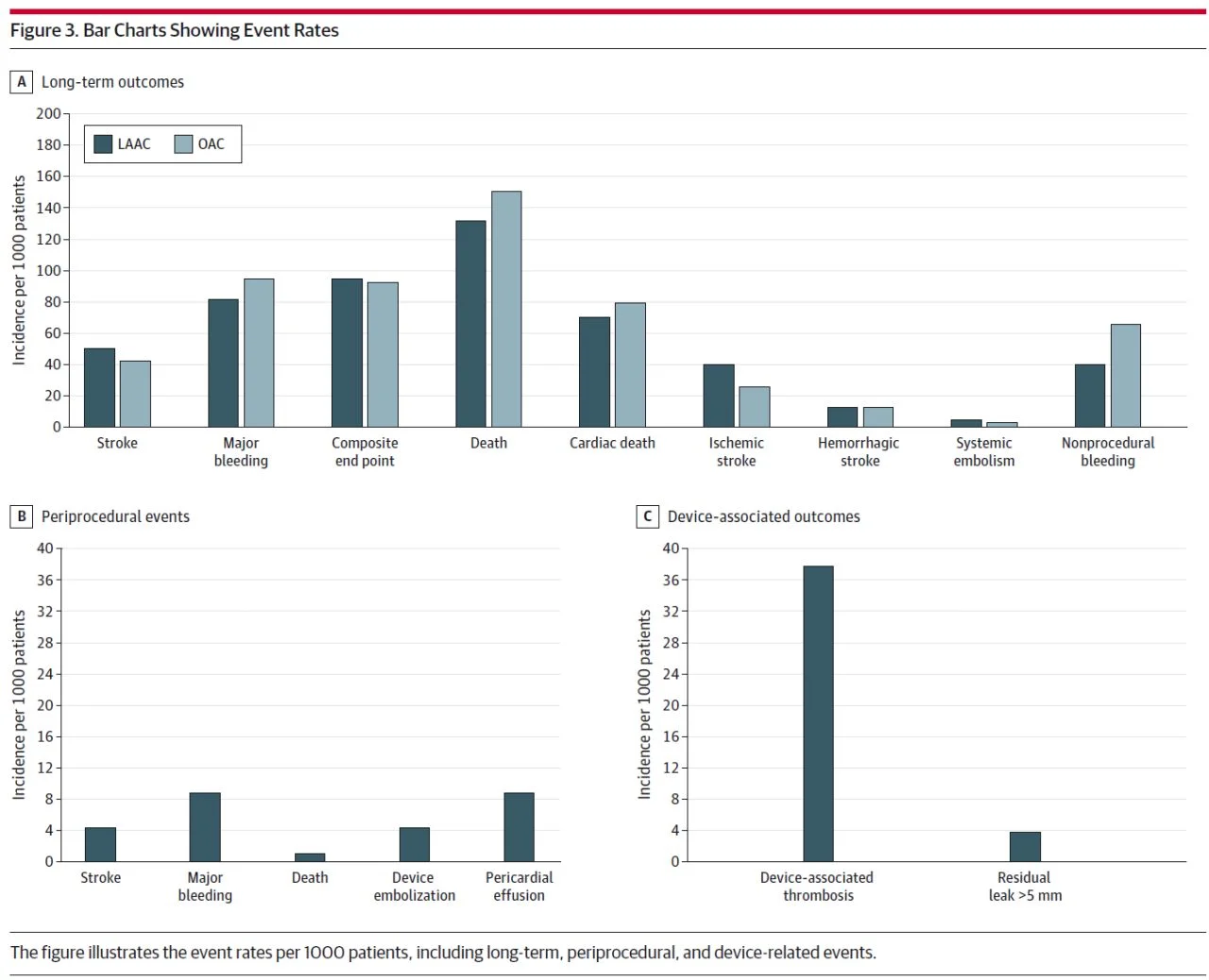
After inclusion of 8 randomized clinical trials encompassing a total of 7,434 patients with atrial fibrillation and 22,441 patient-years of follow-up we found:
- Similar rates of overall stroke and major bleeding between LAAC and OAC.
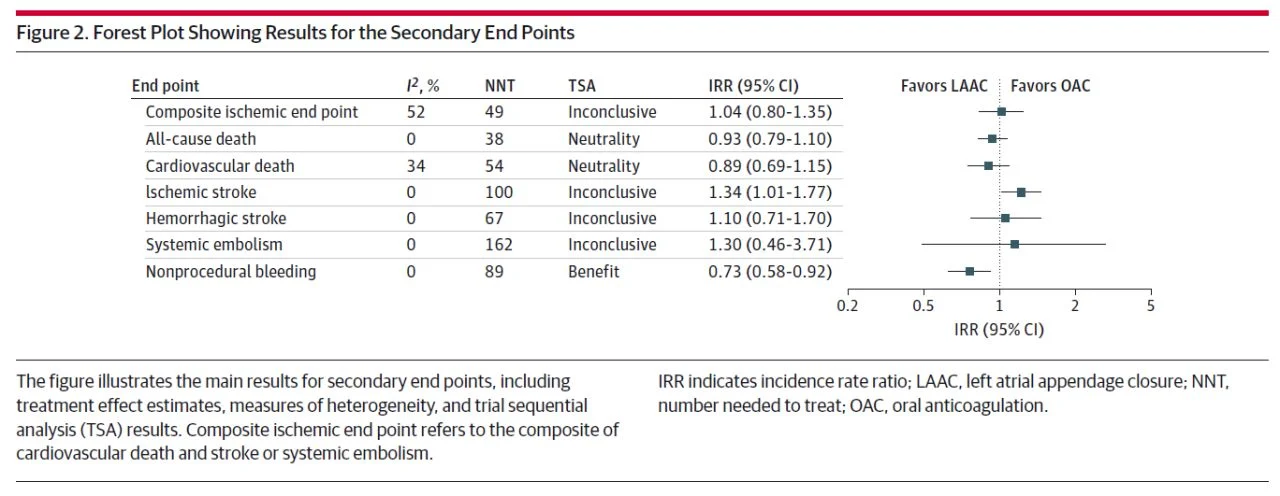
- 34% higher incidence of ischemic stroke with LAAC (IRR 1.34; 95% CI, 1.01-1.77).
- 27% lower incidence of nonprocedural major bleeding with LAAC (IRR 0.73; 95% CI, 0.58-0.92).
- And importantly, LAAC was associated with non-negligible periprocedural events, including stroke, bleeding, death, device embolization, and pericardial effusion.
The reduction in nonprocedural bleeding is certainly relevant.
But when comparing an invasive procedure with long-term medical therapy, we cannot evaluate the long-term benefits of the procedure without accounting for the risks inherent to the procedure itself.
More importantly, the potential benefit of reducing bleeding comes with an increase in ischemic stroke – and the overall net clinical benefit of LAAC compared with OAC therefore remains uncertain.
So, despite the growing use of LAAC and the non-inferiority results reported by some individual trials, our findings do not support its routine use as a first-line strategy for stroke prevention in patients with AF at moderate to high risk of stroke.
For now, my approach remains simple:
- OAC whenever possible.
- LAAC when there is an abosulte contraindication to OAC.
Further studies are still needed to identify which patients truly benefit from LAAC and which antithrombotic strategy should be used after the procedure.”
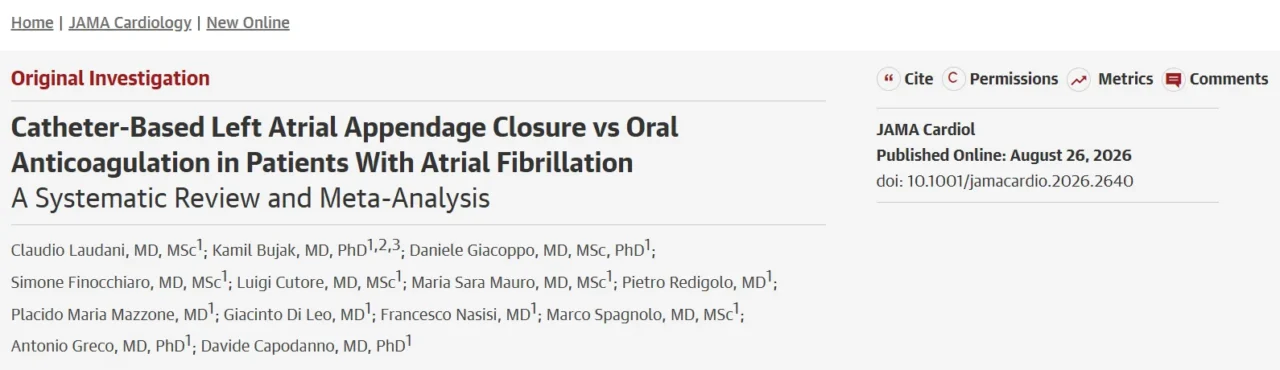
Title: Catheter-Based Left Atrial Appendage Closure vs Oral Anticoagulation in Patients With Atrial Fibrillation
Authors: Claudio Laudani, Kamil Bujak, Daniele Giacoppo, Simone Finocchiaro, Luigi Cutore, Maria Sara Mauro, Pietro Redigolo, Placido Maria Mazzone, Giacinto Di Leo, Francesco Nasisi, Marco Spagnolo, Antonio Greco, Davide Capodanno
Other posts featuring Claudio Laudani on Hemostasis Today.
-
Oct 12, 2026, 07:39Emmanuel J Favaloro: 100 Years of von Willebrand Disease and the Importance of Local Diagnosis and Management
-
Oct 12, 2026, 07:39Post-Stroke Fatigue Trajectories – 38% Recovered at 12 Months, While 16% Developed New Fatigue – International Journal of Stroke
-
Oct 12, 2026, 07:28Beth Sara: IBMS Specialist Portfolio Achievement and a New Role in Transfusion Practice
-
Oct 12, 2026, 07:28Abdul Mannan: PCC vs. aPCC – The Small ‘a’ That Changes Emergency Management
-
Oct 12, 2026, 07:20Mokhtar Tazik: Improving Access to Plasma Derived Medicines Through Awareness, Interest and Accessibility
-
Oct 12, 2026, 07:08Larissa Chastain: Partnering to Transform Anticoagulation Management Through INR Self-Testing
-
Oct 12, 2026, 06:57Saiful Islam: Laboratory Spot Check – Microcytic Anemias and The Thalassemia Spectrum
-
Oct 12, 2026, 06:45Nick Lenamon: Stroke Awareness at Any Age Recognizing the Signs and Acting FAST
-
Oct 12, 2026, 04:45Aparna Korisetty: Upper GI Bleeding and Severe Anemia Secondary to Duodenal NET