

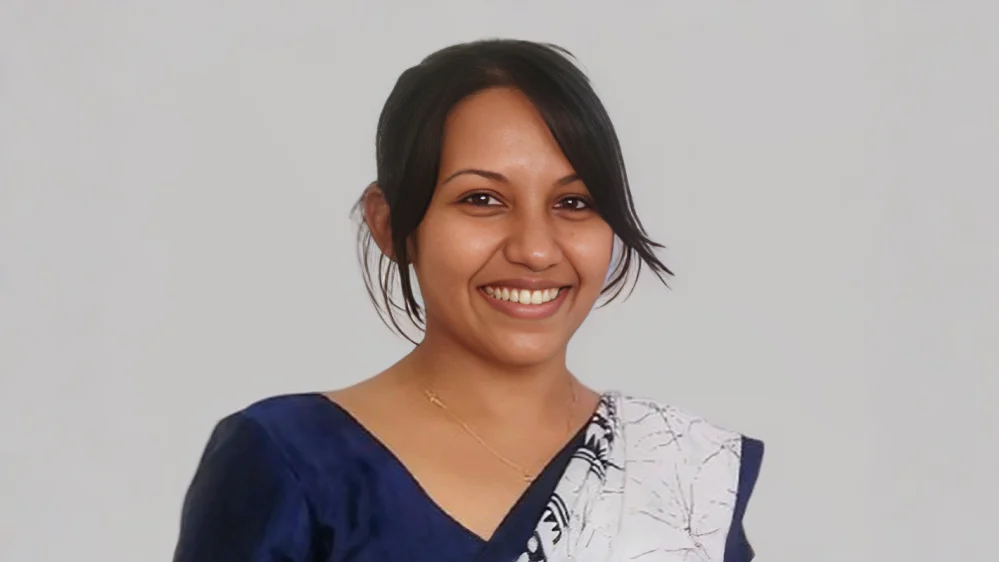
Dilini Christina Ranasinghe: An Exception to the ‘Universal Donor’ – Bombay (Oh)
Dilini Christina Ranasinghe, Registrar in Transfusion Medicine at National Blood Centre, shared a post on LinkedIn:
“An Exception to the ‘Universal Donor’: Bombay (Oh)
A 68-year-old woman with myocardial infarction and a haemoglobin of 5.6 g/dL was referred to the Immunohaematology Reference Laboratory following positive antibody screening and difficulty obtaining crossmatch-compatible blood.
Her forward group appeared to be O.
However:
- Reverse grouping showed strongly positive reactions with A₁, B and O cells.
- Reactivity remained strongly positive at 37 degrees Celsius.
- Antibody screening was panreactive at strongly positive.
- Her red cells did not react with anti-H lectin, while known group O cells reacted at 4+.
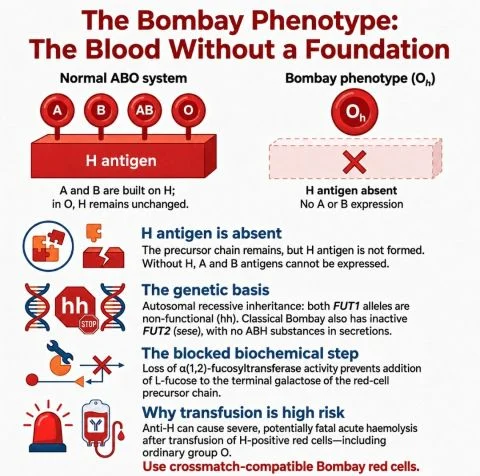
The findings were consistent with the Bombay (Oh) phenotype.
Anti-H is the key transfusion hazard; ordinary group O red cells are therefore unsafe.
Fortunately, a Bombay (Oh) red-cell unit, which was IAT crossmatch compatible, was available in stock.
But what if it had not been?
Sri Lanka’s centrally coordinated blood transfusion service and rare-donor registry allow islandwide donor mobilisation.
Nevertheless, identifying an eligible donor, arranging collection and testing, and transporting the unit all take time – time that an acutely ill patient may not have.
For elective procedures, early planning is essential:
- Activate the rare-donor registry.
- Screen siblings and other family members for potential compatible donors.
- Coordinate donations carefully with the blood service.
- Optimise the patient and minimise blood loss through patient blood management.
Family screening does not replace donor eligibility assessment or compatibility testing.
Cellular components donated by relatives must also be irradiated.
Rare blood saves lives – but only when recognition, planning and donor coordination come together.”
Find more posts featuring Dilini Christina Ranasinghe on Hemostasis Today.
-
Oct 20, 2026, 21:22Intezar Mehdi: When Prolonged Bleeding May Indicate an Underlying Bleeding Disorder
-
Oct 20, 2026, 21:06Nandini Pethe: Sharing My Experience as a Caregiver in the HOPE Factor Resource Guide
-
Oct 20, 2026, 16:51Suzan Nakasendwa: A Growing Stroke Challenge in Uganda
-
Oct 20, 2026, 16:38Steve Moon: How Does Smoking Cessation Duration Affect Ischemic Stroke Risk
-
Oct 20, 2026, 16:25Cedrice Mentor: Reducing Platelet Wastage Through Cold Storage
-
Oct 20, 2026, 16:09Thirunavukkarasu Angappan: Can a Purified Fibrinogen Concentrate Replace Cryoprecipitate
-
Oct 20, 2026, 16:01Kalyan Roy: Platelet Conservation Through Evidence-Based Transfusion Practice
-
Oct 20, 2026, 15:28Stacy E. Croteau: 33 Countries, One Mission – Better Bleeding Disorder Care
-
Oct 20, 2026, 15:19Teresa Barnes: What Does a Pulmonary Embolism Mean for Jalen Hurts?