

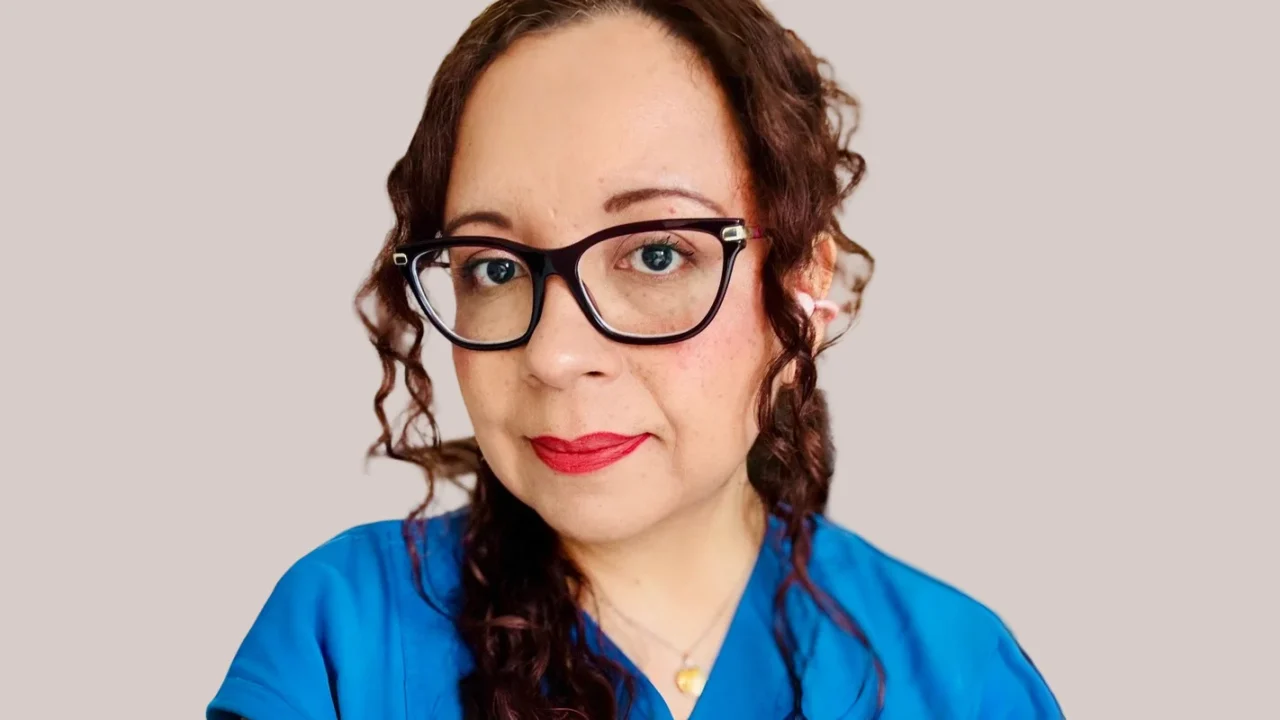
R. Stephani Hellwege: Beyond LVEF Echocardiographic Assessment of Undifferentiated Shock
R. Stephani Hellwege, Intensive Care Specialist (FMH) Cardiology Specialty Registrar at Universitätsspital Zürich, shared a post on LinkedIn about a recent article by Claire Colebourn et al, published in Acho Research and Practice, adding:
“In a patient with shock, I want critical care echo to answer a fundamental question:
What is the heart actually delivering to the circulation?
This review by Claire Colebourn and Richard Fisher proposes a structured five question approach to echocardiographic assessment of undifferentiated shock:
- What are the stroke volume and cardiac output?
- What explains an abnormal cardiac output?
- Is left atrial pressure elevated?
- Are pulmonary artery pressure and/or pulmonary vascular resistance elevated?
- How is the situation evolving?
I particularly appreciate that the assessment begins with flow.
A preserved LVEF can coexist with low stroke volume. A seemingly acceptable cardiac output may depend on compensatory tachycardia. Neither finding, in isolation, establishes adequate tissue perfusion.
This is why LVOT VTI, stroke volume and their evolution matter so much in my bedside assessment.
The review also gives the right heart the attention it deserves.
TAPSE and FAC provide useful information, but understanding the haemodynamic problem also requires assessment of RV loading conditions, pulmonary vascular load and ventricular interdependence. The authors discuss RVOT Doppler and RV–PA coupling, while acknowledging the limitations of individual measurements and thresholds.
One point particularly resonates with my clinical experience: dynamic LVOT obstruction.
I have encountered LVOTO in many critically ill patients receiving high dose catecholamines, particularly in septic shock with profound vasoplegia. Several had not undergone echocardiography and subsequently developed multiorgan failure.
This does not establish causality, but it highlights a potentially overlooked contributor to persistent shock. Escalating inotropic stimulation in the presence of LVOTO can worsen haemodynamics.
A hyperdynamic LV does not guarantee adequate forward flow. Dynamic LVOTO is not to be underestimated.
An equally relevant point: every examination reflects the conditions under which it was performed.
Vasopressor dose, inotropic support, heart rate, rhythm and ventilator settings all influence what we see. A change in ventricular function may reflect a change in loading conditions, intrinsic myocardial function, or both.
For me, this reinforces the value of integrating critical care echocardiography with clinical perfusion assessment and, when indicated, advanced haemodynamic monitoring.
After an intervention, I want to know whether forward flow improved, how filling pressures and congestion changed, and whether tissue perfusion recovered.
Assess, intervene, reassess.
Do not forget the RIGHT ventricle, ventricular coupling, LVOT obstruction, and LVOT VTI.
Colebourn C, Fisher R. A structured 5 question approach for echocardiographic evaluation of undifferentiated shock. Echo Research and Practice.”
Title: A structured 5-question approach for echocardiographic evaluation of undifferentiated shock
Authors: Claire Colebourn, Richard Fisher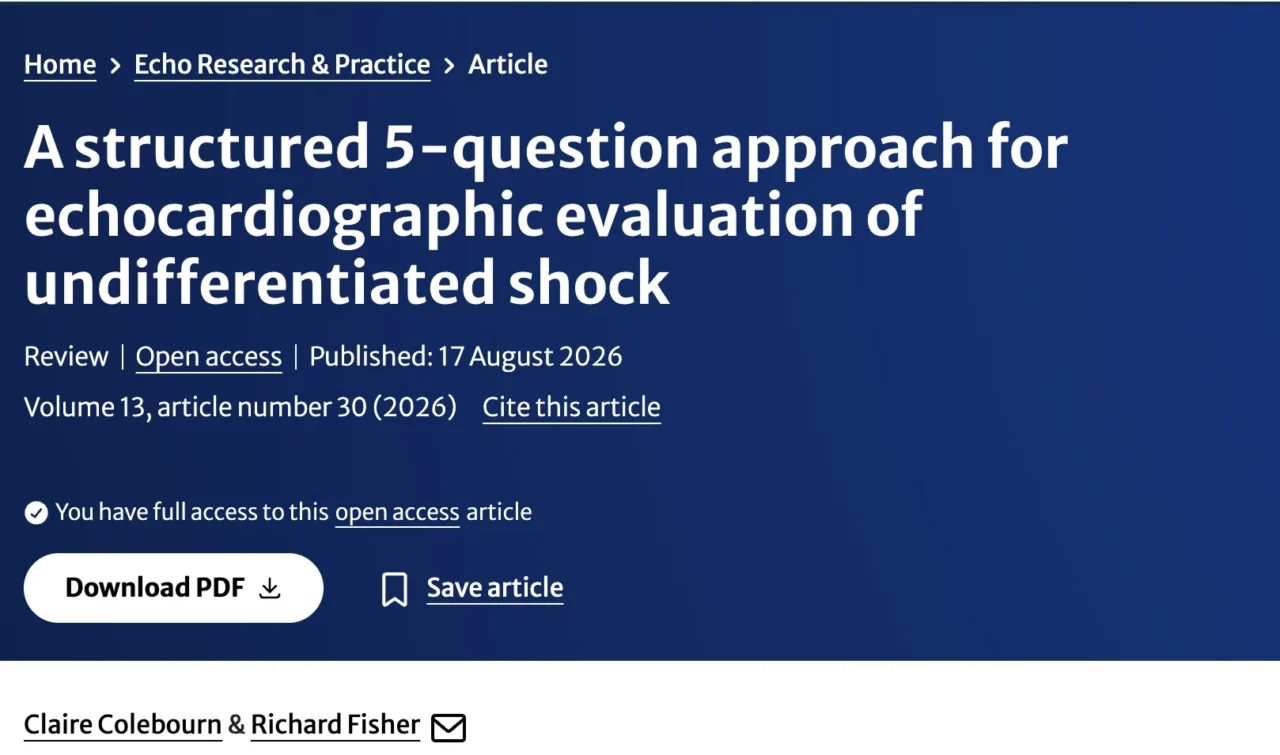
Stay updated on all scientific advances with Hemostasis Today.
-
Nov 13, 2026, 03:21Abdul Muqtadir Abbasi: Iron Deficiency Beyond Anemia and the Importance of Finding the Cause
-
Nov 13, 2026, 03:05Marc Carrier: Aspirin vs Anticoagulants for VTE Prevention After Joint Replacement
-
Nov 13, 2026, 02:28Julia Sjöberg: ROCK1 Inhibition and Red Blood Cell Recovery After Chemotherapy
-
Nov 13, 2026, 02:07Tonie Reincke: Understanding Deep Vein Thrombosis and Vascular Health
-
Nov 13, 2026, 01:52Akshita Singh: The Remarkable Process of Blood Clotting
-
Nov 12, 2026, 22:52Milka Koupenova: The Role of Platelet RIG-I in Regulating Thrombotic Responses
-
Nov 12, 2026, 22:50Arun V J: Why Has India Still Not Achieved 100% Voluntary Blood Donation?
-
Nov 12, 2026, 22:49Sickle Cell Disease Deserves to Be Prioritised in Ghana – ISCC
-
Nov 12, 2026, 22:47Samir Kumar Beura: Delighted to Serve as a Topic Editor for a Research Topic in Frontiers in Neuroscience