


Oliver Weingärtner: What Can Real-World Data Teach Us about Long-Term Treatment Persistence in CP?
Oliver Weingärtner, Professor of Medicine at Friedrich-Schiller University Jena, shared a post on LinkedIn about a recent article by Wolfgang Koenig et al., published in Clinical Research in Cardiology, adding:
“Another Alarming Gap in Cardiovascular Care
What can real-world data teach us about long-term treatment persistence in cardiovascular prevention?
Cardiovascular disease remains the leading cause of death in Germany.
While effective strategies exist to lower LDL cholesterol and reduce cardiovascular risk, a major challenge remains: many patients do not stay on treatment over the long term.
A retrospective cohort study analyzed real-world data from nearly 900,000 patients over 36 months.
The findings highlight an important gap in the patient journey and raise critical questions about how we support patients beyond.
The Persistence Challenge
- A substantial proportion of patients discontinued treatment within the first year.
- Long-term persistence remained low over the 36-month follow-up period.
- Women consistently demonstrated lower persistence rates than men.
The Silver Lining
Among patients who remained on therapy, adherence was generally high, suggesting that once patients stay engaged with treatment, they are often able to follow their prescribed regimen successfully.
The Bigger Picture
The challenge is not only identifying patients at risk and initiating appropriate management.
It is also ensuring ongoing support throughout the patient journey to help patients remain engaged with long-term cardiovascular risk reduction strategies.
Improving persistence may require a combination of patient education, shared decision-making, regular follow-up, and healthcare system interventions that address barriers to long-term treatment.
Every step in the patient journey matters.
From risk identification and diagnosis to long-term management and follow-up, helping patients stay engaged in their care remains a key opportunity to improve cardiovascular outcomes.
How can we better support patients throughout their cardiovascular prevention journey to improve long-term treatment persistence?”
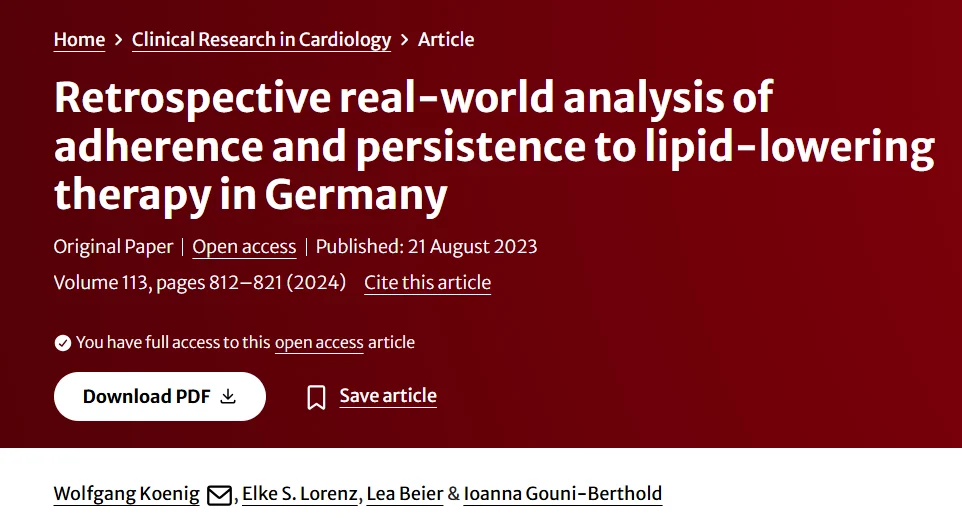
Title: Retrospective real-world analysis of adherence and persistence to lipid-lowering therapy in Germany
Authors: Wolfgang Koenig, Elke S. Lorenz, Lea Beier, Ioanna Gouni-Berthold
Stay updated on all scientific advances with Hemostasis Today.
-
Nov 13, 2026, 03:21Abdul Muqtadir Abbasi: Iron Deficiency Beyond Anemia and the Importance of Finding the Cause
-
Nov 13, 2026, 03:05Marc Carrier: Aspirin vs Anticoagulants for VTE Prevention After Joint Replacement
-
Nov 13, 2026, 02:28Julia Sjöberg: ROCK1 Inhibition and Red Blood Cell Recovery After Chemotherapy
-
Nov 13, 2026, 02:07Tonie Reincke: Understanding Deep Vein Thrombosis and Vascular Health
-
Nov 13, 2026, 01:52Akshita Singh: The Remarkable Process of Blood Clotting
-
Nov 12, 2026, 22:52Milka Koupenova: The Role of Platelet RIG-I in Regulating Thrombotic Responses
-
Nov 12, 2026, 22:50Arun V J: Why Has India Still Not Achieved 100% Voluntary Blood Donation?
-
Nov 12, 2026, 22:49Sickle Cell Disease Deserves to Be Prioritised in Ghana – ISCC
-
Nov 12, 2026, 22:47Samir Kumar Beura: Delighted to Serve as a Topic Editor for a Research Topic in Frontiers in Neuroscience