


Alexsander Santiago: Evaluating Clinical Harm from Missing versus Overdiagnosing HIT
Alexsander Santiago, Health Education Coordinator at Intensive therapy in Foco, shared a post on LinkedIn:
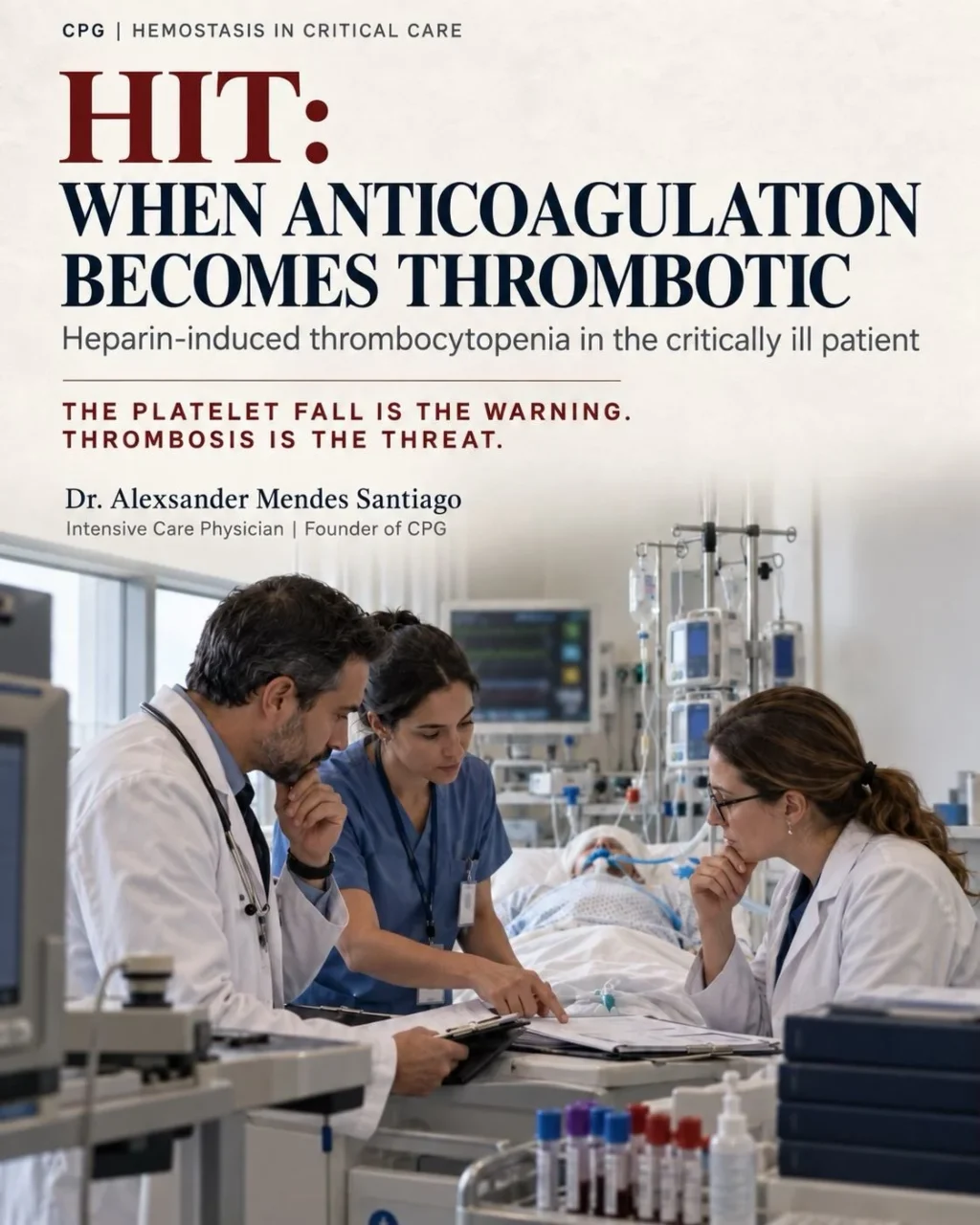
“The platelet fall is the warning.
Thrombosis is the threat.
Heparin-induced thrombocytopenia (HIT) is one of the most paradoxical complications we face in the ICU.
The platelet count falls.
But the patient is not primarily in danger because of bleeding.
The real emergency is an immune-driven, highly prothrombotic state.
Antibodies form against PF4/heparin complexes, activate platelets, amplify thrombin generation and can produce venous or arterial thrombosis.
That is why HIT should never be reduced to ‘thrombocytopenia after heparin.’
In critically ill patients, thrombocytopenia is common.
True HIT is not.
So the challenge is double:
- Miss HIT, then risk catastrophic thrombosis.
- Overdiagnose HIT, theb unnecessary testing, alternative anticoagulation and bleeding risk.
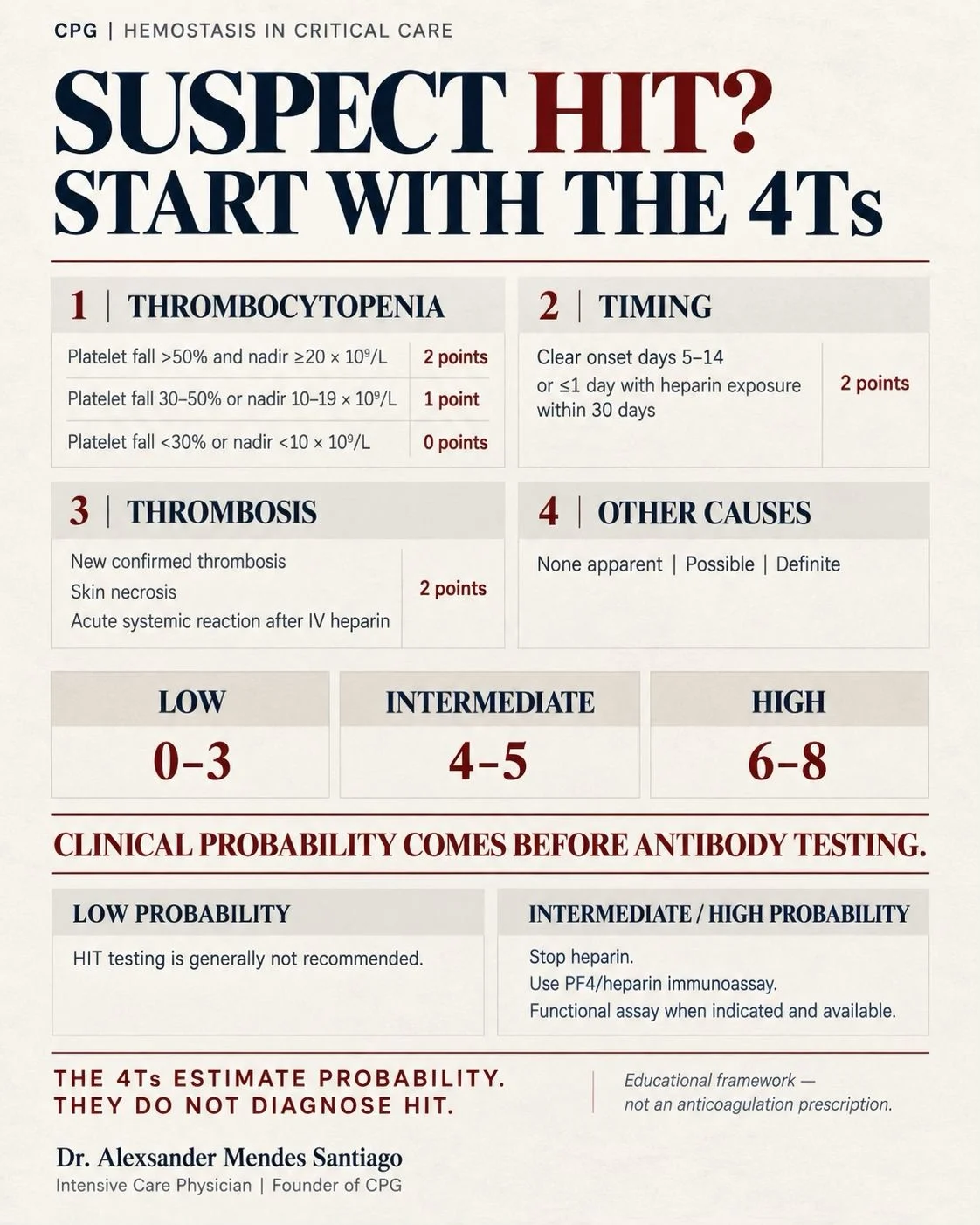
My bedside framework starts with the 4Ts:
1. Thrombocytopenia:
- How much did the platelet count fall?
- A fall >50 percent matters even if the absolute count is not dramatically low.
2. Timing:
- Classic onset is usually 5–14 days after heparin exposure.
- Earlier falls can occur with recent prior exposure.
3. Thrombosis:
- New venous or arterial thrombosis changes the entire picture.
4. Other Causes:
- Sepsis, DIC, drugs, devices, surgery and critical illness itself may explain the platelet fall.
- This is why the 4Ts score matters.
- ASH recommends using it before laboratory testing rather than relying on gestalt alone.
Low probability?
- HIT testing is generally not recommended.
Intermediate or high probability?
- Stop heparin, evaluate with a PF4/heparin immunoassay and, if positive, use a functional assay when available.
And importantly:
‘Stop heparin’ means identifying all relevant sources of heparin, not only the obvious infusion.
Treatment then requires a non-heparin anticoagulant, individualized to thrombosis, bleeding risk, organ function, clinical stability and procedural needs.
One more nuance matters:
- A positive PF4 immunoassay is not automatically HIT.
- Clinical probability and immunologic testing and functional confirmation, when available, belong together.
For me, the principle is simple:
Do not chase the platelet count.
Recognize the thrombotic syndrome.
In a heparin-exposed patient, a new platelet fall should trigger structured reasoning, not panic, and not complacency.
What causes more harm in practice: Missing HIT? Or overdiagnosing it?”
Stay updated with Hemostasis Today.
-
Nov 13, 2026, 03:21Abdul Muqtadir Abbasi: Iron Deficiency Beyond Anemia and the Importance of Finding the Cause
-
Nov 13, 2026, 03:05Marc Carrier: Aspirin vs Anticoagulants for VTE Prevention After Joint Replacement
-
Nov 13, 2026, 02:28Julia Sjöberg: ROCK1 Inhibition and Red Blood Cell Recovery After Chemotherapy
-
Nov 13, 2026, 02:07Tonie Reincke: Understanding Deep Vein Thrombosis and Vascular Health
-
Nov 13, 2026, 01:52Akshita Singh: The Remarkable Process of Blood Clotting
-
Nov 12, 2026, 22:52Milka Koupenova: The Role of Platelet RIG-I in Regulating Thrombotic Responses
-
Nov 12, 2026, 22:50Arun V J: Why Has India Still Not Achieved 100% Voluntary Blood Donation?
-
Nov 12, 2026, 22:49Sickle Cell Disease Deserves to Be Prioritised in Ghana – ISCC
-
Nov 12, 2026, 22:47Samir Kumar Beura: Delighted to Serve as a Topic Editor for a Research Topic in Frontiers in Neuroscience