


Katie Baca-Motes: Estradiol Fluctuations May Help Explain Menstrual Migraine
Katie Baca-Motes, CEO and Co-Founder of GSD Health Research, Co-Founder and Advisor at Scripps Research Digital Trial Center, shared a post on LinkedIn about a recent article by Britt W H van der Arend et al., published in European Journal of Endocrinology, adding:
“Before puberty, girls and boys get migraine at similar rates. After menarche, migraine becomes about three times more common in women than in men.
That shift is one reason researchers have long looked at the menstrual cycle, and especially the premenstrual drop in estradiol, as a possible contributor to migraine attacks.
A new study in the European Journal of Endocrinology by Antoinette Maassen van den Brink, Gisela Terwindt, Britt van der Arend, Iris Verhagen, and colleagues, takes a more precise look at that relationship.
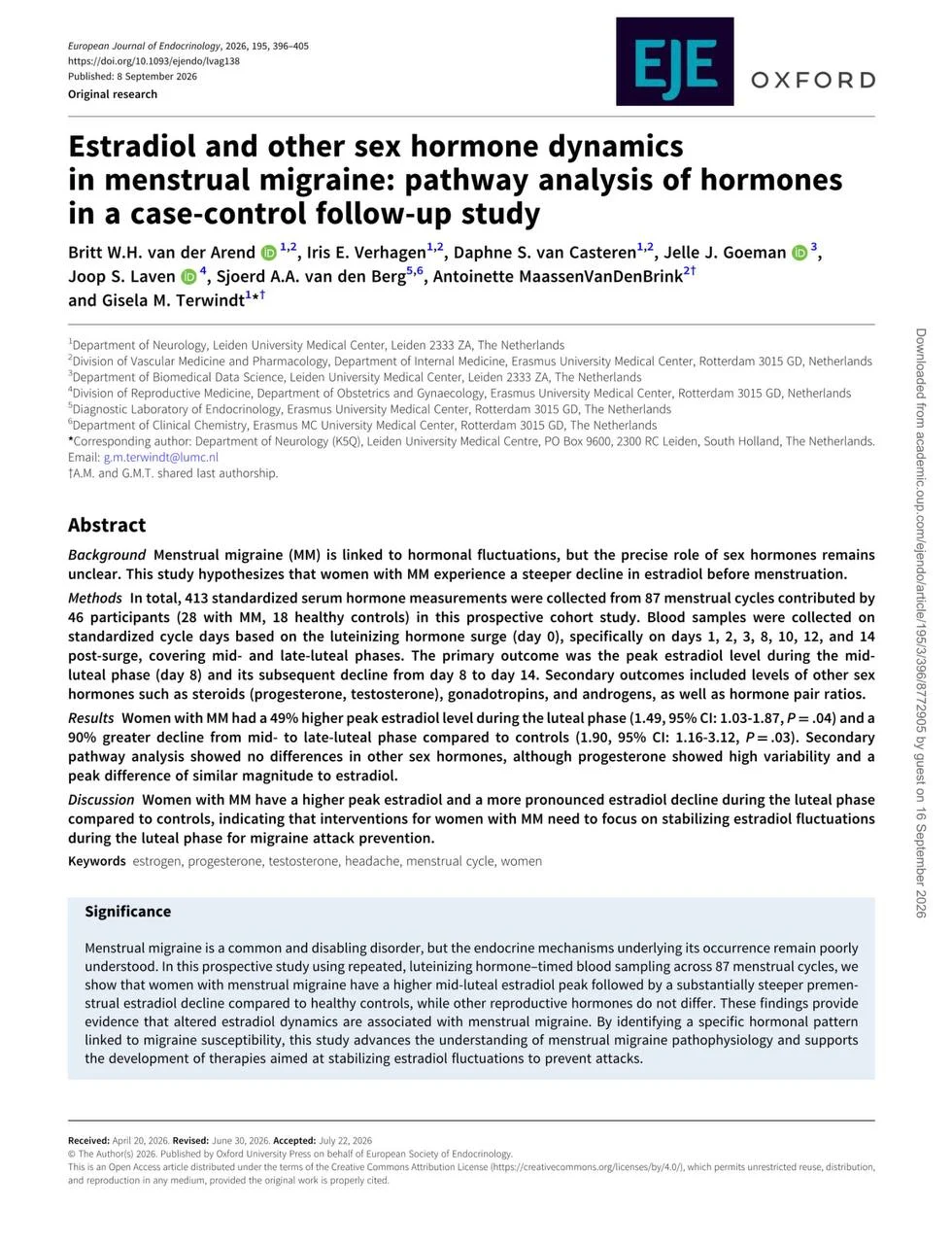
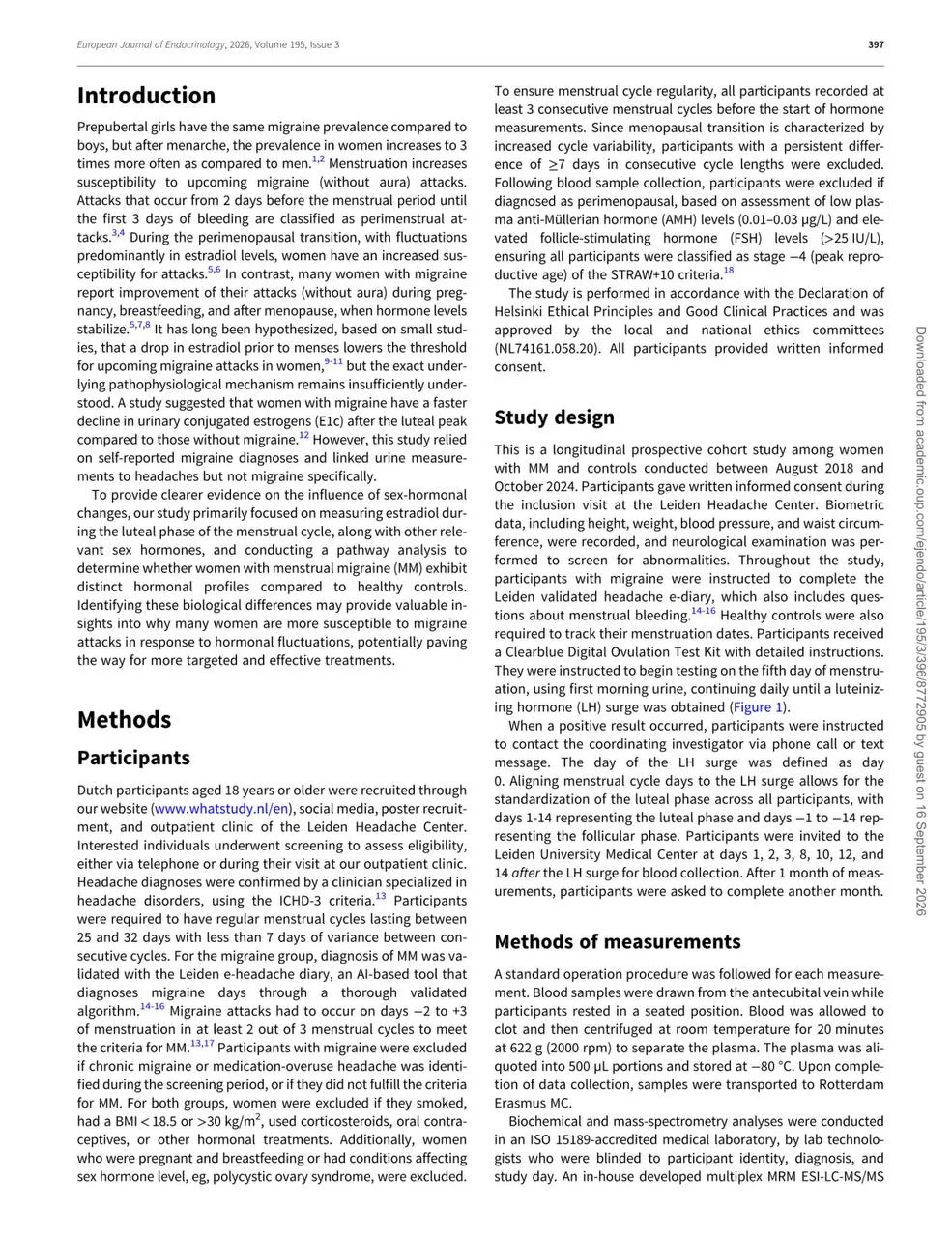
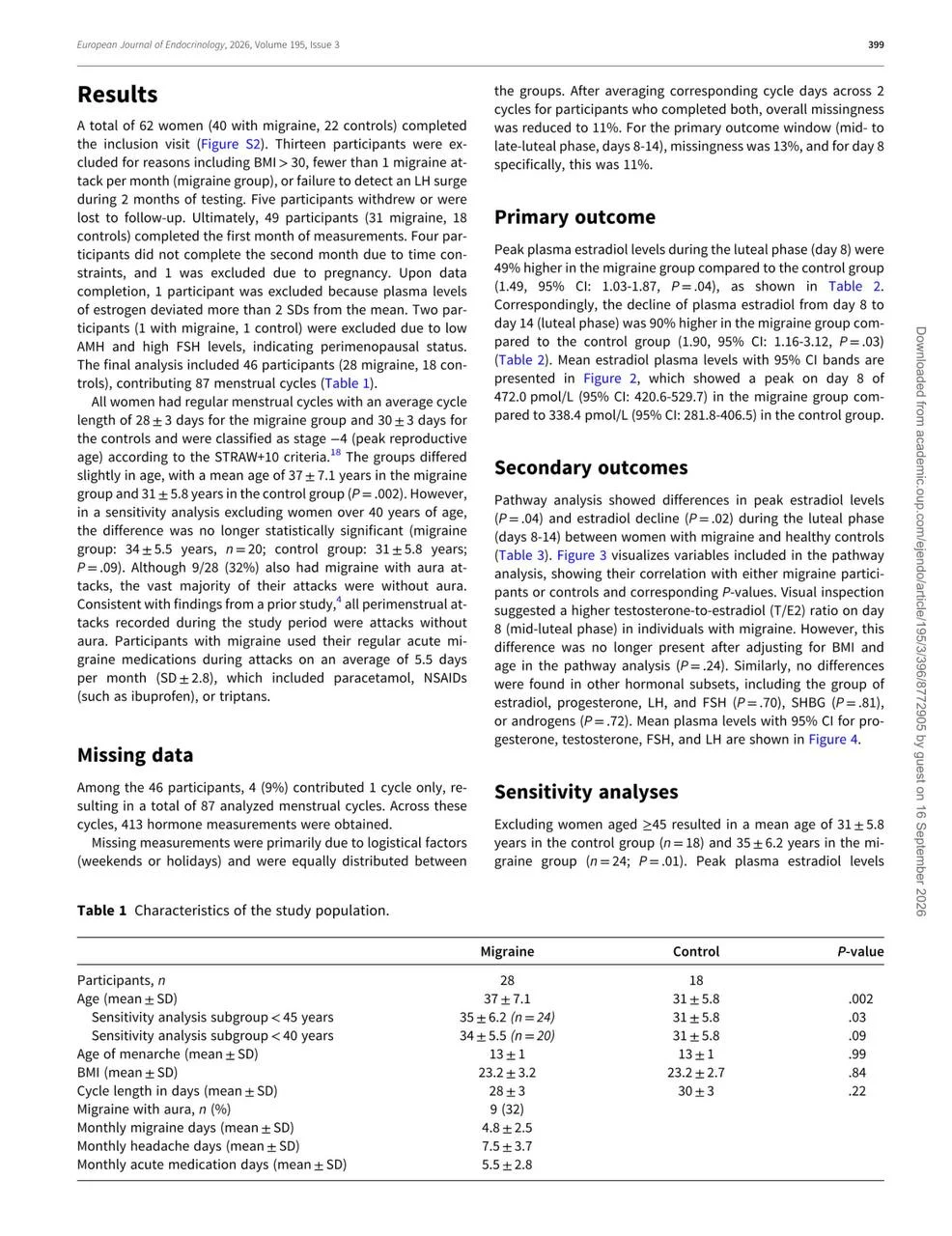
The study followed 28 women with menstrual migraine and 18 healthy controls across 87 menstrual cycles.
All participants had regular cycles and were not using hormonal contraception.
Migraine diagnoses were confirmed by a headache specialist, and menstrual migraine was validated with an electronic headache diary.
Participants used home ovulation tests to identify the LH surge, and blood samples were then collected on seven standardized days after the surge.
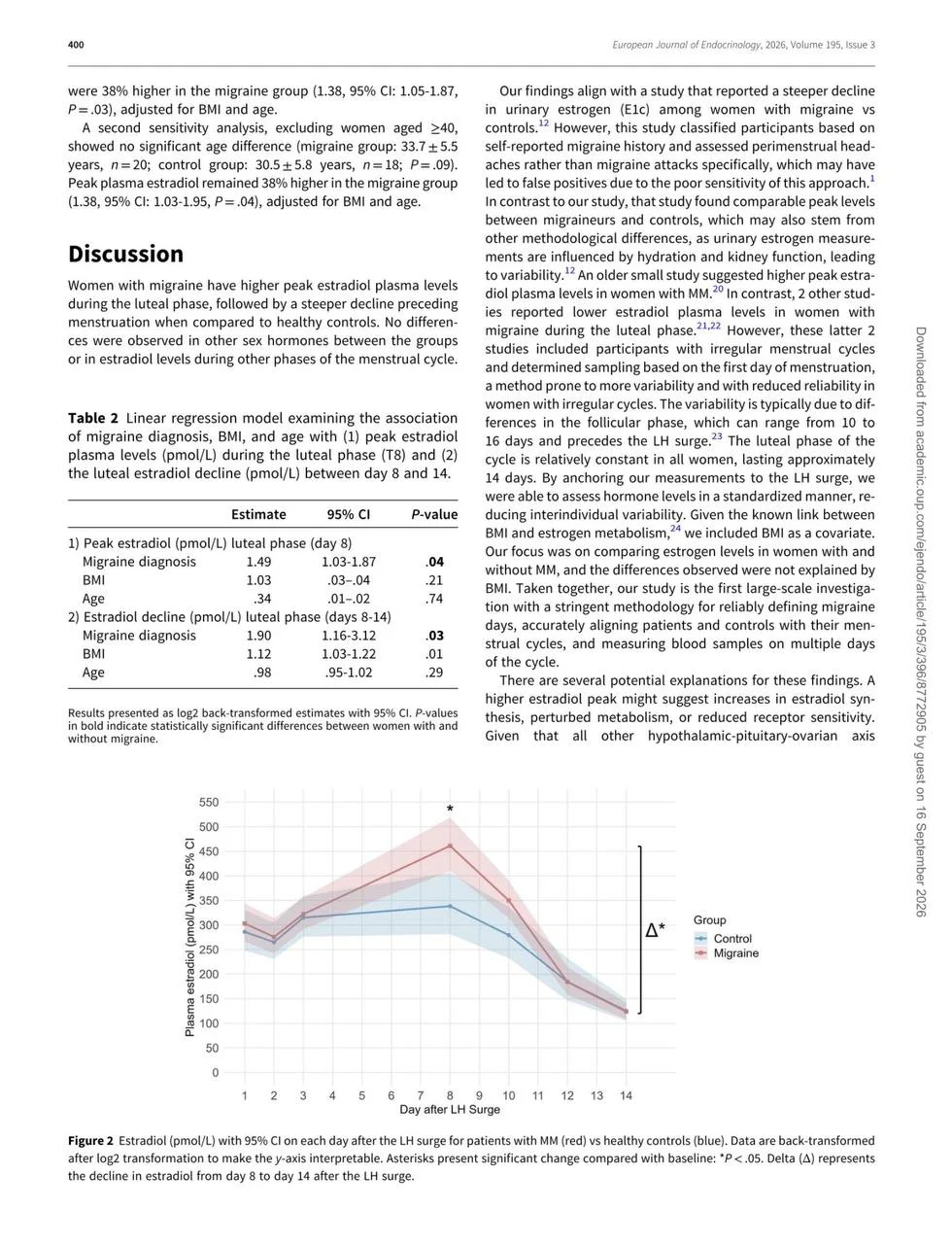
That allowed the authors to look beyond a single hormone measurement and follow the trajectory of estradiol across the part of the cycle most relevant to menstrual migraine.
Women with menstrual migraine had a 49% higher mid-luteal estradiol peak, followed by a 90% greater premenstrual decline, compared with healthy controls.
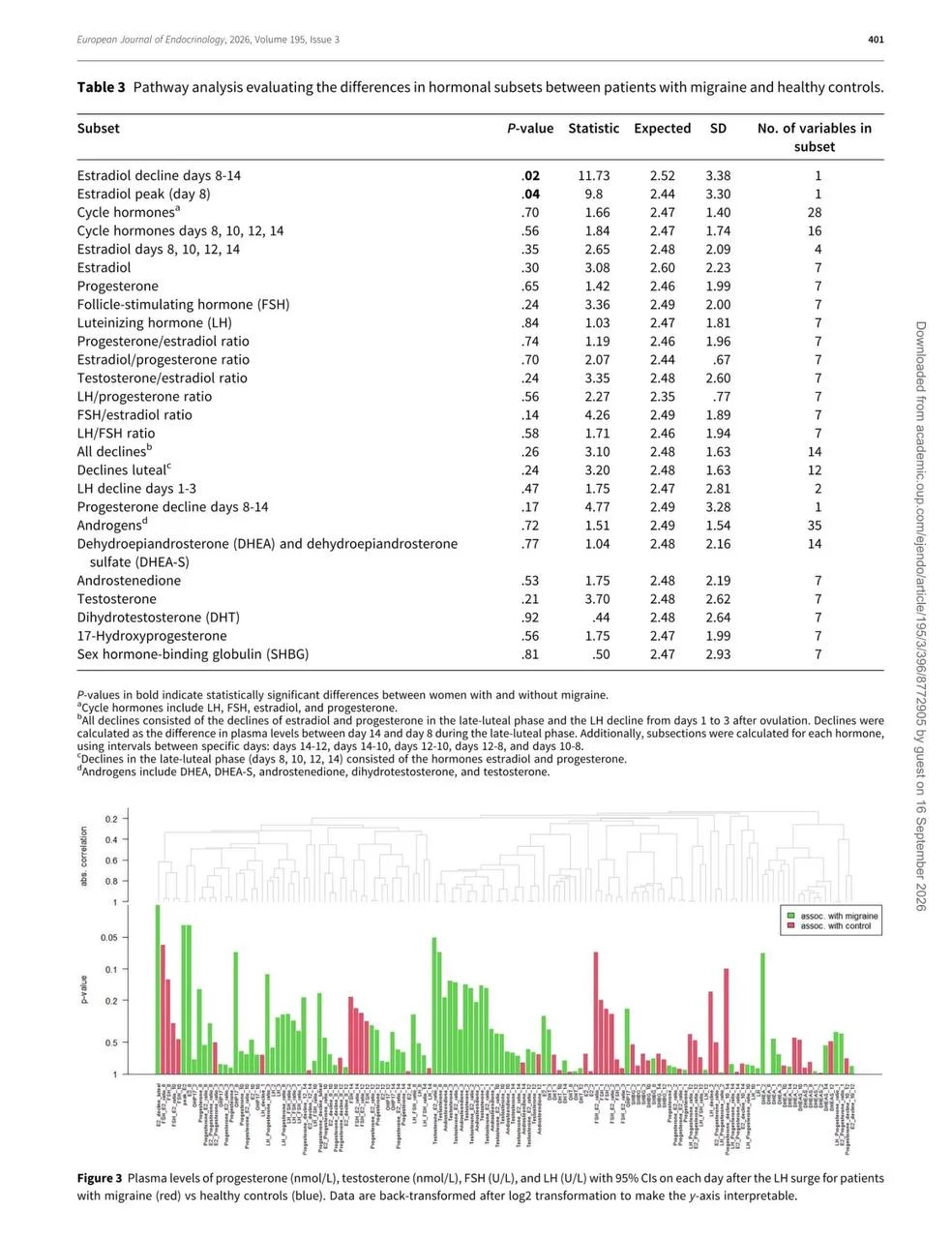
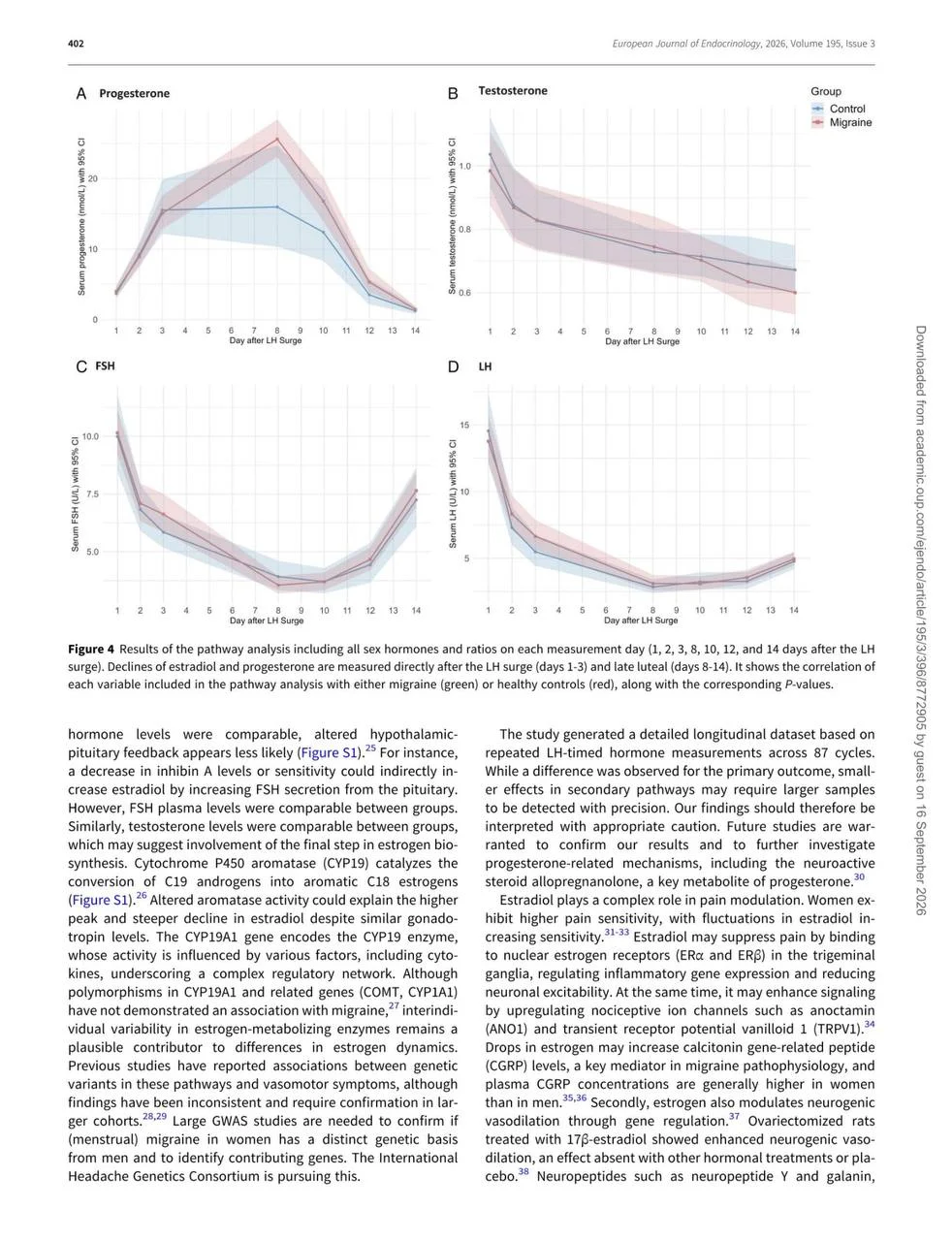
Across 413 serum hormone measurements, other sex hormones did not differ significantly, although progesterone was highly variable.
The authors conect this to future treatment development.
If estradiol fluctuations are part of the mechanism, approaches aimed at stabilizing estradiol during the luteal phase may be worth studying for migraine prevention.
Their ongoing WHAT! trial is testing whether continuous combined oral contraception, without a hormone-free interval, can reduce migraine burden in women with menstrual migraine.
The authors also note that these therapeutic implications remain speculative, that the findings may not generalize to women with irregular cycles or in perimenopause, and that the study was not powered to compare cycles with and without attacks.
They point out that earlier studies reporting lower estradiol in women with migraine timed sampling from the first day of menstruation and included women with irregular cycles.
Here, the pattern emerged when measurements were anchored to the LH surge.
For menstrual migraine, that kind of timing may be central to understanding susceptibility and to testing whether stabilizing estradiol fluctuations can reduce attacks.”
Title: Estradiol and other sex hormone dynamics in menstrual migraine: pathway analysis of hormones in a case-control follow-up study
Authors: Britt W H van der Arend, Iris E Verhagen, Daphne S van Casteren, Jelle J Goeman, Joop S Laven, Sjoerd A A van den Berg, Antoinette MaassenVanDenBrink, Gisela M Terwindt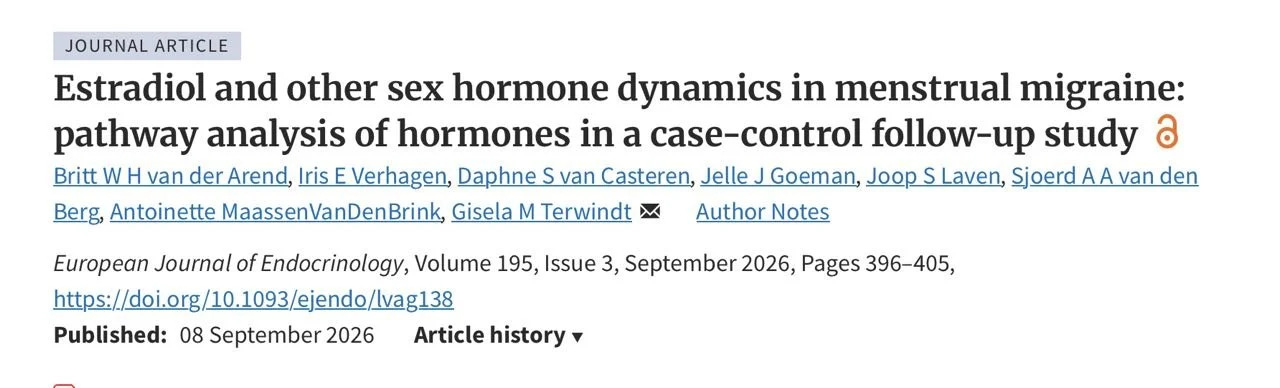
Stay updated on all scientific advances with Hemostasis Today.
-
Sep 21, 2026, 03:49Jessica Lee: Walking Together for a Stronger Bleeding Disorders Community
-
Sep 21, 2026, 03:36Syed Asif Ali Shah: From Pakistan to Australia – A Clinical Haematology Milestone
-
Sep 21, 2026, 03:00Family History Can Reveal Hidden Risk of Aortic Dissection – The Marfan Foundation
-
Sep 21, 2026, 02:47Transitioning from Paediatric to Adult Haemophilia Care – Haemophilia Foundation Australia
-
Sep 21, 2026, 02:29Diana Castro Paupério: A New Era for Patient Blood Management
-
Sep 21, 2026, 00:29Iheanyichukwu Ike: Childhood Anaemia in Nigeria Through an Analysis of the 2018 NDHS
-
Sep 21, 2026, 00:27Nicole De Vita: The Global Burden of Iron Deficiency and Anemia in Women at SABM
-
Sep 21, 2026, 00:25Giuseppe Panuccio: IVUS and OCT Guidance Reduce MACE and Stent Thrombosis in Calcified Coronary Lesions
-
Sep 21, 2026, 00:23Parveen Yograj: Anemia in Older Adults 2026 – Don’t Call It “Just Old Age” and Find the Cause