

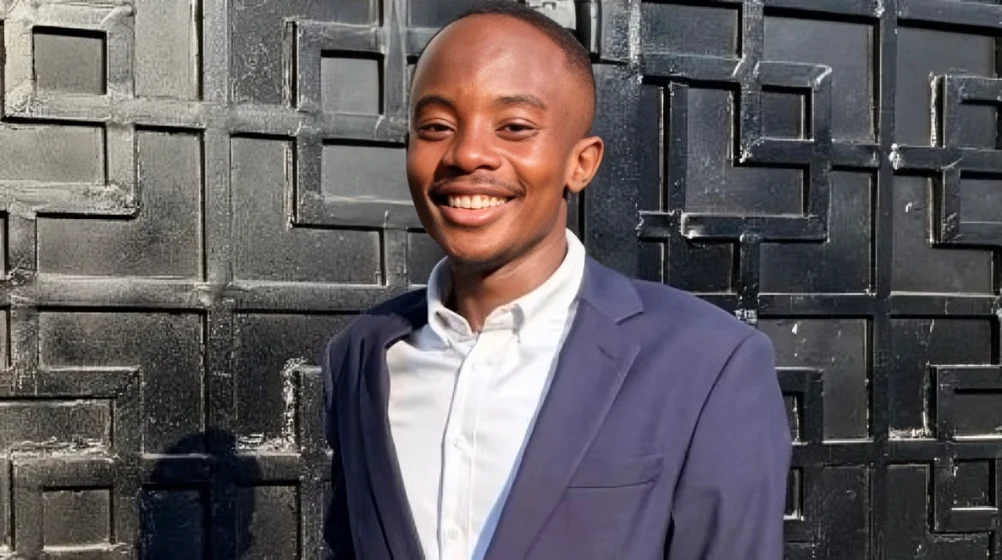
David Akande: When Sickle Cell Crises Have No Clear Trigger
David Akande, Executive Director of One Desire Foundation, Member of Youth Sounding Board at European Union in Ghana, shared a post on LinkedIn:
“Day 22/30 – So What Actually Triggers a Sickle Cell Crisis?
One question I get asked quite often is:
- ‘So what actually triggers your crisis?’
And I wish I could give one simple answer.
Sometimes I can look back and say, yeah, I probably didn’t drink enough water.
Sometimes I’ve pushed my body too hard.
Sometimes there has been stress, illness, extreme temperatures or something else that may have contributed.
And then there are times when I genuinely can’t point to anything.
I can do everything I think I’m supposed to do and still end up in pain.
That’s one of the frustrating things about living with sickle cell.
You learn your body.
You learn the things that tend to put you at greater risk.
You hydrate.
You rest.
You take your medication as prescribed.
You try to avoid extremes of temperature.
You pay attention when your body starts giving you signs.
But none of those things gives you complete control.
And I think that’s important for people to understand.
Sometimes when someone with sickle cell has a crisis, the immediate question becomes:
- ‘What did you do?’
Were you drinking enough water?
Did you go out?
Did you stress yourself?
Did you take your medication?
And while those can be reasonable questions, sometimes they can sound as though every crisis must be the person’s fault.
It isn’t always that simple.
Living with sickle cell involves learning how to reduce your risks while also accepting that you cannot predict everything your body will do.
I’ve become much more aware of my own triggers over the years.
But I’m also still learning.
That’s why I say living with sickle cell sometimes feels like having a lifelong conversation with your own body.
You notice patterns.
Your body gives you feedback.
Sometimes you listen.
Sometimes you stubbornly ignore it.
And sometimes, even when you do everything right, it surprises you anyway.
The goal for me isn’t to live afraid of everything that might trigger a crisis.
It’s to understand my body well enough to make better decisions while still actually living my life.
Because managing sickle cell should help me live.
It shouldn’t become another reason to stop living.
Day 22/30 .”

Stay updated with Hemostasis Today.
-
Nov 9, 2026, 10:08Ibrahim Mansoor: Rare Tests, Common Diseases – Rethinking Autoimmune Diagnostics
-
Nov 9, 2026, 09:29Veronica Sanchez: A Framework for Woman’s Health
-
Nov 8, 2026, 19:31Anna Kajaste-Rudnitski: Presenting AAV-Induced p53 Signalling in Human CNS Cells at ESGCT 26
-
Nov 8, 2026, 19:29David McIntosh: Cybersecurity Matters, but Blood Availability Remains the Bigger Challenge
-
Nov 8, 2026, 19:26Wenxue Ma: An Integrative Framework for Macrophage-Mediated Therapeutic Resistance in Cancer
-
Nov 8, 2026, 19:25Yildiz Yigit: Presenting a Polycythemia Vera Case at the MPN Subcommittee Session
-
Nov 8, 2026, 18:56Denis Oduor: Strengthening the Regulation and Delivery of Blood Transfusion and Transplantation Services
-
Nov 8, 2026, 18:28Raghavendra Rao: A Narrative Review on Chronic Venous Disease during Pregnancy
-
Nov 8, 2026, 17:57Dhiren Patel: PLD1-Derived Phospholipids Regulate NAD Kinase and ROS Production in Neutrophils