


Muhammad Yousaf: Iron Deficiency Beyond Diet
Muhammad Yousaf, Iron Deficiency Beyond Diet, shared a post on LinkedIn:
“When we hear the words ‘iron deficiency,’ the first thing that often comes to mind is, ‘Maybe the person is not eating enough iron.’
But during my studies, I learned that iron deficiency is more complex than simply looking at how much iron someone eats.
Iron is an essential mineral. It plays an important role in hemoglobin, the protein in red blood cells that carries oxygen throughout the body.
Iron is also involved in growth, neurological development, and normal cellular function.
So, why can iron deficiency happen?
There are several possible reasons.
1. Not enough iron in the diet
A diet with limited sources of iron can increase the risk of deficiency. Iron comes in two main forms:
Heme iron found mainly in meat, poultry, and seafood
Non heme iron found in foods such as beans, lentils, nuts, seeds, vegetables, and fortified foods
But the story doesn’t end with food intake.
2. Poor absorption
The amount of iron present in food is not necessarily the same amount that the body absorbs.
Vitamin C can improve the absorption of non-heme iron, while some compounds in foods, such as phytates and certain polyphenols, can reduce its bioavailability.
This made me realize an important point: Nutrition is not only about what is present in food but also about what the body can absorb and use.
3. Increased requirements
Some stages of life require more iron. For example, growing children and pregnant women have increased requirements and can be more vulnerable to iron deficiency.
4. Blood loss and health conditions
Iron deficiency can also be related to blood loss or conditions that affect absorption.
Menstrual blood loss, gastrointestinal blood loss, infections, inflammation, and some chronic conditions can contribute to anemia or iron deficiency.
What about iron deficiency anemia?
This is another area where I learned that we should be careful with terminology. Iron deficiency and anemia are not exactly the same thing.
Anemia means that the hemoglobin concentration or number of red blood cells is lower than normal.
Iron deficiency is considered the most common nutritional cause of anemia, but anemia can also have other causes, including folate or vitamin B12 deficiency, infections, inflammation, chronic disease, and inherited blood disorders.
So we shouldn’t automatically assume: ‘Anaemia is equal iron deficiency.’
The underlying cause needs to be assessed.
Imagine someone eats lentils regularly.
Lentils provide non heme iron, but the amount absorbed by the body depends on several factors.
Combining iron containing plant foods with a source of vitamin C, such as tomatoes, citrus fruits or other vitamin C rich foods, can help improve non heme iron absorption.
This is why food combinations and overall dietary patterns matter not just individual nutrients.
What I learned from this
Iron nutrition made me understand something important:
A nutrient deficiency is not always simply a matter of ‘not eating enough.’
We need to think about:
Intake, Absorption, Requirements, Losses, Health conditions
This is also why nutrition assessment should look at the whole person, rather than focusing on one food or one nutrient.
What do you think is most often overlooked when we talk about iron deficiency: dietary intake, absorption, increased requirements, or blood loss?”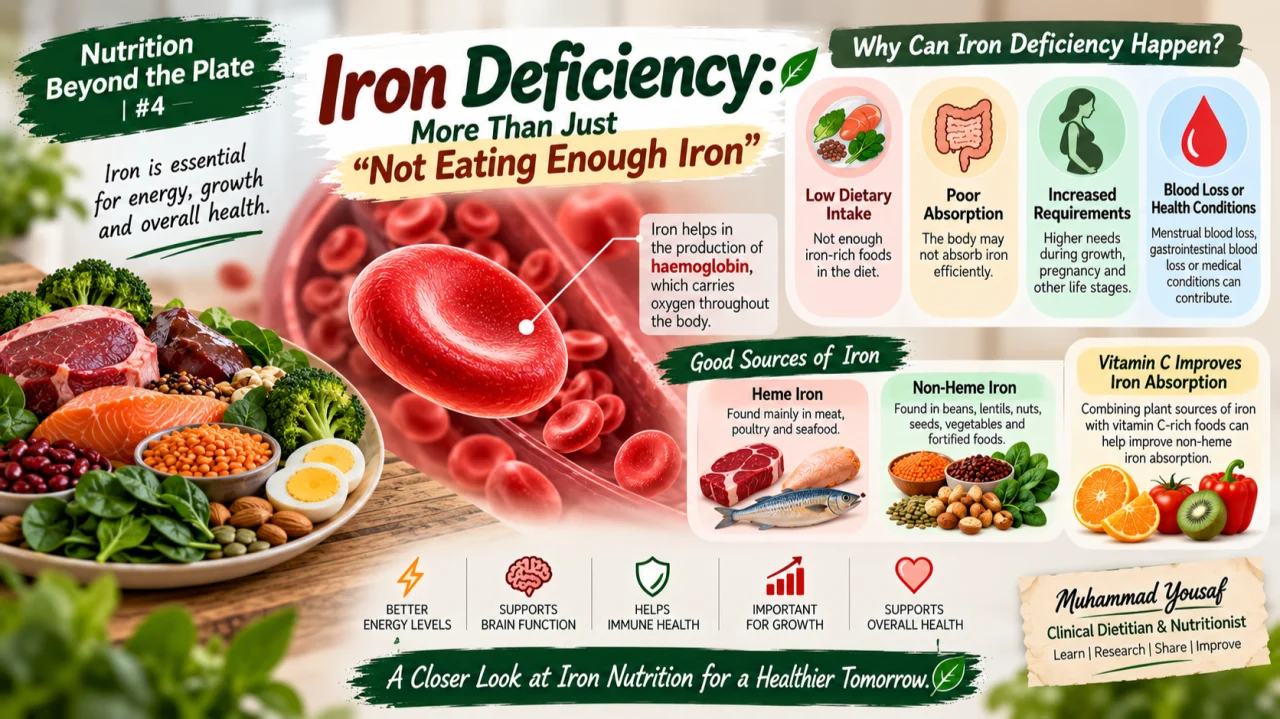
Stay updated with Hemostasis Today.
-
Nov 13, 2026, 03:21Abdul Muqtadir Abbasi: Iron Deficiency Beyond Anemia and the Importance of Finding the Cause
-
Nov 13, 2026, 03:05Marc Carrier: Aspirin vs Anticoagulants for VTE Prevention After Joint Replacement
-
Nov 13, 2026, 02:28Julia Sjöberg: ROCK1 Inhibition and Red Blood Cell Recovery After Chemotherapy
-
Nov 13, 2026, 02:07Tonie Reincke: Understanding Deep Vein Thrombosis and Vascular Health
-
Nov 13, 2026, 01:52Akshita Singh: The Remarkable Process of Blood Clotting
-
Nov 12, 2026, 22:52Milka Koupenova: The Role of Platelet RIG-I in Regulating Thrombotic Responses
-
Nov 12, 2026, 22:50Arun V J: Why Has India Still Not Achieved 100% Voluntary Blood Donation?
-
Nov 12, 2026, 22:49Sickle Cell Disease Deserves to Be Prioritised in Ghana – ISCC
-
Nov 12, 2026, 22:47Samir Kumar Beura: Delighted to Serve as a Topic Editor for a Research Topic in Frontiers in Neuroscience