


Hisham Fahmi: Thromboprophylaxis in Children With ALL A Risk Adapted Approach
Hisham Fahmi, Lecturer at Pediatric Hematology and Oncology, shared a post on LinkedIn:
“Should We Prevent Thrombosis in Children With ALL Before It Happens?
We routinely think about infection, bleeding and organ toxicity during ALL therapy.
But venous thromboembolism (VTE) particularly during asparaginase containing therapy is another important complication.
The difficult question is: Should we anticoagulate before thrombosis occurs?
The new 2026 ASH ISTH guidelines provide an interesting answer: not routinely for everyone.
Why ALL is different?
Asparaginase contributes to a profoundly prothrombotic state, including depletion of natural anticoagulant proteins such as antithrombin.
Add steroids, central venous access, infection, immobility and the malignancy itself and thrombosis risk can rise substantially.
Yet prophylactic anticoagulation introduces another problem: bleeding in a child who may be thrombocytopenic and undergoing repeated lumbar punctures.
What do the new guidelines say?
For children with leukemia or lymphoblastic lymphoma, ASH ISTH suggests either anticoagulant prophylaxis OR no prophylaxis, depending on the individual balance between thrombosis and bleeding risk.
The recommendation is conditional because the evidence remains limited.
Patients who may have greater thrombotic risk include:
- Age high 10 years
- Obesity
- T cell phenotype
- High risk ALL
- Personal family history of thrombosis.
If prophylaxis is chosen, the guideline suggests focusing it on asparaginase containing cycles, with interruption around procedures and modification or withholding during significant thrombocytopenia.
And Antithrombin replacement?
Here comes another interesting point. Despite its biological rationale, the guideline suggests against routine Antithrombin supplementation. Why?
Although available evidence suggests antithrombin may reduce VTE, concern arose from data showing lower event free survival compared with UFH LMWH groups.
Importantly, the guideline emphasizes that the relationship remains uncertain.
What about DOACs?
They are increasingly entering pediatric thrombosis practice but oncology remains complicated.
A 2026 real world study of 51 pediatric oncology patients receiving rivaroxaban or apixaban reported recurrent progressive thrombosis in 8 percent, major bleeding in 6 percent, and clinically relevant non major bleeding in 20 percent.
This changes the idea that every child with ALL should receive thromboprophylaxis.
The question becomes: Can we identify the child whose thrombosis risk is high enough to justify anticoagulation before the clot occurs?
It is a shift from universal prophylaxis to risk adapted thromboprophylaxis.
Reference:
ASH/ISTH 2026 Guidelines for Anticoagulant Prophylaxis in Pediatric Patients at Risk of VTE. Blood Advances. 2026. ASH PublicationsKumar R, et al. Res Pract Thromb Haemost. 2026;10:103392.”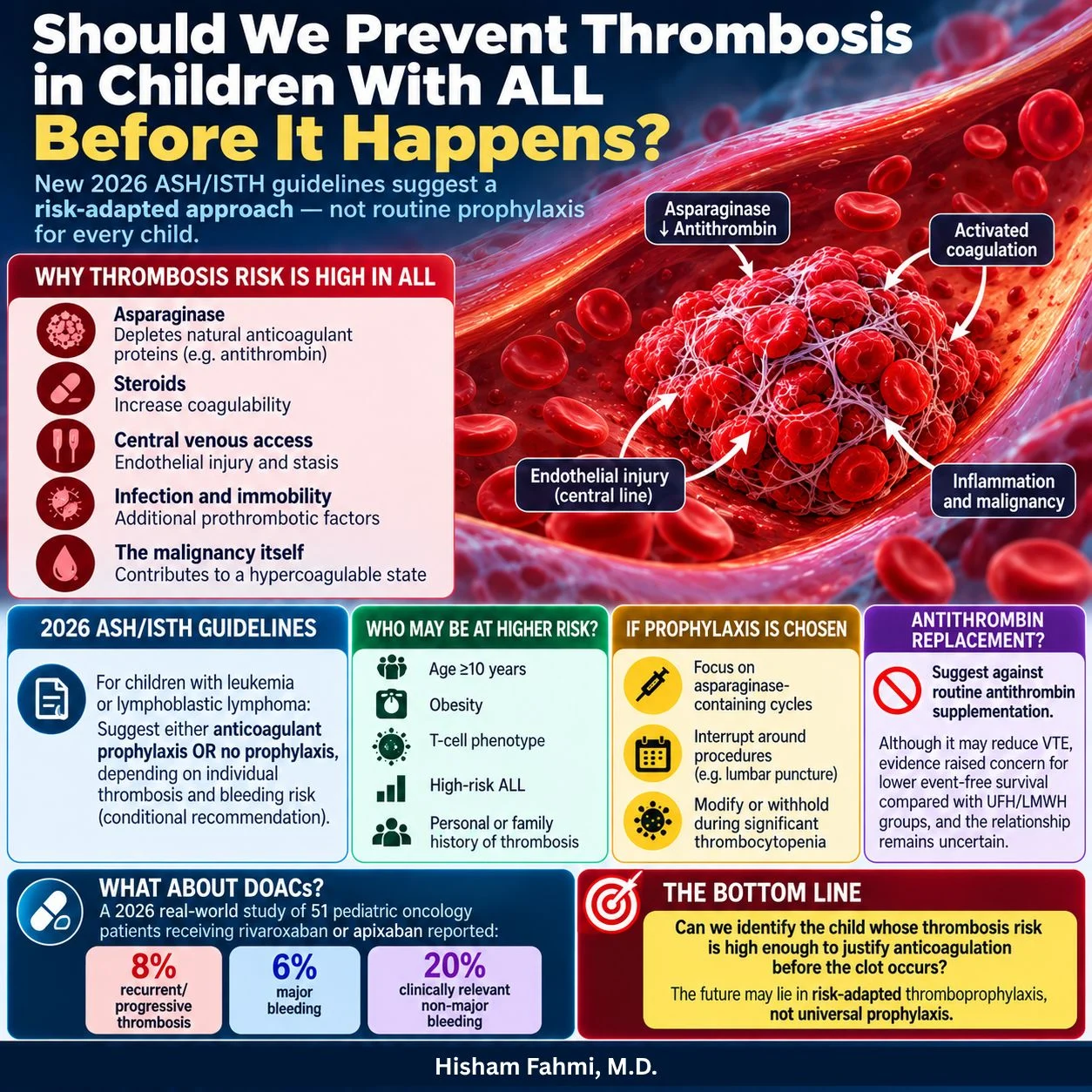
Stay updated with Hemostasis Today.
-
Oct 4, 2026, 06:00Aadil Sheikh: Menopausal Hormone Therapy and Thrombosis Rethinking Route Dose and Risk
-
Oct 4, 2026, 05:39Alicja Urbaniak: Targeting CD148 for Novel Antithrombotic Therapy
-
Oct 4, 2026, 05:27Nirali Thakkar: Influenza and Myocardial Infarction An Unexpected Cardiovascular Connection
-
Oct 4, 2026, 05:00Mary Cushman: Erin Michos Highlights Rising Heart Disease Mortality Among Younger Women in the US
-
Oct 4, 2026, 04:48Liv Tybjærg Nordestgaard: Is Fasting Necessary Before Blood Sampling?
-
Oct 4, 2026, 04:31Sonal Sonu: Gen Z doesn’t just set trends – Gen Z saves lives
-
Oct 4, 2026, 04:22Registration Opens for 2027 Highlights of ASH – American Society of Hematology
-
Oct 4, 2026, 04:06Konstantinos Stavroulakis: Vessel Preparation in Lower Limb Revascularization
-
Oct 4, 2026, 03:34Liselotte Hyveled: Exploring Opportunities to Improve Hemophilia and Sickle Cell Care in Ghana