

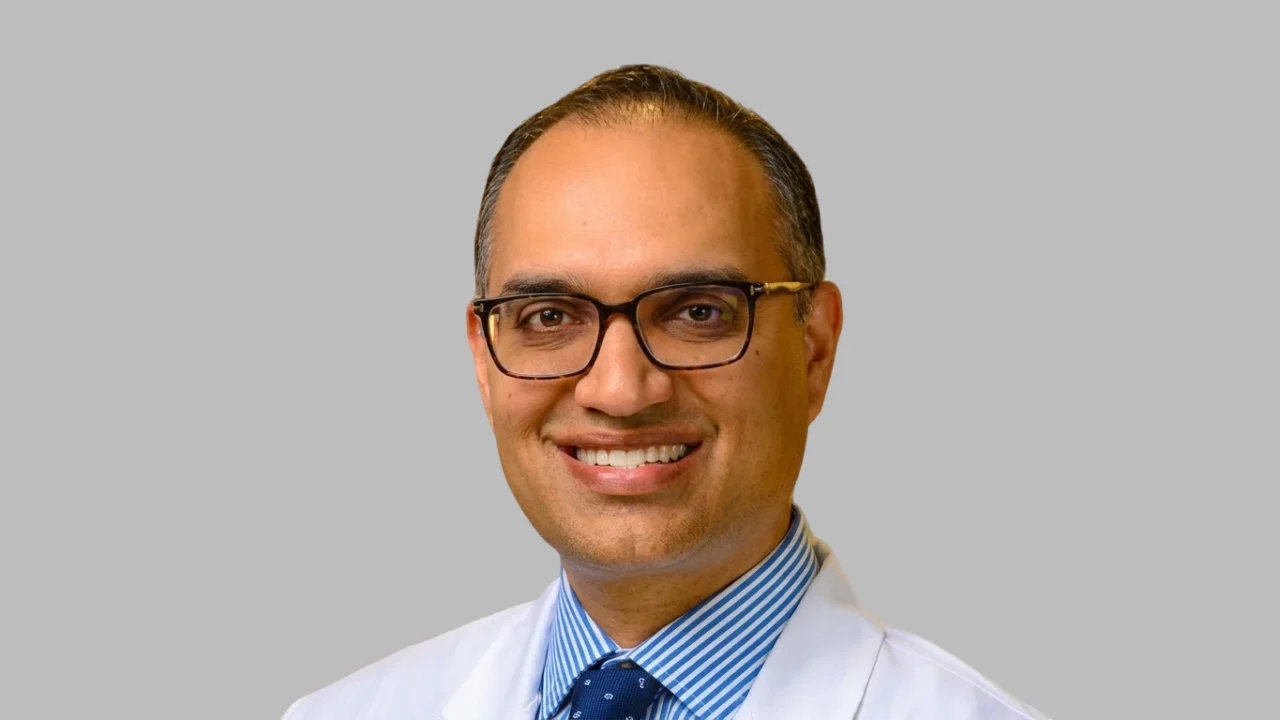
Muhammad Alvi: CASPR Study Explores Treatment Response Across ESUS Phenotypes
Mud Alvi, Professor and Vice Chair of Neurology at West Virginia University, shared a post on LinkedIn about a recent article he and his colleagues co-authored, published in Annals of Clinical and Translational Neurology, adding:
“Excited to share our new paper in Annals of Clinical and Translational Neurology: ‘Anticoagulation Treatment Response Among Phenotypic ESUS Clusters: Evidence From CASPR.’
Does one size fit all in cryptogenic stroke?
Using causal inference methods in 1,869 patients with ESUS, we found:
- Three distinct phenotypic clusters with significantly different risks of recurrent stroke, major bleeding, or death
- No population-level benefit of anticoagulation over antiplatelet therapy
- But cluster membership did not predict who responds to anticoagulation
- Higher LVEF and a history of cancer were associated with better outcomes on antiplatelet therapy over anticoagulation
The takeaway: risk phenotypes and treatment response are not the same thing.
Causal inference tools like these may help us move past ‘ESUS’ as a single bucket toward more individualized antithrombotic decisions.
Huge congratulations to Dr. Elena Badillo Goicoechea, who led this substudy, and to Jim Siegler, the driving force behind the CASPR studies.
Grateful to our co-authors and collaborating centers for making this work possible.”
Title: Anticoagulation Treatment Response Among Phenotypic ESUS Clusters: Evidence From CASPR
Authors: Elena Badillo Goicoechea, Patrick Ellsworth, James E. Siegler, James R. Brorson, Christina M. Lineback, Frank G. Conyers, Deborah Kerrigan, Kelsey Eklund, Shadi Yaghi, Farid Khasiyev, Emiliya Melkumova, Collin J. Culbertson, Marissa D’Souza, Dinesh V. Jillella, Patrick Glover, Hassan Aboul-Nour, Fadi Nahab, Mahan Shahrivari, Simona Nedelcu, David S. Liebeskind, Matthew M. Smith, Aaron Rothstein, Anna Bowman, Alicia Zha, Narendra Kala, Ahmad Abu Qdais, Sami Al Kasab, Mudassir Farooqui, Diana Rojas-Soto, Yasmin Aziz, Franziska Herpich, Jean-Philippe Daniel, Sean L. Thompson, Vivek Patel, Thanh N. Nguyen, Siddharth Sehgal, Wenzheng Yu, Wayneho Kam, Russel Van Coevering, Oana M. Dumitrascu, Muhammad Alvi, Balaji Krishnaiah, Setareh Salehi Omran, Guillermo Linares, Eesha Singh, Hamid Ali, Mary Penckofer, Jesse M. Thon, Shani Mannion, Dalia Chahien, Lucia Chen, Fawad Talat, Mehdi Abbasi, Richa Sharma
Stay updated on all scientific advances with Hemostasis Today.
-
Oct 11, 2026, 16:03Parth Parmar: Practical Guidelines for Managing Venous Thromboembolism
-
Oct 11, 2026, 15:15Thalassaemia International Federation Joins ASCAT 2026 to Advance Sickle Cell and Thalassaemia Care
-
Oct 11, 2026, 15:14Challenges and Perspectives on Gene Therapy in Hemophilia A – Seminars in Thrombosis and Hemostasis
-
Oct 11, 2026, 15:07Neysa Rahardjo: Platelet Estimation Pitfalls and Discrepancy Resolution
-
Oct 11, 2026, 15:05Lance Trewhella: Reflections from the ASCLS Region V Fall Symposium
-
Oct 11, 2026, 15:04The Anti-Inflammatory Rationale for GLP-1 Agonists in Hemophilia – CRH French Reference Center for Hemophilia Lyon
-
Oct 11, 2026, 15:00Donja W.: Blood Shortages Aren’t Just Statistics
-
Oct 11, 2026, 14:54Archil Jaliashvili: NHSBT Highlights Persistent Gaps in Matched Blood for Sickle Cell Patients
-
Oct 11, 2026, 14:46Sebastien Lobet: Physiotherapy and Joint Health Across the Spectrum of Bleeding Disorders