


Caitlyn Mooney: Pulmonary Embolism in Athletes, Recognition and Return to Sport
Caitlyn Mooney, Sports Medicine Physician at Vanderbilt University Medical Center, shared a post on LinkedIn:
“I’m a sports medicine physician. I had pulmonary emboli in both lungs—and didn’t know for days.I even traveled across the country by plane before my diagnosis. Earlier this month marked four years since my PE. I planned to share my anniversary photos and reflections here, but never got around to it.
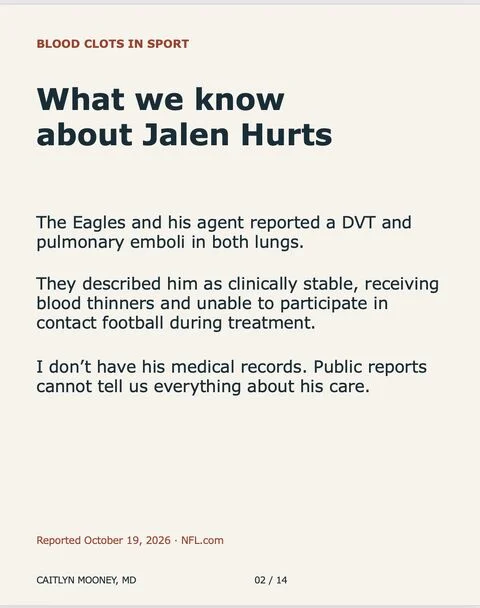
Now the news about Jalen Hurts has brought us back to this conversation.
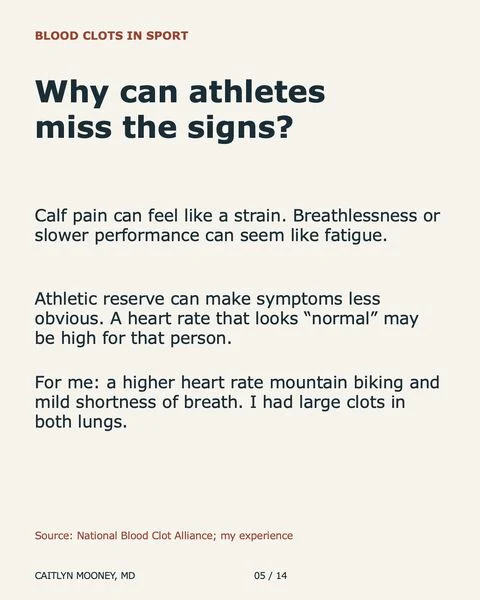
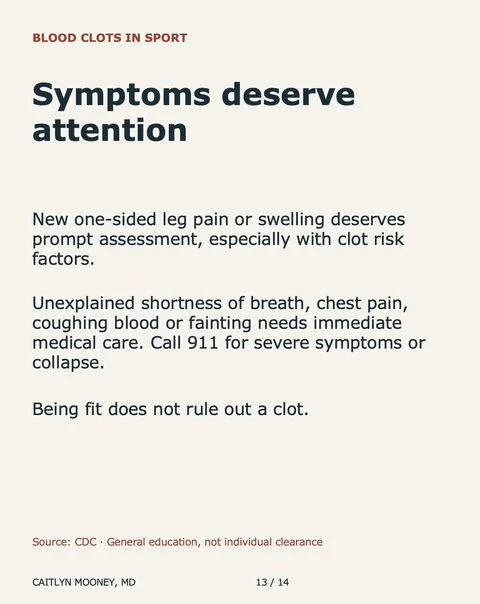
My symptoms were subtle: calf pain, a higher-than-usual heart rate while mountain biking, and mild shortness of breath. Even with my medical training, I didn’t immediately recognize what was happening.
A few things I hope people take away from this discussion:
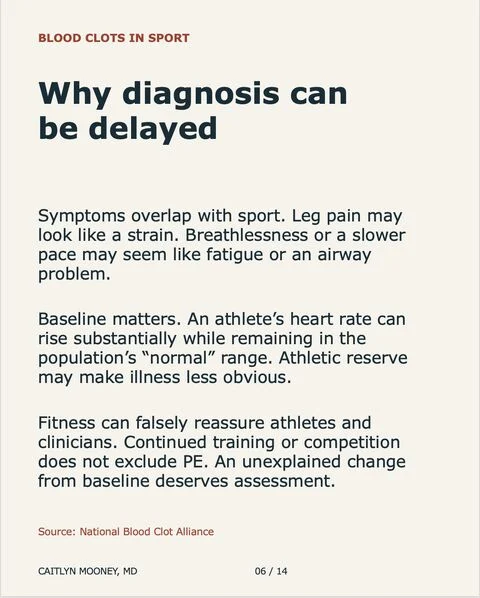
- Fitness does not rule out a blood clot. Symptoms can overlap with routine training complaints, and a change from an athlete’s baseline matters. Athletes can have great cardiopulmonary reserves, which can also lead to difficulty with diagnosis.
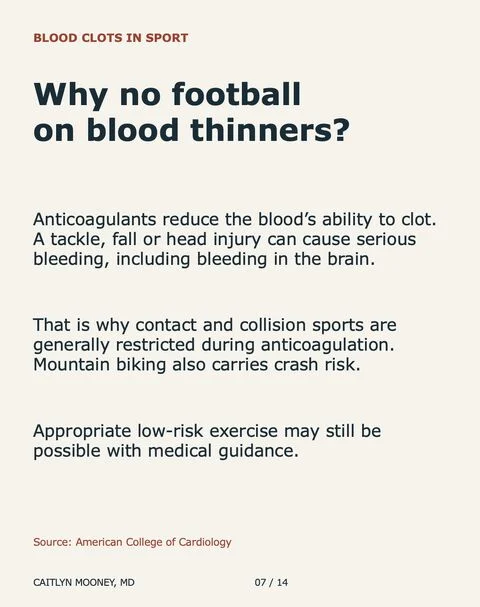
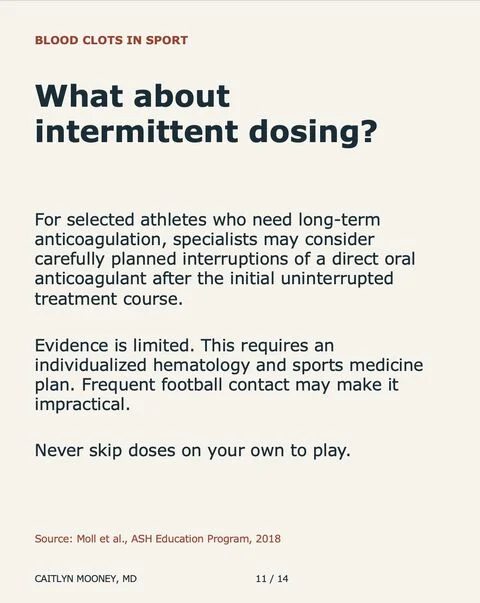
- Feeling well enough to play does not establish that it is safe. Anticoagulation adds a serious bleeding risk in contact sports.
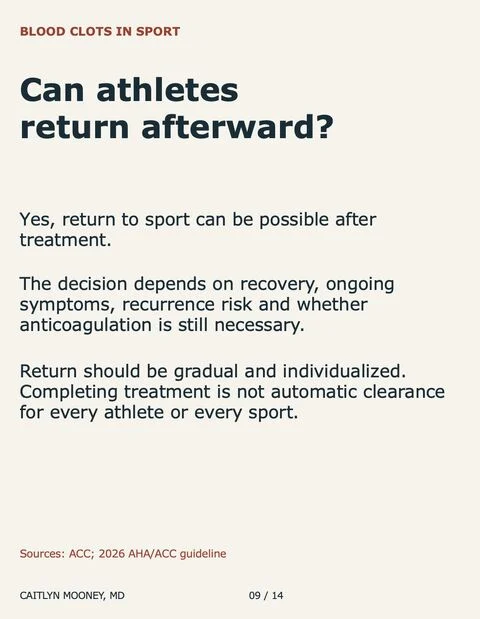
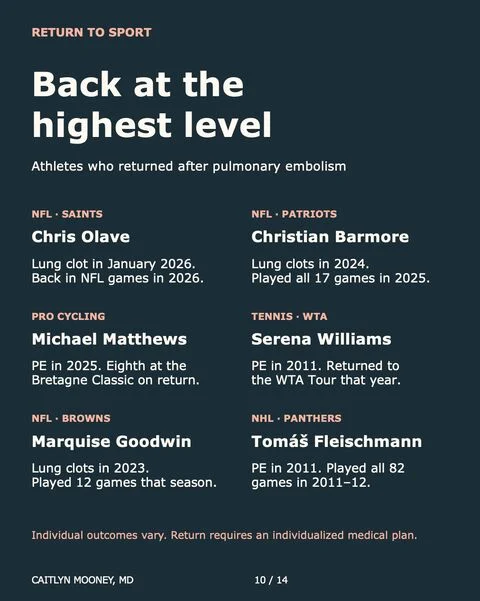
- A PE does not automatically end an athletic career. Return depends on recovery, treatment needs, and the demands of the sport.
- Many athletes and people who suffer from PE develop panic disorder and anxiety about recurrence. For me travel or flights and being away from medical care always feel riskier.
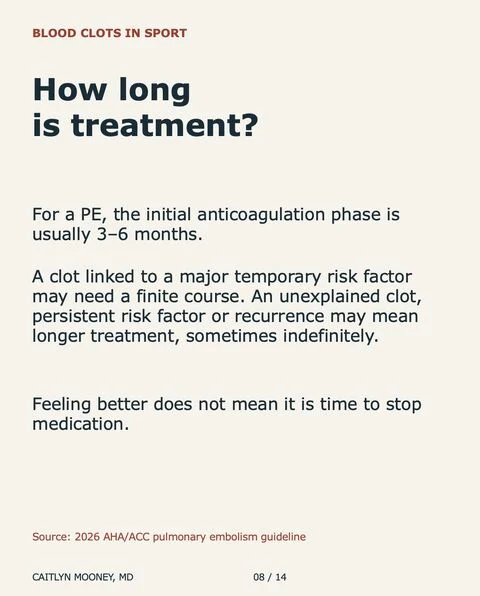
- Some contact athletes can return after the initial treatment period while still on DOACs, but they hold it on contact days; some can go off anticoagulation, and some may not return. It’s simply too early to tell, and the treatment is individualized and based on information we do not know.
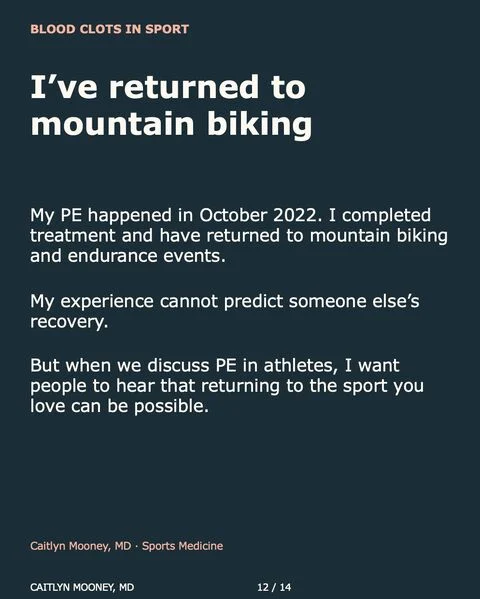
I don’t have Hurts’ medical records, so I won’t speculate about the specifics of his care.I have returned to mountain biking and endurance events. That possibility deserves space alongside the seriousness of this diagnosis.
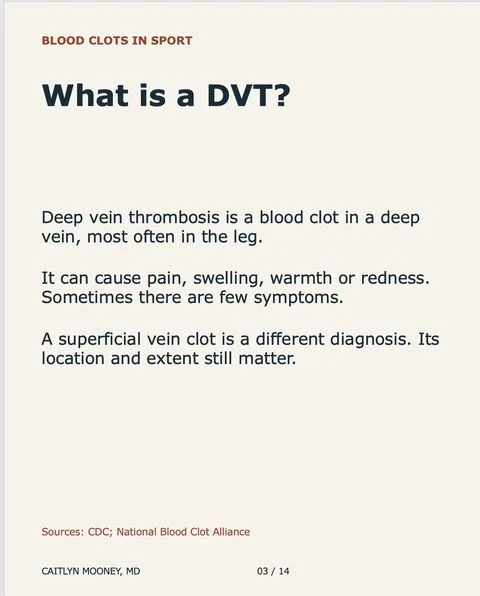
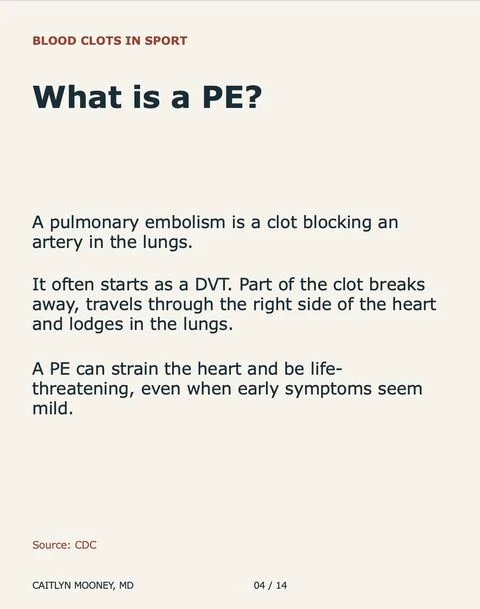
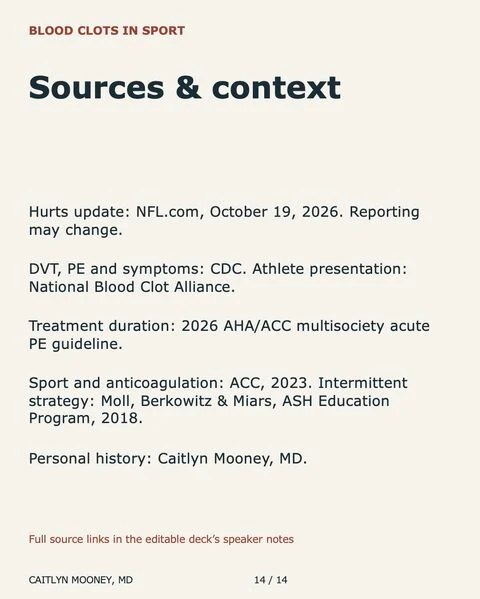
The slides explain DVT and PE, why recognition can be difficult in athletes, and the considerations around returning to sport—including examples of athletes who have done so.”

Stay updated with Hemostasis Today.
-
Oct 21, 2026, 00:54Hani Karrar: Pleased to Share Our Review on Emicizumab in Hemophilia A Management
-
Oct 21, 2026, 00:53Akshay Sharma: HSCT Leads to Sustained Improvements in Sickle Cell Cardiomyopathy for Up to 3 Years
-
Oct 21, 2026, 00:51Prateek Meena: The F. A. T. R. N. Mnemonic for Recognizing TTP
-
Oct 20, 2026, 23:51Registration Is Open for WFH CCS 2027 – World Federation of Hemophilia
-
Oct 20, 2026, 23:44Edward Lee Carter: AF in Nursing Homes – When Stroke Risk Scores Tell Only Part of the Story
-
Oct 20, 2026, 22:59Building Effective Patient Advocacy Through Collaboration Between Patients and Clinicians – EHC
-
Oct 20, 2026, 21:22Intezar Mehdi: When Prolonged Bleeding May Indicate an Underlying Bleeding Disorder
-
Oct 20, 2026, 21:06Nandini Pethe: Sharing My Experience as a Caregiver in the HOPE Factor Resource Guide
-
Oct 20, 2026, 16:51Suzan Nakasendwa: A Growing Stroke Challenge in Uganda