

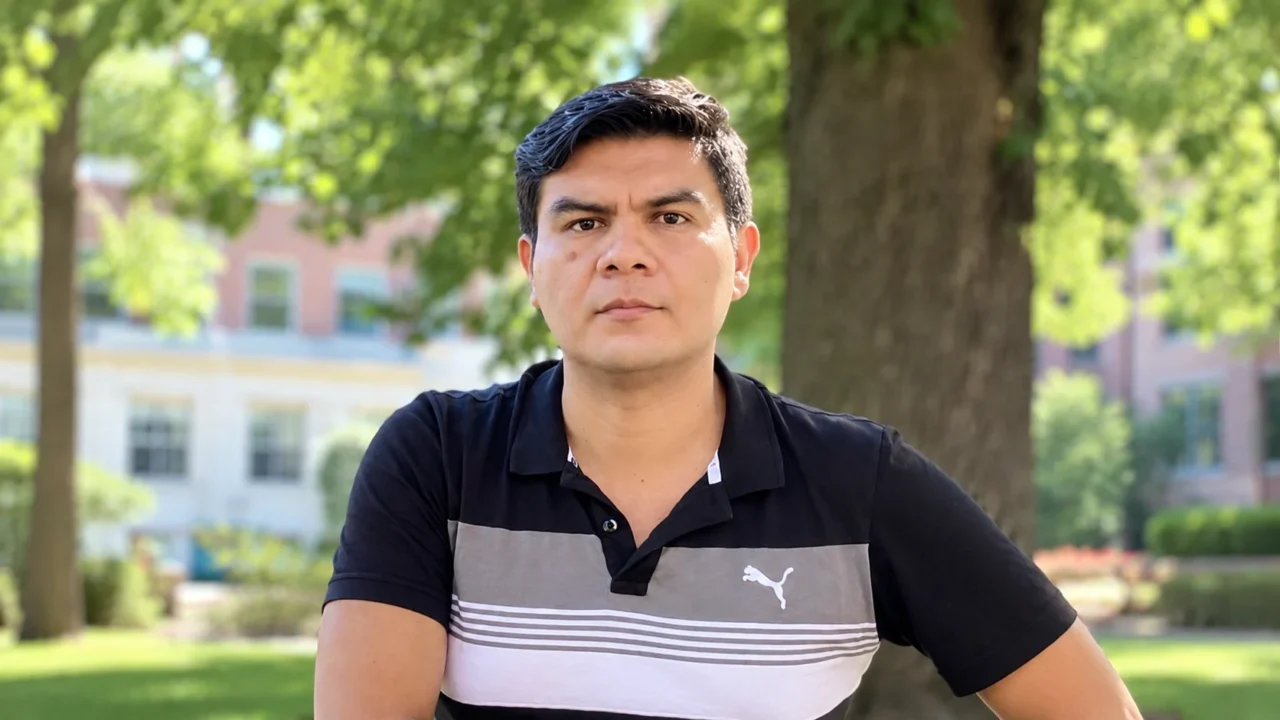
M. Alejandro Mosso-Pani: Dengue in Florida – Why Platelet Function Matters
M. Alejandro Mosso-Pani, Biotechnology Laboratory Associate at ODIN Bioscience, shared a post on LinkedIn:
“Dengue in Florida: Why understanding platelet dysfunction matters
Florida is facing a significant dengue outbreak. According to the latest state surveillance report covering October 11–17, 425 locally acquired dengue cases had been reported across 11 counties in 2026.
This is a reminder that dengue is not only a global health challenge — it is also a growing public health concern in our own communities. Beyond fever and other clinical symptoms, dengue can profoundly affect platelet number and function, contributing to the risk of bleeding and severe disease.
Understanding how the virus interacts with platelets is therefore an important component of dengue research.
Our research contributes to this effort.
In our published research, we investigated how dengue virus affects human platelets, identifying changes in platelet activation, surface markers, inflammatory mediator release, and morphology.
Our findings include:
- Increased platelet activation and changes in platelet surface markers, including CD62P and CD42b.
- Enhanced release of soluble CD40L and inflammatory mediators following dengue virus exposure.
- Morphological alterations that highlight the complex interaction between dengue virus and platelets.
Explore our research:
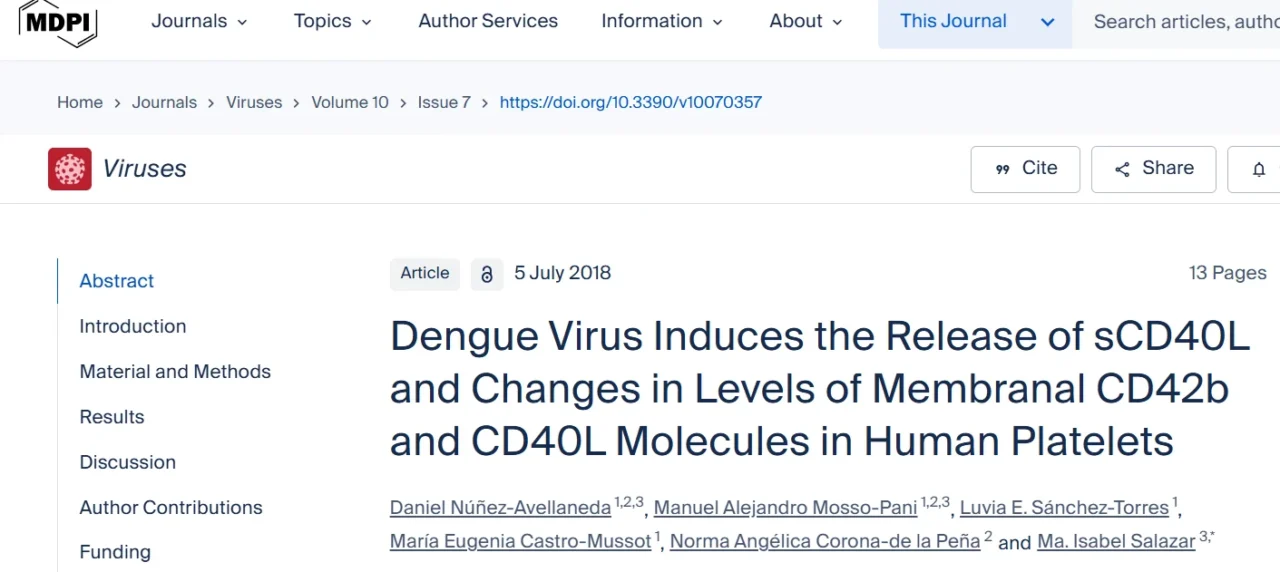
- Dengue Virus Induces the Release of sCD40L and Changes in Levels of Membranal CD42b and CD40L Molecules in Human Platelets — Viruses (2018).
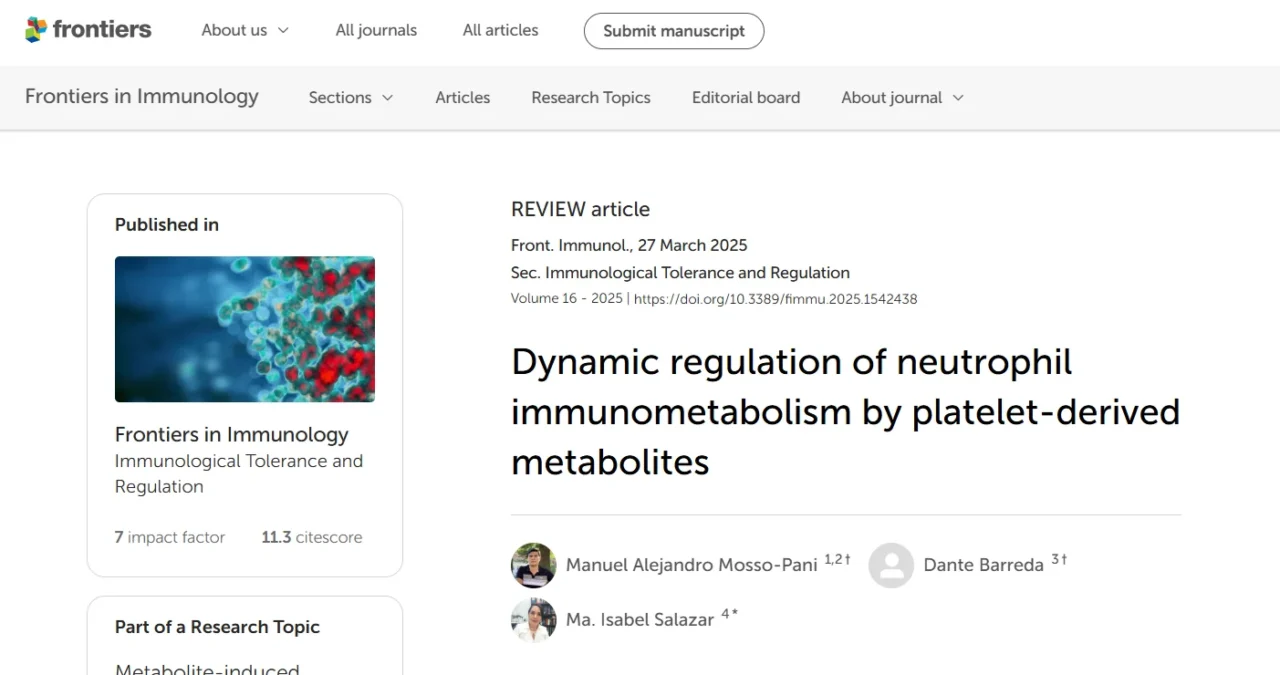
- Our more recent publication in Frontiers in Immunology (2025).
Why does this matter?
Characterizing dengue-associated platelet dysfunction may help researchers identify biological mechanisms underlying disease severity and guide future investigations into potential biomarkers.
Although additional clinical studies are needed to establish the translational significance of these findings, understanding platelet responses is an important step toward a more complete picture of dengue pathophysiology.
As dengue transmission expands, collaboration among researchers, clinicians, and public health professionals becomes increasingly important. Scientific evidence, surveillance, prevention, and continued investigation must work together to address this challenge.
Research is not only about understanding what a virus does—it is about generating the knowledge needed to improve how we respond to it.”
Title 1: Dengue Virus Induces the Release of sCD40L and Changes in Levels of Membranal CD42b and CD40L Molecules in Human Platelets
Authors: Daniel Núñez-Avellaneda, Manuel Alejandro Mosso-Pani, Luvia E. Sánchez-Torres, María Eugenia Castro-Mussot, Norma Angélica Corona-de la Peña, Ma. Isabel Salazar
Read the Full Article on Viruses
Title 2: Dynamic regulation of neutrophil immunometabolism by platelet-derived metabolites
Authors: Manuel Alejandro Mosso-Pani, Dante Barreda, Ma. Isabel Salazar
Read the Full Article on Frontiers in Immunology
Stay updated with Hemostatis Today.
-
Oct 28, 2026, 13:13Michael Cahillane: Three-Buffy-Coat Platelets – Strengthening Blood Supply Resilience
-
Oct 28, 2026, 13:05N. Mariana S. Vasquez: Antiplatelets vs Anticoagulants – Key Clinical Differences
-
Oct 28, 2026, 12:45Panithaya Chareonthaitawee: A Podcast Walk Through Anticoagulation
-
Oct 28, 2026, 11:55Natalia C. Badillo: Anticoagulation in AF – A Decision Beyond the Score
-
Oct 28, 2026, 08:40Simon Fletcher: The Hidden Burden of Non-Severe Haemophilia
-
Oct 28, 2026, 08:08Paul Agwu: A Low Platelet Count Is Not a Diagnosis – It Is a Clue
-
Oct 28, 2026, 07:54Ifeanyichukwu Ifechidere: When Normal Results Don’t Explain the Bleeding
-
Oct 28, 2026, 06:06Thirunavukkarasu Angappan: Anti-TFPI Antibodies and an Antithrombin-Lowering Drug
-
Oct 28, 2026, 05:52Reegan Burnell-Clarke: Pegcetacoplan and the Evolving Treatment Landscape of PNH