


Reza Shojaei: Artificial Intelligence in Blood Donation
Reza Shojaei, Chief Operating Officer at Canadian Plasma Resources, shared a post on LinkedIn:
” The AI Opportunity in Blood and Plasma
From donor recruitment to precision transfusion, AI may finally unlock the value hidden in data we already collect. The leadership question is not whether, but where to start.
For decades, blood and plasma organizations have accumulated extraordinary amounts of data. Every appointment, deferral, laboratory result, collection, adverse reaction, shipment and transfusion generates a record.
Yet most of it has been used for one purpose at a time: qualify a donor, release a product, investigate an event. Then it is filed.
What if we could connect those dots?
That is where AI may have its greatest opportunity in our sector. Not replacing physicians, laboratorians, quality professionals or human judgment, but helping us see patterns across millions of data points and turn them into better decisions.
Executive summary
The evidence is real. Machine-learning recruitment raised donor recruitment success by an average of 151.57 percent across 13 prospective rounds in China (Ye et al., 2026). Facility-level forecasting roughly halved platelet outdating (Engelke et al., 2026).
So is the gap. One 2026 review found only three truly deployed AI tools in transfusion medicine, and none yet proven to improve outcomes or cost (Maynard et al., 2026).
The leadership conclusion. AI strategy is problem selection. Start with a problem that is valuable, measurable, data-rich and governable. Then decide whether AI is the right tool.
Why this matters now
The evidence base has matured from concept papers to systematic reviews and prospective field tests. In 2026, the AABB Foundation framed AI’s opportunity across the entire vein-to-vein continuum (Goel et al., 2026), and a Vox Sanguinis review mapped AI to every stage of the transfusion data pipeline (Raza et al., 2026). The profession is organizing too: ISBT, the International Haemovigilance Network and SHOT launched a global survey on AI use in hemovigilance (AABB, 2026).
Meanwhile, recurring shortages, rising immunoglobulin demand and constrained workforces mean small gains in donor return or outdate reduction carry real value. The question is changing from ‘Can AI be used?’ to:
‘Where can AI create the most value first?’
One label, many tools
Not everything labelled ‘AI’ belongs in the same category.
Prediction models, time-series forecasting, computer vision, natural-language processing (NLP) and generative large language models do very different jobs, with very different evidence behind them.
The most mature applications in our field are not generative AI.
They are mostly tree-based prediction models and classical forecasting built on structured data we already hold. And sophistication is not the goal: in regional demand forecasting, traditional ARIMA models performed as well as deep learning (Engelke et al., 2026).
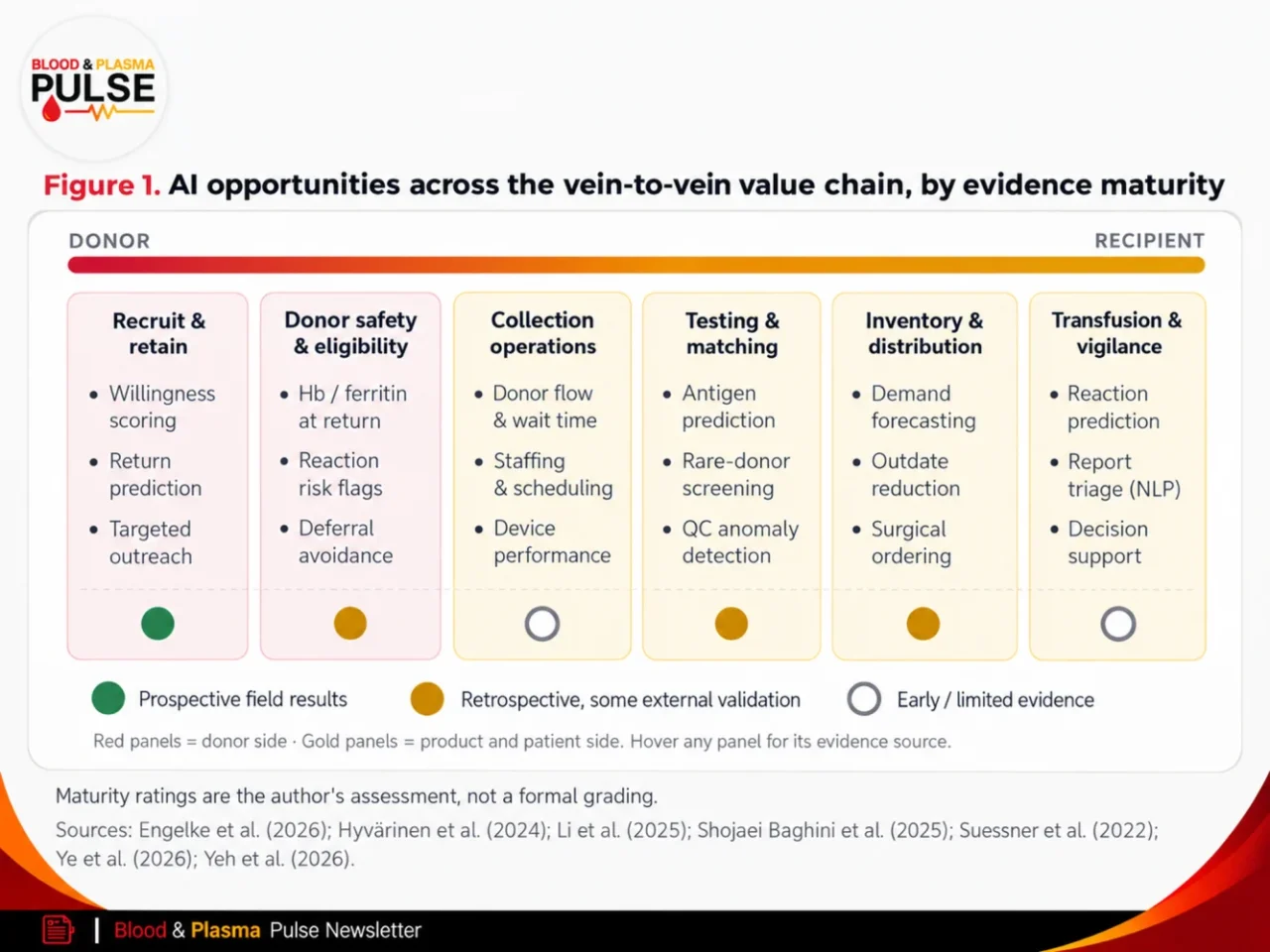
Seven places AI could earn its keep
1. Finding the right donor, not more donors
Donor organizations hold years of behavioural data: donation history, intervals, no-shows, eligibility outcomes and responses to outreach. AI makes precision donor engagement possible: knowing who is likely to respond, when, and through which channel.
A study across three Chinese cities tested a machine-learning recruitment framework prospectively against conventional methods over 13 rounds. Recruitment success rose by an average of 151.57 percent, and efficiency per message by 34.42percent (Ye et al., 2026). In Taiwan, model-selected donors returned at nearly four times the rate of the comparison group (Figure 2; Yeh et al., 2026).
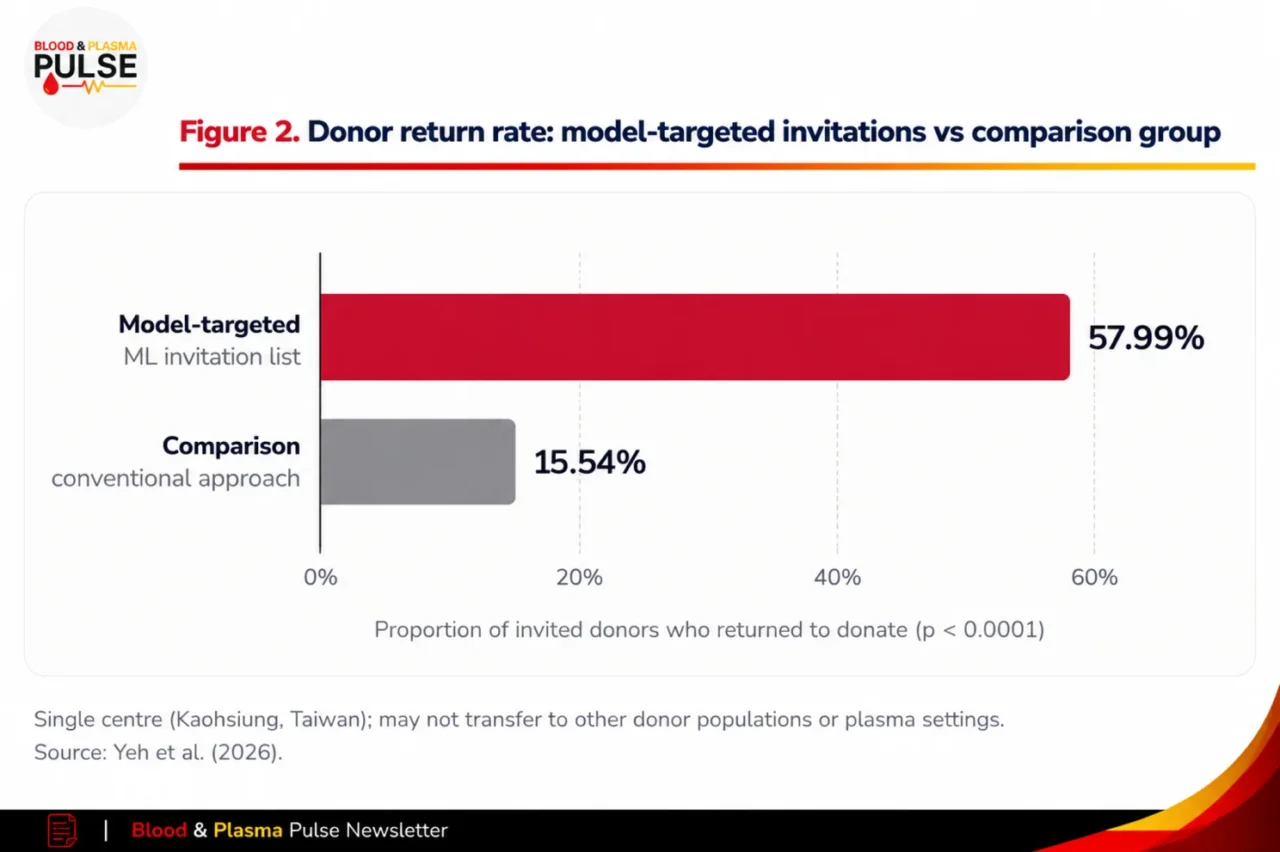
AI may not need to convince anyone to donate. It may simply help us find who is already willing to help, at the right time. One caveat: these models only work for donors already in the database, not first-timers (Ye et al., 2026).
2.From reacting to shortages to predicting demand
A 2026 systematic review analysed 24 studies forecasting transfusion demand, from the individual patient to the regional supply chain (Table 1; Engelke et al., 2026).
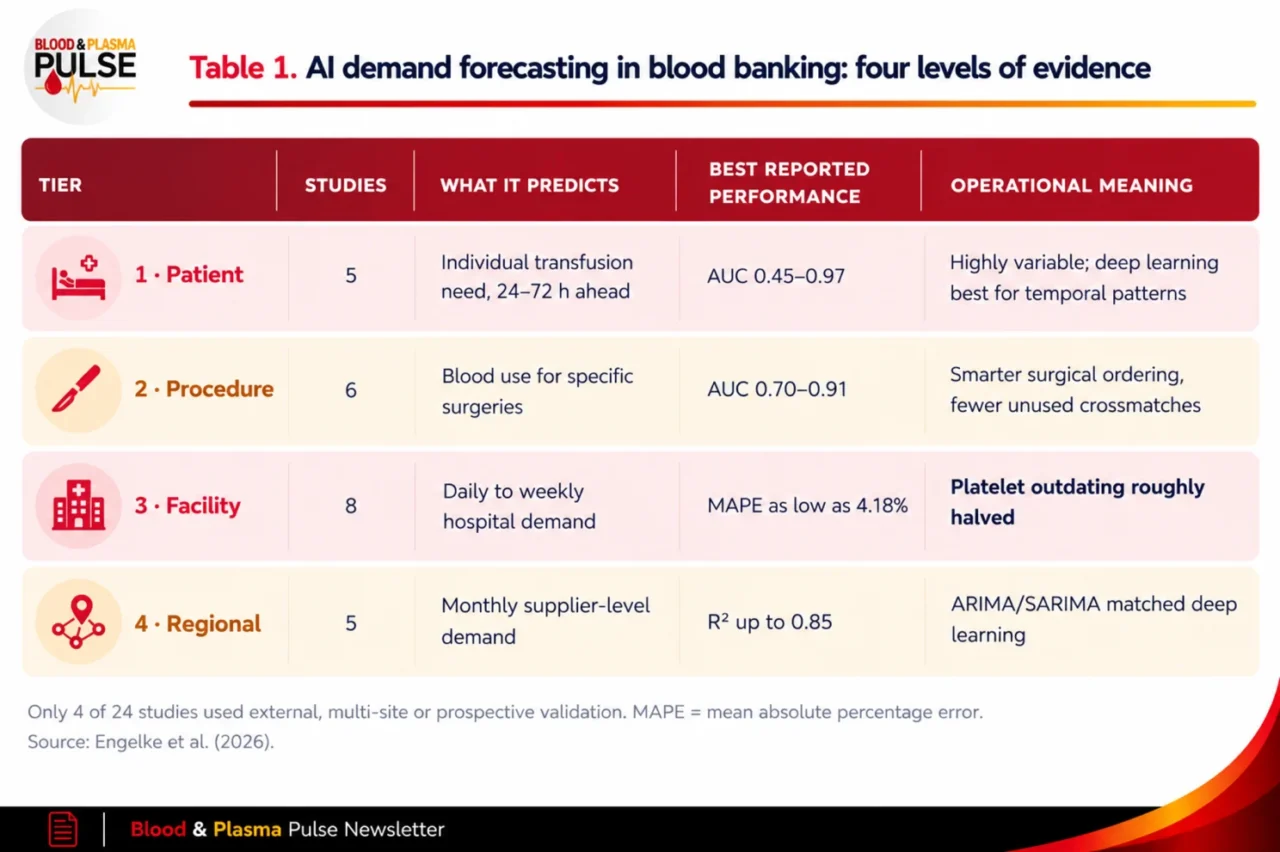
Accurate forecasting could connect functions that today run separately: demand, collection targets, recruitment, production and distribution.
Every unit represents a donor’s time and generosity. Reducing avoidable expiry is better stewardship of the donation itself.
3.A smarter donation experience
Arrival times, screening duration, chair utilization, staffing, reactions and return behaviour are each a KPI. Together they tell a story. AI could predict when wait times will spike, which staffing patterns produce the best flow, and which first-time donors are likely to return.
Peer-reviewed evidence here is thin; operators will likely move ahead of academia. But the shift is real: from asking “What happened yesterday?” to “What is likely to happen this afternoon, and what should we change now?”
4.A second set of eyes for quality
Deviations, CAPAs, complaints, audit findings, equipment events and trend reports often sit in separate systems. NLP for unstructured records and anomaly detection for product quality are among the most promising AI methods for exactly this kind of fragmented data (Raza et al., 2026). Are unrelated deviations across five centres the same process weakness?
The best use of AI may not be replacing the investigator. It may be showing the investigator where to look.
5.From blood type to precision transfusion
Random-forest models trained on Finnish biobank donors predicted 39 red cell antigens from standard genotyping data. Tested on 111,667 Danish donors, 34 models replicated with a median balanced accuracy of 97.1% (Hyvärinen et al., 2024). That enables screening entire donor populations for rare and antigen-negative donors, moving us from “Which blood type?” toward “Which product best matches this patient?”
6.Hemovigilance and donor safety could become predictive
A review of 24 studies found AI models predicting adverse transfusion reactions with AUROCs of 0.71 to 0.92, but none had evaluated an implemented active-management system (Shojaei Baghini et al., 2025). On the donor side, models predicting hemoglobin and ferritin at the next donation held up in external validation across the United States, South Africa and the Netherlands (Li et al., 2025), opening the door to individualized donation intervals.
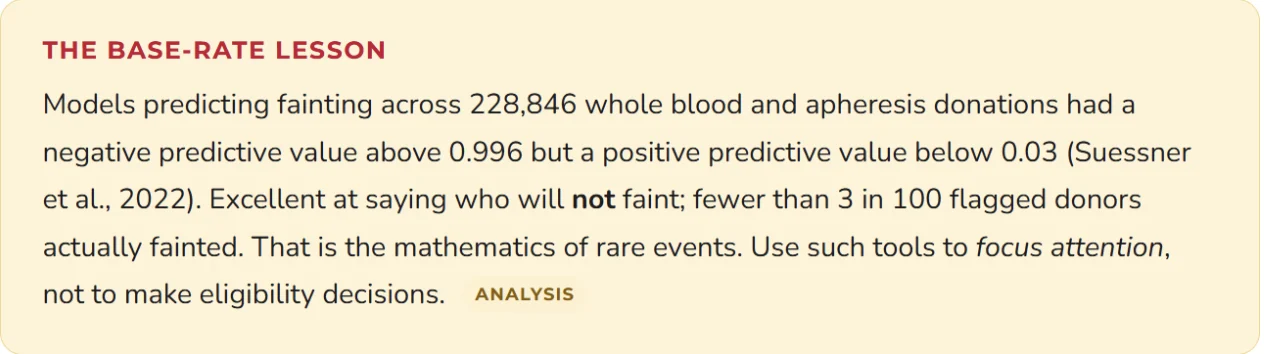
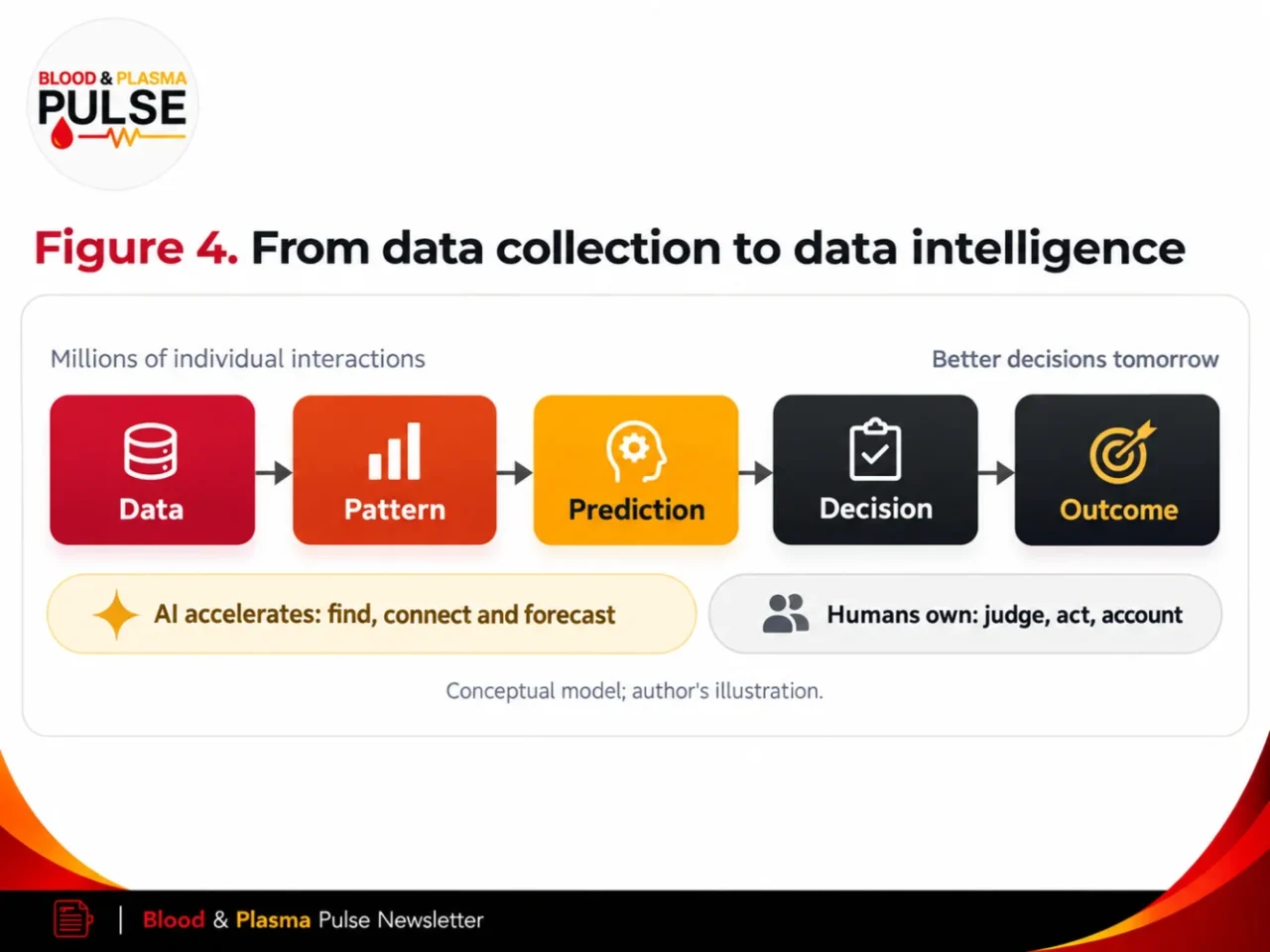
AI provides intelligence. Humans retain accountability.
7.Plasma may have the most interesting opportunity
Almost all the literature comes from whole blood and hospital transfusion. Yet plasma may be the better fit: frequent donors generate far more longitudinal data per person. A plasma network could use AI to predict donor return and lapse, anticipate hemoglobin and protein deferrals, optimize appointments and staffing, detect device patterns preceding reactions, and recognize quality trends across sites.
The advantage will not belong to whoever collects the most data, but to whoever learns to connect and use it responsibly.
The reality check
The deployment gap is as real as the opportunity (Figure 3).
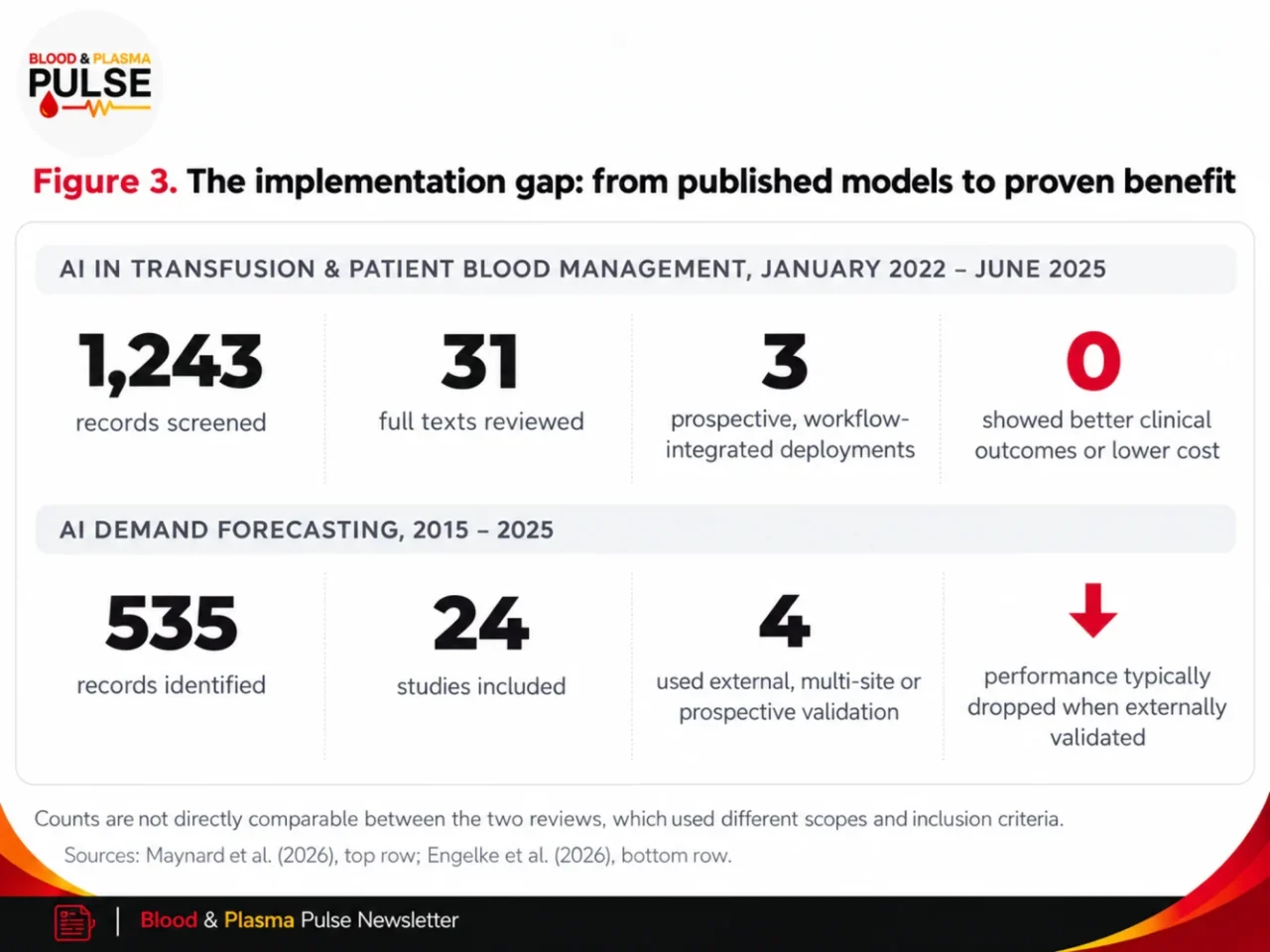
The few successes shared common enablers: a real clinical need, existing data infrastructure, interpretable models and early stakeholder engagement (Maynard et al., 2026).
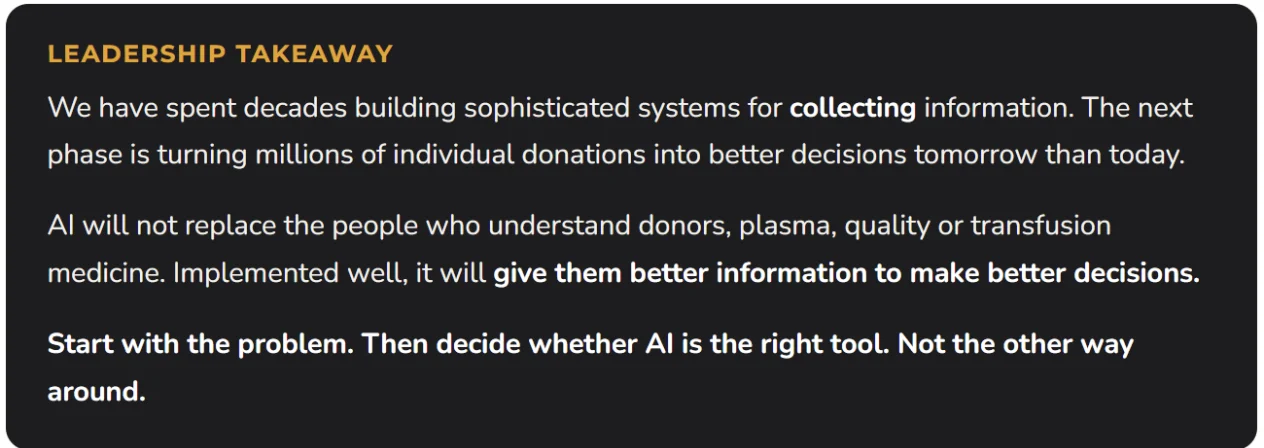
AI should solve a real problem, not become the project because it is fashionable.
Stakeholder perspectives
Donors gain fewer wasted trips but worry about privacy and being “scored.” Patients gain better-matched products but not opaque decisions about their care. Operators see higher return and less waste, against validation burden and unproven ROI. Clinicians fear alert fatigue; quality teams, models that change after validation; regulators, algorithms influencing eligibility without oversight. The answer is governance: performance monitoring, fairness audits, cybersecurity and transparent human oversight (Raza et al., 2026).
The leadership lens
The question is not ‘o we need an AI strategy?’ Everyone will say yes. The better question:
‘Which problem is valuable enough, measurable enough and data-rich enough for AI to solve?’
The implementation evidence adds two more tests: is it governable, and is it deployable (Table 2)?
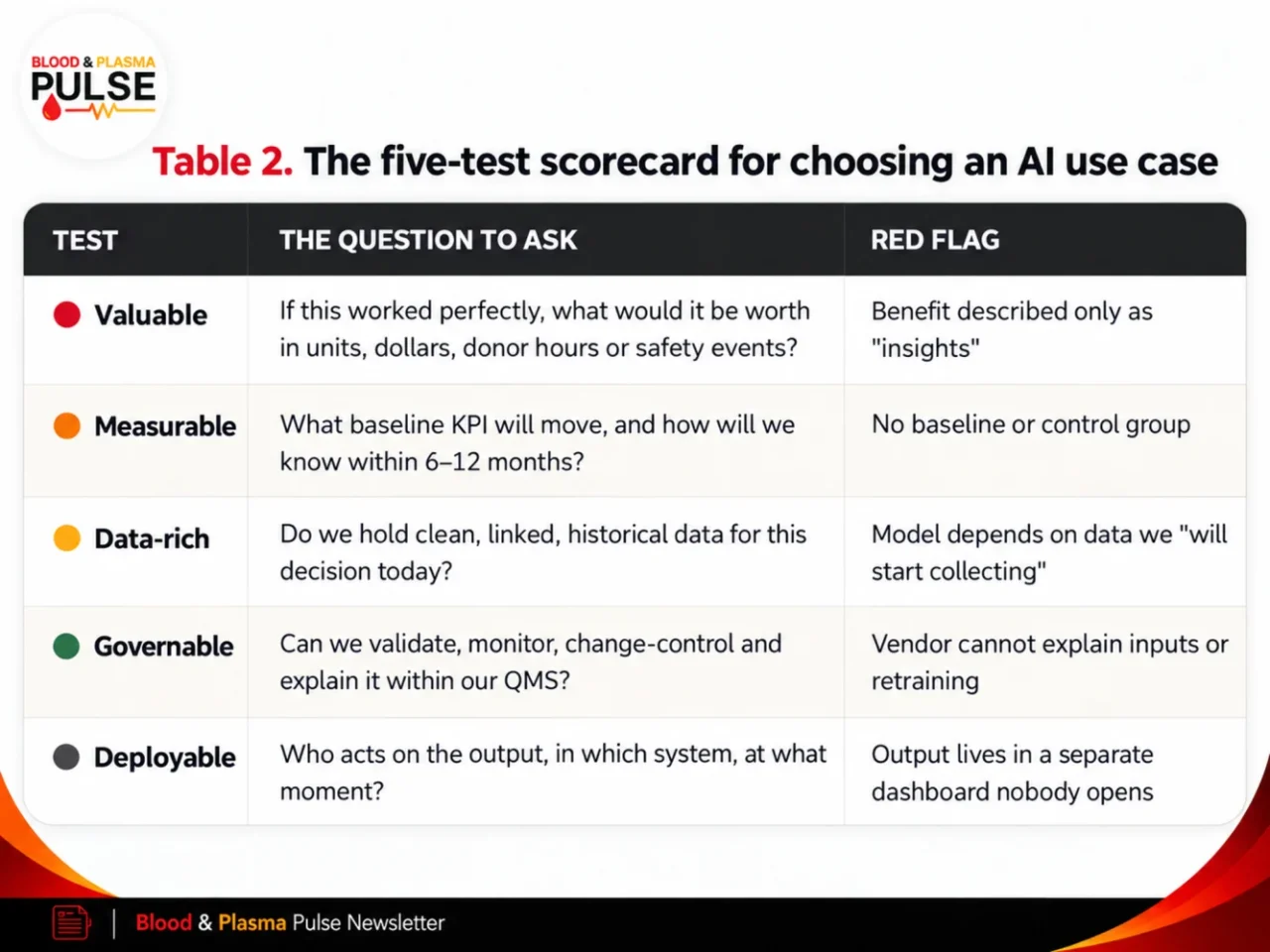
Applied honestly, this favours the unglamorous: donor return, deferral anticipation, short-dated inventory forecasting, quality trending.
The central tension
Our sector rightly validates every system touching donor eligibility or product release. AI models challenge that: performance drifts as populations change, and external validation often lowers it (Engelke et al., 2026). Move too slowly, and we leave shortages and waste on the table; move too fast, and a poorly validated model could damage donor trust for years. The answer is sequencing: start where errors are cheap and reversible, build governance there, then move to higher stakes.
What should happen next?
Regulators: clarify how GMP and computerized-system expectations apply to machine-learning models, including monitoring and retraining.
Operators: pick one or two use cases, run them against a control group for at least two quarters, and treat models as GMP-relevant from day one.
Fractionators: share demand signals so collection planning responds with less lag.
Hospitals: prioritize inventory forecasting and insist on external validation before relying on vendor models.
Researchers and associations: fill the plasma evidence gap and contribute to the global hemovigilance AI survey (AABB, 2026).
Over to you
If you could deploy AI in just ONE part of the blood or plasma value chain today, where would you start?
- Donor recruitment & retention
- Demand forecasting
- Inventory management
- Laboratory and matching
- Quality and hemovigilance
- Collection operations
- Clinical decision support “
Stay updated with Hemostasis Today.
-
Oct 29, 2026, 16:20Sherif Hamdy: NBTS Scientific Day Highlights Collaboration in Blood Transfusion Services and Laboratory Medicine
-
Oct 29, 2026, 16:20Ronak Mistry: Strengthening the Future of Hematology Through Mentorship
-
Oct 29, 2026, 16:16Clinical Insights and Patient Perspectives in the Upcoming ERIN Webinar – EHC
-
Oct 29, 2026, 16:14Nisha Zahid: Study Links Preeclampsia to Impaired Mesenchymal Stem Cell Function
-
Oct 29, 2026, 16:06Bruno Pougault: Evidence-Based Guidance for Perioperative Bleeding Management
-
Oct 29, 2026, 15:54Negar Saleh: Integrating Interpretability Into AI-Based Pulmonary Embolism Prediction
-
Oct 29, 2026, 15:53Shweta Tikoo: New Pathways of Macrophage Development From Embryonic Life to Adulthood
-
Oct 29, 2026, 15:40Daniel Messiha: AI-Integrated PERT Workflow Improves Pulmonary Embolism Care and Speeds Up Intervention
-
Oct 29, 2026, 15:36Brigitta Nicorici: Pregnancy and Laboratory Medicine