


Lainie Kazan’s Story and the Clinical Risks of Post-Injury Immobilization
For actress and singer Lainie Kazan, a seemingly straightforward foot injury in the early 1970s became a life-threatening medical emergency. After fracturing her foot and having it immobilized in a cast, Kazan developed deep vein thrombosis (DVT), which progressed to a pulmonary embolism (PE) before she could travel to Australia for work.
Her physician recognized the seriousness of her symptoms, and she subsequently spent more than a month in the hospital in critical condition.
Kazan survived the episode and later used her public profile to raise awareness of venous thromboembolism (VTE). Her story illustrates how an injury and restricted mobility can contribute to a potentially fatal complication, why seemingly nonspecific symptoms should not be dismissed, and how an individual experience can help communicate the importance of early recognition.
From a Foot Fracture to a Life-Threatening Blood Clot
In 1971, Kazan fractured her foot and had it placed in a cast. She was preparing to travel to Australia for a professional engagement when she began feeling unwell at the airport, initially interpreting her symptoms as something resembling influenza.
She contacted her physician, hoping to receive treatment for what she believed was an impending flu episode before continuing her journey. Instead, her physician recognized that her condition required urgent medical assessment and told her not to travel.
According to Kazan’s account, the physician suspected the problem during their telephone conversation and directed her to seek medical attention. The subsequent clinical assessment identified a pulmonary embolism associated with a blood clot originating in her lower extremity. The available reports do not provide a complete medical record or detailed diagnostic findings, but they establish that the episode was severe enough to require prolonged hospitalization.
The consequences were substantial: Kazan remained hospitalized in critical condition for more than a month. She later reflected that boarding the plane without recognizing the seriousness of her condition could have been fatal. Her experience demonstrates how a thrombotic event may evolve from a problem affecting one limb into a medical emergency involving the pulmonary circulation.
Understanding the Connection Between DVT and Pulmonary Embolism
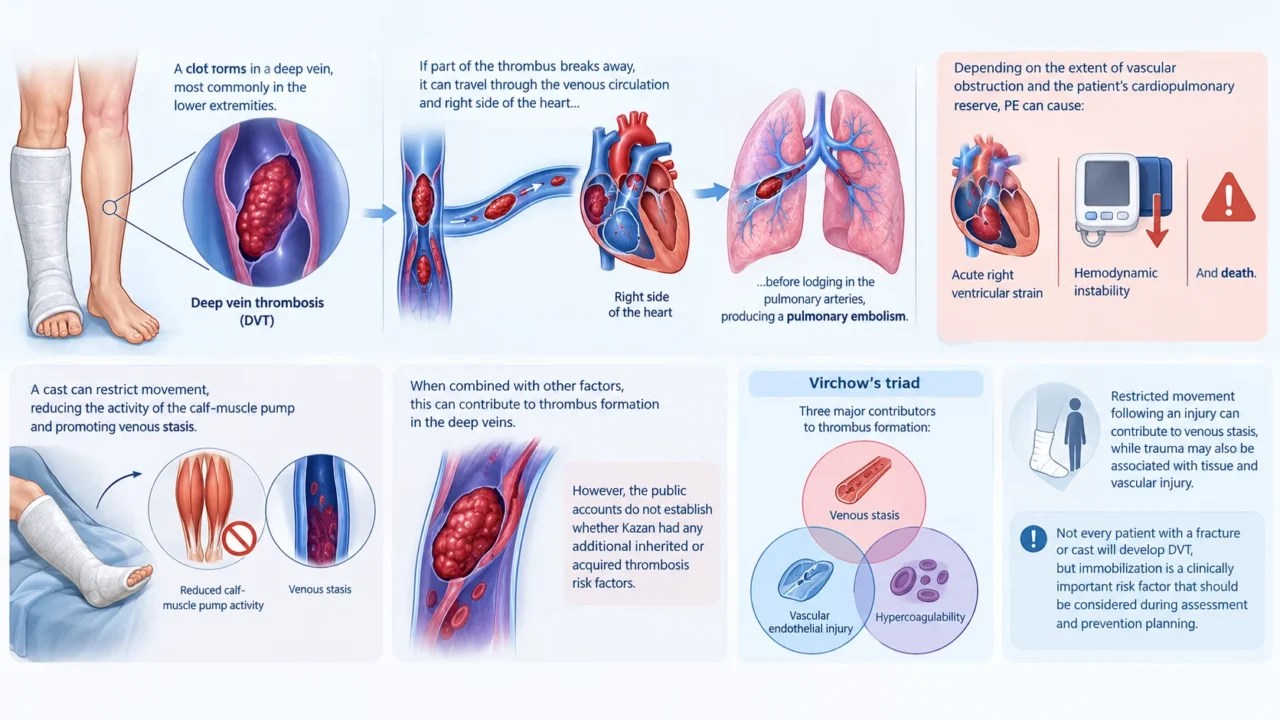
Deep vein thrombosis occurs when a blood clot forms in a deep vein, most commonly in the lower extremities. If part of the thrombus breaks away, it can travel through the venous circulation and right side of the heart before lodging in the pulmonary arteries, producing a pulmonary embolism. Depending on the extent of vascular obstruction and the patient’s cardiopulmonary reserve, PE can cause acute right ventricular strain, hemodynamic instability and death.
Kazan’s case illustrates this progression: a clot associated with her injured leg had reached her lungs by the time her physician recognized the emergency. A cast can restrict movement, reducing the activity of the calf-muscle pump and promoting venous stasis.
When combined with other factors, this can contribute to thrombus formation in the deep veins. However, the public accounts do not establish whether Kazan had any additional inherited or acquired thrombosis risk factors.
The relationship between immobilization and thrombosis is consistent with Virchow’s triad, which describes three major contributors to thrombus formation: venous stasis, vascular endothelial injury and hypercoagulability.
Restricted movement following an injury can contribute to venous stasis, while trauma may also be associated with tissue and vascular injury. Not every patient with a fracture or cast will develop DVT, but immobilization is a clinically important risk factor that should be considered during assessment and prevention planning.
Recognizing the Warning Signs Before a Medical Emergency
One important feature of Kazan’s story is that she initially attributed her symptoms to a flu-like illness rather than a thromboembolic complication. Her reported experience included feeling unwell and having a visibly swollen, discolored injured foot. These details do not establish a complete list of her symptoms, but they illustrate how an evolving thrombotic event may be mistaken for a less serious condition, particularly when a patient is already recovering from an injury.
Typical DVT symptoms include unilateral limb swelling, pain or tenderness, warmth and skin discoloration. However, some patients have few symptoms or no obvious clinical manifestations.
Symptoms suggestive of PE include sudden or unexplained shortness of breath, chest pain that may worsen with breathing, coughing up blood, rapid heart rate and syncope. Because these manifestations are nonspecific, clinicians must consider the patient’s history, risk factors and clinical presentation rather than relying on a single symptom.
Kazan’s physician recognized that her symptoms warranted action before she boarded the plane. Although the published account describes this as a telephone-based recognition of the emergency, it should not be interpreted as evidence that telephone assessment alone is sufficient to diagnose DVT or PE in other patients.
Suspected DVT generally requires diagnostic imaging, usually compression ultrasonography, while suspected PE is commonly evaluated with computed tomography pulmonary angiography when appropriate.
Why Immobilization After Injury Requires Clinical Attention
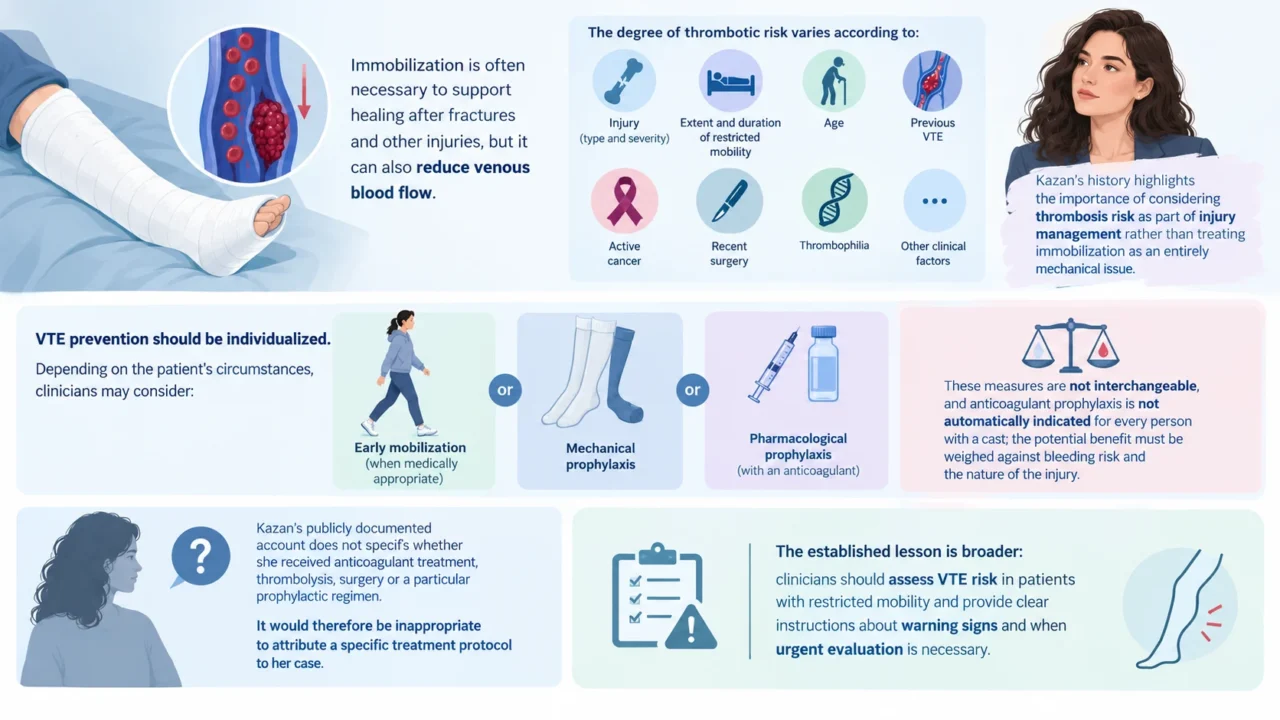
Immobilization is often necessary to support healing after fractures and other injuries, but it can also reduce venous blood flow. The degree of thrombotic risk varies according to the injury, the extent and duration of restricted mobility, age, previous VTE, active cancer, recent surgery, thrombophilia and other clinical factors.
Kazan’s history highlights the importance of considering thrombosis risk as part of injury management rather than treating immobilization as an entirely mechanical issue.
VTE prevention should be individualized. Depending on the patient’s circumstances, clinicians may consider early mobilization when medically appropriate, mechanical prophylaxis or pharmacological prophylaxis with an anticoagulant. These measures are not interchangeable, and anticoagulant prophylaxis is not automatically indicated for every person with a cast; the potential benefit must be weighed against bleeding risk and the nature of the injury.
Kazan’s publicly documented account does not specify whether she received anticoagulant treatment, thrombolysis, surgery or a particular prophylactic regimen. It would therefore be inappropriate to attribute a specific treatment protocol to her case.
The established lesson is broader: clinicians should assess VTE risk in patients with restricted mobility and provide clear instructions about warning signs and when urgent evaluation is necessary.
Recovery After a Critical Pulmonary Embolism
Kazan survived the episode after spending more than a month in the hospital in critical condition. Her recovery allowed her to continue her professional career, and she later became publicly associated with efforts to improve awareness of DVT. The sources reviewed establish her prolonged hospitalization and survival, but they do not document the precise course of her treatment, the duration of anticoagulation or whether she experienced long-term complications.
Surviving an acute PE does not necessarily mean that every consequence of VTE has disappeared. Some patients experience recurrent venous thromboembolism, post-thrombotic syndrome following DVT or persistent exercise intolerance and breathlessness after PE; a smaller proportion develop chronic thromboembolic pulmonary hypertension.
These are recognized potential outcomes of VTE, not complications that have been established in Kazan’s individual case.
Long-term management after VTE depends on the provoking circumstances, recurrence risk, bleeding risk and the patient’s overall health. Anticoagulation is central to the treatment of most acute DVT and PE cases, with the choice of agent and duration determined by clinical assessment.
Follow-up also provides an opportunity to review recurrence prevention, assess persistent symptoms and discuss risk during future periods of immobilization or travel.
Turning a Personal Experience Into Public Awareness
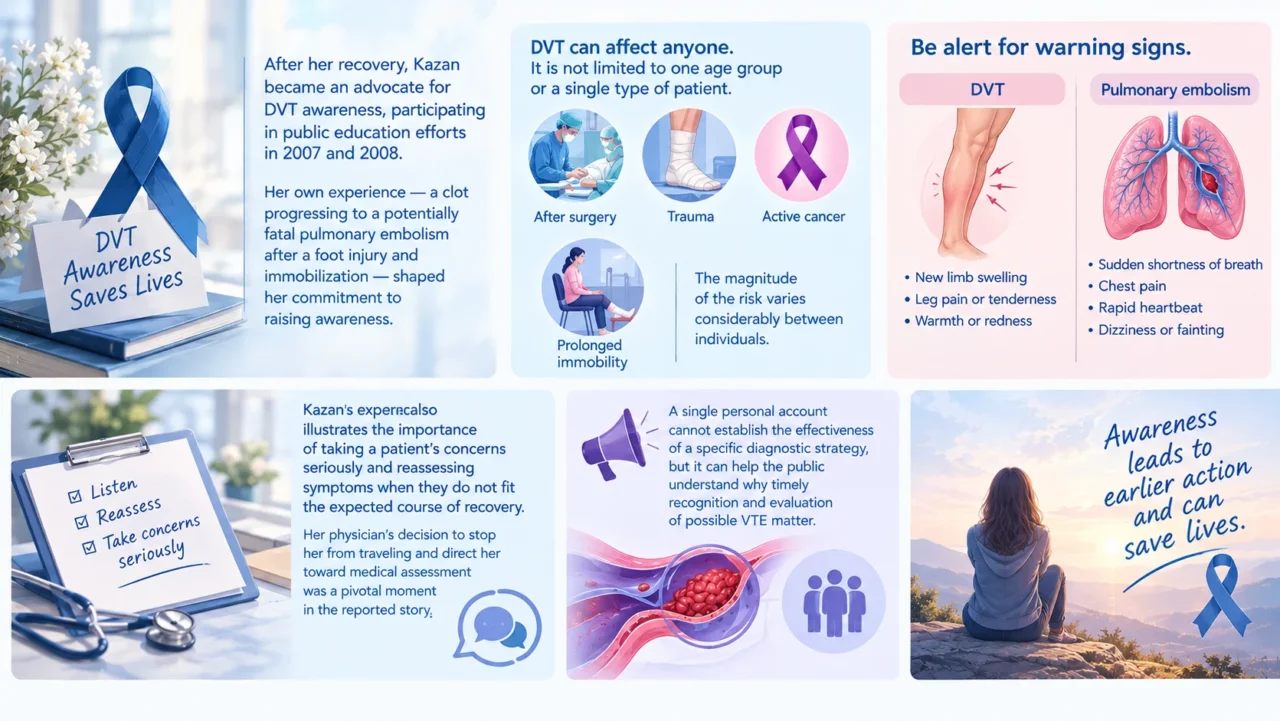
After her recovery, Kazan became an advocate for DVT awareness. In 2007 and 2008, she participated in public education efforts intended to help people recognize the signs, symptoms and risk factors of blood clots. Her involvement was rooted in her own experience of a clot progressing to a potentially fatal pulmonary embolism after a foot injury and a period of immobilization.
Her public messaging emphasized that DVT is not restricted to one age group or a single type of patient. People recovering from surgery, experiencing trauma, living with active cancer or facing prolonged immobility may have an elevated risk, although the magnitude of that risk varies considerably.
Awareness is especially important when a person develops new limb swelling or pain, or symptoms that could indicate pulmonary embolism.
Kazan’s experience also illustrates the importance of taking a patient’s concerns seriously and reassessing symptoms when they do not fit the expected course of recovery. Her physician’s decision to stop her from traveling and direct her toward medical assessment was a pivotal moment in the reported story.
Although a single personal account cannot establish the effectiveness of a particular diagnostic strategy, it can help the public understand why timely recognition and evaluation of possible VTE matter.
The Clinical Significance of Lainie Kazan’s Story
The central clinical lesson is that a relatively common event, such as a foot fracture requiring immobilization, may be followed by a serious thromboembolic complication.
DVT can remain unrecognized until a patient develops symptoms of PE, and pulmonary embolism can be life-threatening even when the initial presentation appears nonspecific. Prevention, clinical vigilance and timely diagnostic evaluation are therefore important components of care for patients with relevant risk factors.
Kazan’s story is also a reminder that clinical outcomes depend not only on identifying risk factors but also on recognizing when a patient’s condition has changed. Her physician’s response, followed by hospital care, was associated with her survival in the published account. For healthcare professionals, the case reinforces the importance of educating patients about possible thrombotic complications and providing clear guidance on when to seek urgent care.
Ultimately, Kazan transformed a frightening personal experience into an opportunity to educate others about venous thromboembolism. Her history does not provide a complete medical record, and it cannot establish the details of her treatment or long-term health status.
Nevertheless, it offers a compelling example of why DVT awareness matters: recognizing a potential blood clot early may help prevent a serious complication and can, in some circumstances, save a life.
FAQ
1. What is deep vein thrombosis (DVT)?
Deep vein thrombosis is the formation of a blood clot in a deep vein, most commonly in the lower extremities. It can obstruct venous blood flow and may lead to complications, including pulmonary embolism, if part of the clot travels to the lungs.
2. What happened to Lainie Kazan?
Kazan fractured her foot in the early 1970s and had it immobilized in a cast. Before a planned trip to Australia, she became unwell, and her physician recognized a potentially serious problem. The clot had progressed to a pulmonary embolism, and she spent more than a month hospitalized in critical condition.
3. How was Lainie Kazan’s foot injury related to her blood clot?
The published reports describe her DVT in the context of a fractured foot and immobilization in a cast. Restricted mobility can promote venous stasis, which is one of the major contributors to thrombosis. The reports do not establish whether she had additional risk factors.
4. What is the difference between DVT and pulmonary embolism?
DVT is a clot in a deep vein, usually in the leg, whereas PE occurs when a clot or part of a clot obstructs the pulmonary arteries. A PE can impair gas exchange and strain the right ventricle, and severe cases may cause hemodynamic instability or death.
5. What are the warning signs of DVT?
Common signs include swelling in one limb, pain or tenderness, warmth and skin discoloration. However, DVT may also occur without obvious symptoms. New or unexplained symptoms should be assessed clinically, particularly in people with recognized risk factors.
6. Which symptoms may indicate pulmonary embolism?
Possible symptoms include sudden shortness of breath, chest pain that worsens with breathing, rapid heart rate, coughing up blood and fainting. Suspected PE requires urgent medical assessment because it can be life-threatening.
7. Does everyone who wears a cast develop DVT?
No. Immobilization is a risk factor, but the absolute risk varies with the type of injury, the duration of restricted mobility and individual patient characteristics. Clinicians should assess whether preventive measures are appropriate rather than assuming that every patient requires anticoagulant prophylaxis.
8. How are DVT and pulmonary embolism diagnosed?
Compression ultrasonography is commonly used to diagnose DVT. Computed tomography pulmonary angiography is a standard imaging test for PE, while ventilation-perfusion scanning may be appropriate in selected circumstances. The diagnostic approach depends on clinical probability, contraindications and the available investigations.
9. How are DVT and pulmonary embolism treated?
Anticoagulants are the mainstay of treatment for most patients with acute DVT or PE because they prevent clot extension and reduce the risk of further thromboembolic events. The choice and duration of treatment depend on the clinical presentation, recurrence risk and bleeding risk. The available reports do not specify which treatments Kazan received.
10. What is the key clinical lesson from Lainie Kazan’s experience?
Her experience highlights how DVT following an injury and restricted mobility can progress to a potentially fatal pulmonary embolism. It underscores the importance of recognizing warning signs, assessing thrombotic risk and seeking timely medical evaluation. Her subsequent public awareness work helped bring attention to a condition that may otherwise go unrecognized.
Written by Hermine Sayiyan, MD
Stay updated with Hemostasis Today.
-
Oct 29, 2026, 16:39A Scholarship Creating Opportunities for Women with Bleeding Disorders – WFH
-
Oct 29, 2026, 16:30Wendy Disbro: AABB Highlights the People and Experience Behind Transfusion Medicine
-
Oct 29, 2026, 16:23Reza Shojaei: Artificial Intelligence in Blood Donation
-
Oct 29, 2026, 16:20Sherif Hamdy: NBTS Scientific Day Highlights Collaboration in Blood Transfusion Services and Laboratory Medicine
-
Oct 29, 2026, 16:20Ronak Mistry: Strengthening the Future of Hematology Through Mentorship
-
Oct 29, 2026, 16:16Clinical Insights and Patient Perspectives in the Upcoming ERIN Webinar – EHC
-
Oct 29, 2026, 16:14Nisha Zahid: Study Links Preeclampsia to Impaired Mesenchymal Stem Cell Function
-
Oct 29, 2026, 16:06Bruno Pougault: Evidence-Based Guidance for Perioperative Bleeding Management
-
Oct 29, 2026, 15:54Negar Saleh: Integrating Interpretability Into AI-Based Pulmonary Embolism Prediction