


Jesus Ardila Novoa: Why HbF Levels and Hydroxyurea Absorption Matter in Children With SCA
Jesus Ardila Novoa, Pediatric Hematologist and Oncologist at Club Noel Children’s Hospital Foundation, shared a post on LinkedIn:
“A number that changes a child’s outcome.
There is a moment in pediatric hematology where a lab result stops being a data point and becomes a clinical decision. For children with sickle cell anemia on hydroxyurea, that moment arrives with a single number: fetal hemoglobin.
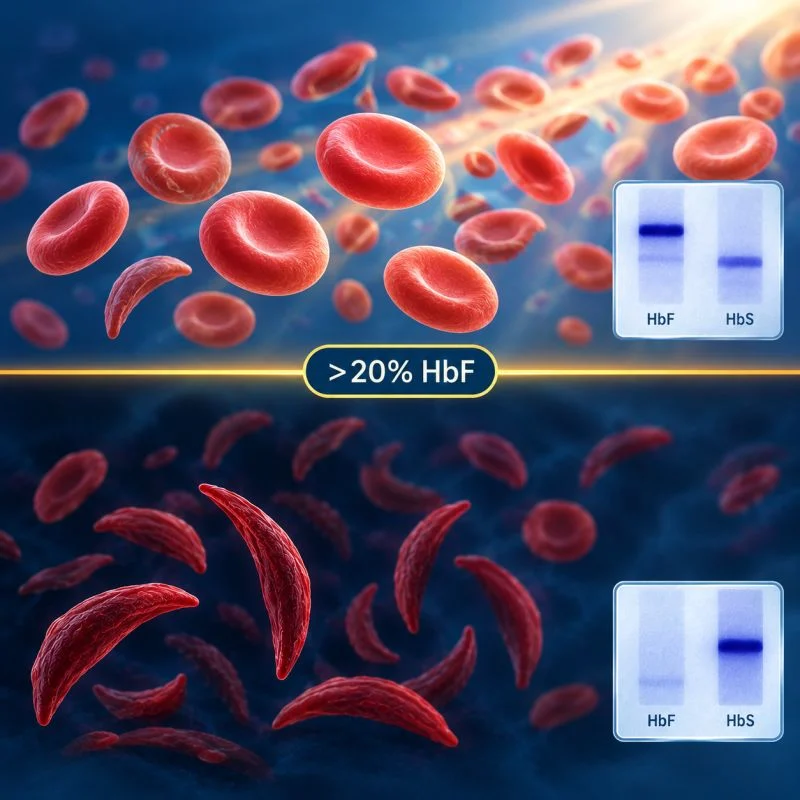
The HUSTLE study – 230 children, 610 patient-years of prospective follow-up at St. Jude – established something that should be on the wall of every clinic managing these patients: when HbF falls at or below 20%, children have twice the odds of hospitalization for any reason, twice the risk of vaso-occlusive crises and acute chest syndrome, and four times the odds of being admitted for fever.
Above that threshold, those numbers reverse. Not gradually — abruptly.
The threshold is real, it is clinically meaningful, and it is measurable. (Estepp et al., Am J Hematol, 2017)
This is not an academic endpoint. This is a child who goes home instead of to the ICU.
The natural next question — one that a 2026 pharmacokinetic study from Strasbourg has begun to answer — is why some children reach that threshold and others don’t, even at equivalent doses.
In the OPTIMDREP trial, 22 pediatric patients revealed something quietly important: not all children absorb hydroxyurea the same way.
Rapid absorbers — those who peak within the first hour — showed significantly higher MCV, lower reticulocyte counts, and a meaningful trend toward higher HbF percentages. Their bone marrow was simply seeing more drug, faster, at the moments that matter for erythropoiesis.
The striking part: this pharmacokinetic advantage came without any increase in myelosuppression. Same drug. Same dose range. Different biological fate. (Sabo et al., Pharmaceutics, 2026)
Put these two findings together and you have a clinical mandate that goes beyond the prescription pad. Measuring HbF via electrophoresis is not a routine box to check — it is the only way to know whether the drug is doing what the child needs it to do.
And when it isn’t — when a patient remains persistently below 20% at an adequate, well-monitored dose — the science is now telling us that the next question isn’t simply ‘should we increase?’
It is ‘what does this patient’s pharmacokinetic profile actually look like?’
We have had the therapeutic tool for decades. We are still learning the precision with which to use it.”
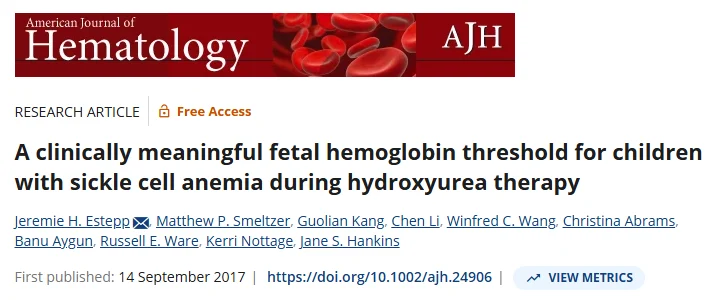
Title 1: A clinically meaningful fetal hemoglobin threshold for children with sickle cell anemia during hydroxyurea therapy
Authors: Jeremie H. Estepp, Matthew P. Smeltzer, Guolian Kang, Chen Li, Winfred C. Wang, Christina Abrams, Banu Aygun, Russell E. Ware, Kerri Nottage, Jane S. Hankins
Read the Full Article on American Jounal of Hematology
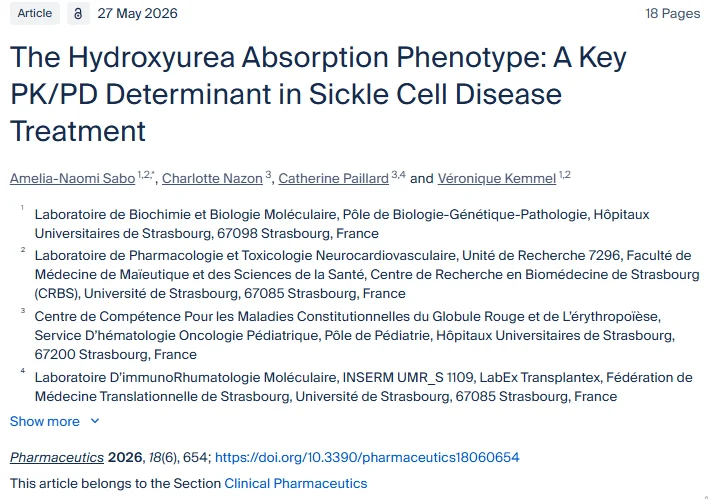
Title 2: The Hydroxyurea Absorption Phenotype: A Key PK/PD Determinant in Sickle Cell Disease Treatment
Authors: Amelia-Naomi Sabo, Charlotte Nazon, Catherine Paillard, Véronique Kemmel
Read the Full Article on Pharmaceutics
Stay updated with Hemostasis Today.
-
Oct 30, 2026, 23:56Laboratory Testing and Interpretation in Modern Haemophilia Care – South African Haemophilia Foundation
-
Oct 30, 2026, 23:41Ana Paula Tagliari: Presenting a First-in-Human Experience With Mechanical Thrombectomy at TCT 2026
-
Oct 30, 2026, 23:38Alok Khorana: The Role of Platelets in Immune Suppression in Primary Brain Tumors
-
Oct 30, 2026, 23:34W. Alberto Sifuentes Giraldo: Temporal Structure of Cardiovascular and Thromboembolic Risk in AAV
-
Oct 30, 2026, 23:33Obi Light Ogbonnia: I Gifted Him My Isi Agu, and He Gifted My Family the Sun
-
Oct 30, 2026, 17:43Santagata Davide: Can Targeting Inflammation Help Prevent Thrombosis?
-
Oct 30, 2026, 17:38Patrick Ellsworth: Supporting Patients and Families Through Bleeding Disorders Awareness and Community Initiatives
-
Oct 30, 2026, 17:33Ed Shovelin: Comparative Hemostatic Performance of CRP-A and Equine Fibrillar Collagen
-
Oct 30, 2026, 16:52Tosin Ola: A New Era in Sickle Cell Disease Treatment and the Question of Access