


Alejandro González Veliz: Does PCI Change The Long-Term Outcome In Stable Coronary Artery Disease?
Alejandro González Veliz, Interventional Cardiologist at Institute of Cardiology and Cardiovascular Surgery, shared a post on LinkedIn:
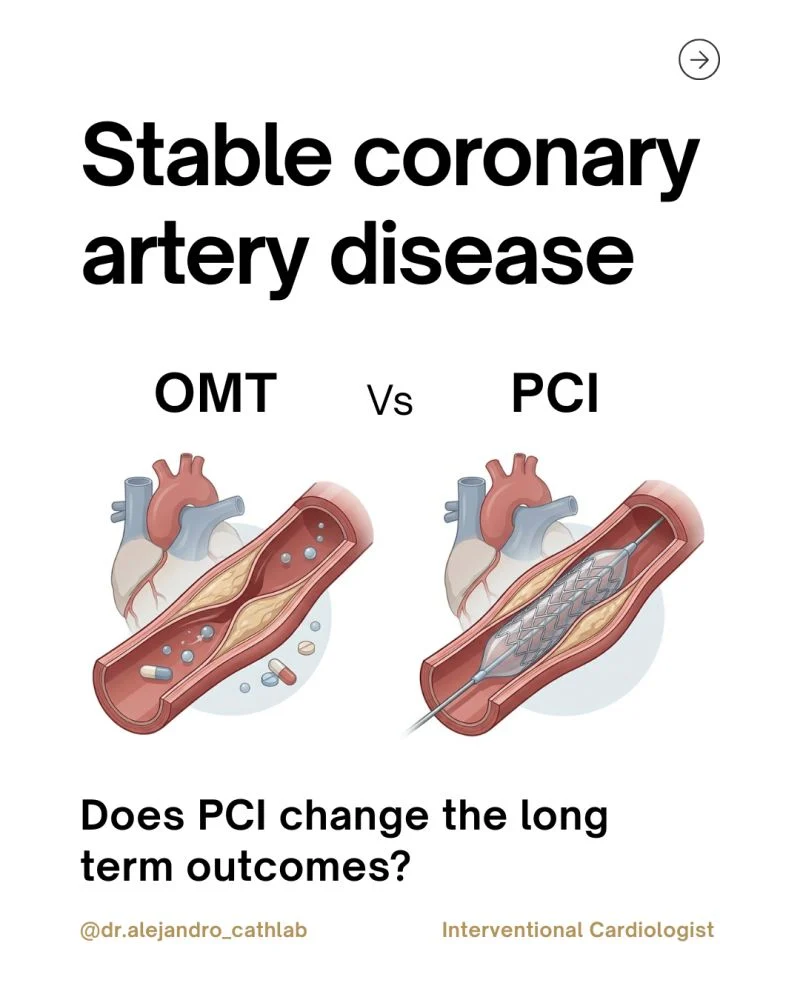
“Does PCI Change The Long-Term Outcome In Stable Coronary Artery Disease?
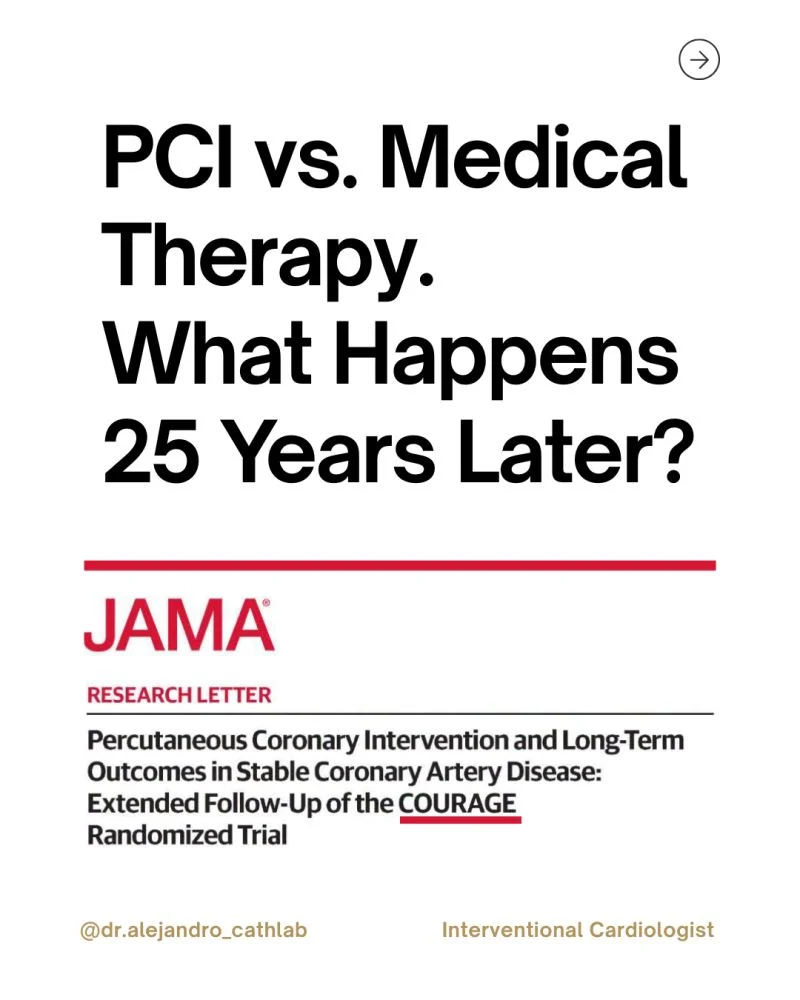
A new extended follow-up analysis of the COURAGE trial, published in JAMA (November 2026), revisits one of the most important questions in interventional cardiology: does an initial PCI strategy provide a long-term prognostic benefit when added to optimal medical therapy (OMT)?
What did the study find?
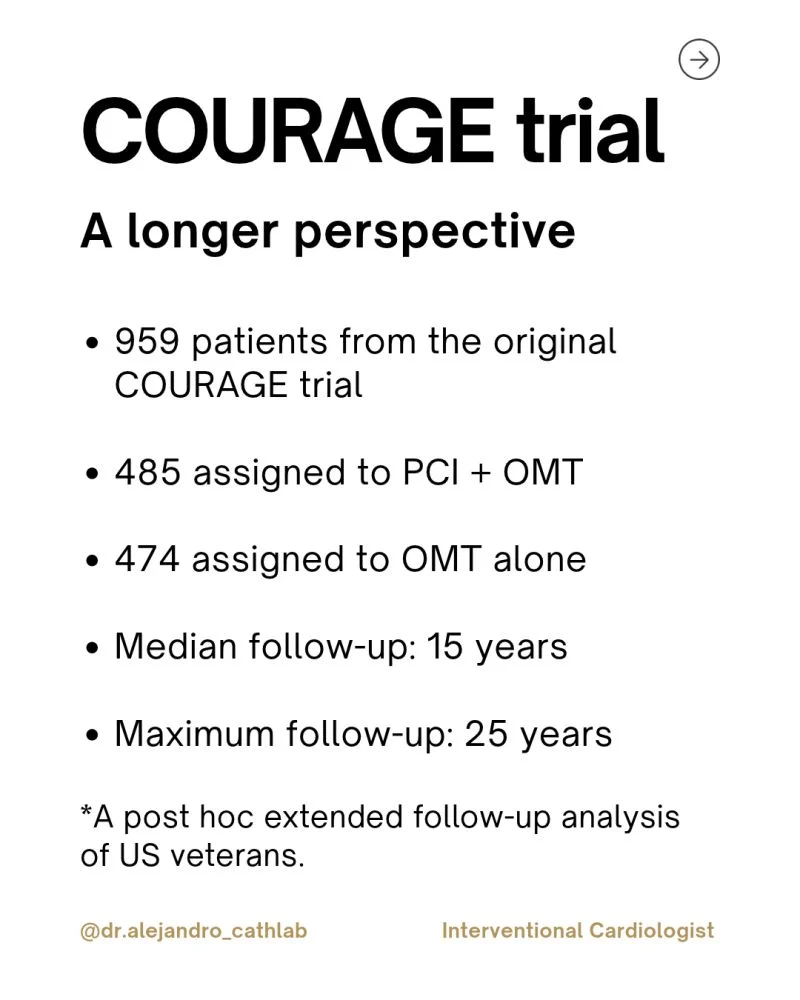
Researchers followed 959 veterans from the original COURAGE trial, with a median follow-up of 15 years and a maximum follow-up of 25 years.
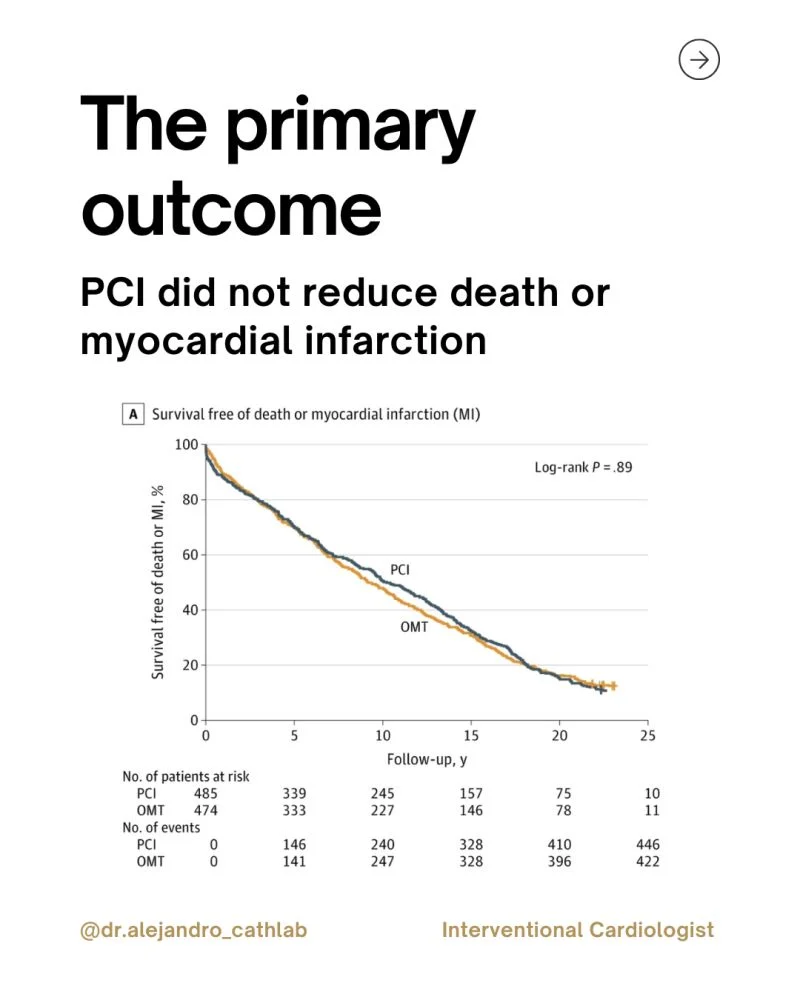
The results showed no statistically significant differences between PCI and OMT and OMT alone:
- Death or MI: 91.0% vs. 93.3% (HR 1.01; P = 0.89).
- All-cause mortality: 83.9% vs. 82.2% (HR 0.98).
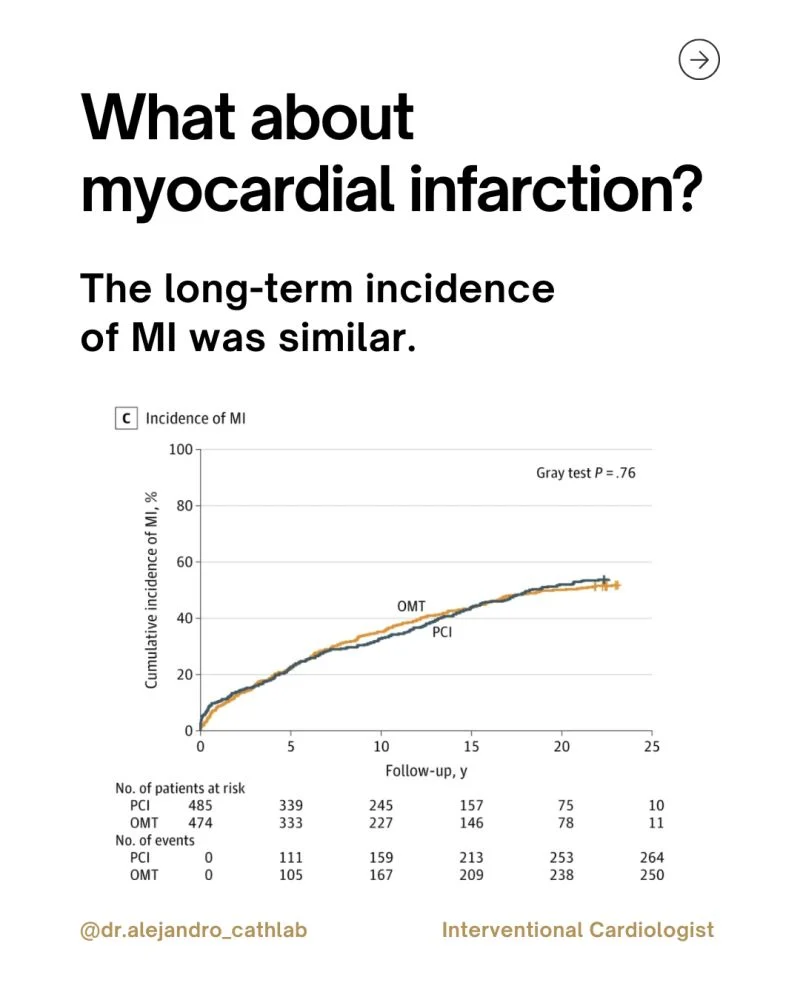
- Myocardial infarction: 54.6% vs. 54.0% (HR 1.01).
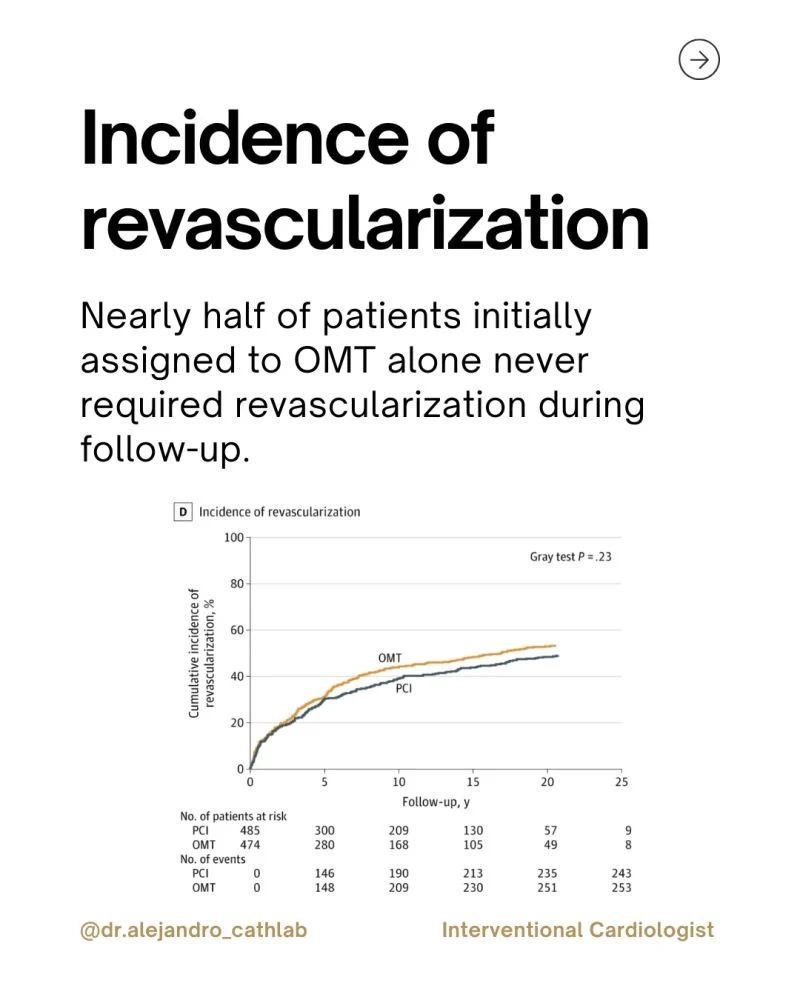
Interestingly, nearly half of the patients initially assigned to OMT alone never required coronary revascularization during follow-up.
Important considerations
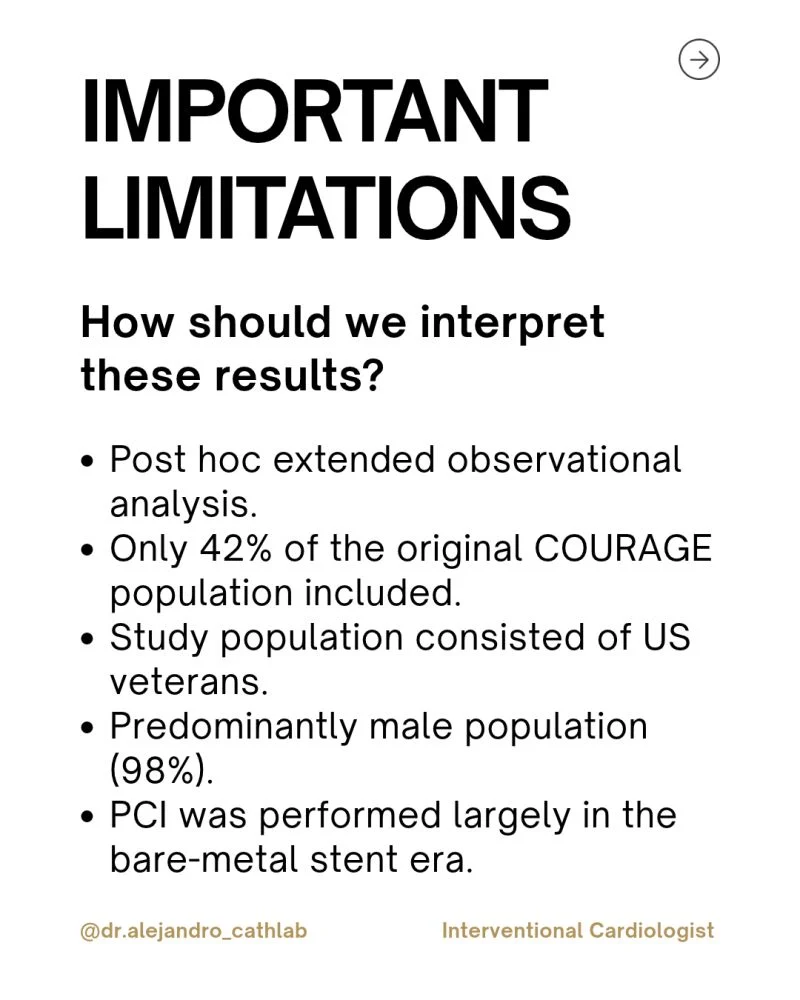
These findings come from a post hoc extended observational analysis involving only 42% of the original COURAGE population.
Furthermore, the study reflects an earlier PCI era, predominantly involving bare-metal stents.
Therefore, these results should not be interpreted as evidence that contemporary PCI has no value, nor as proof of equivalence between strategies.
The clinical message
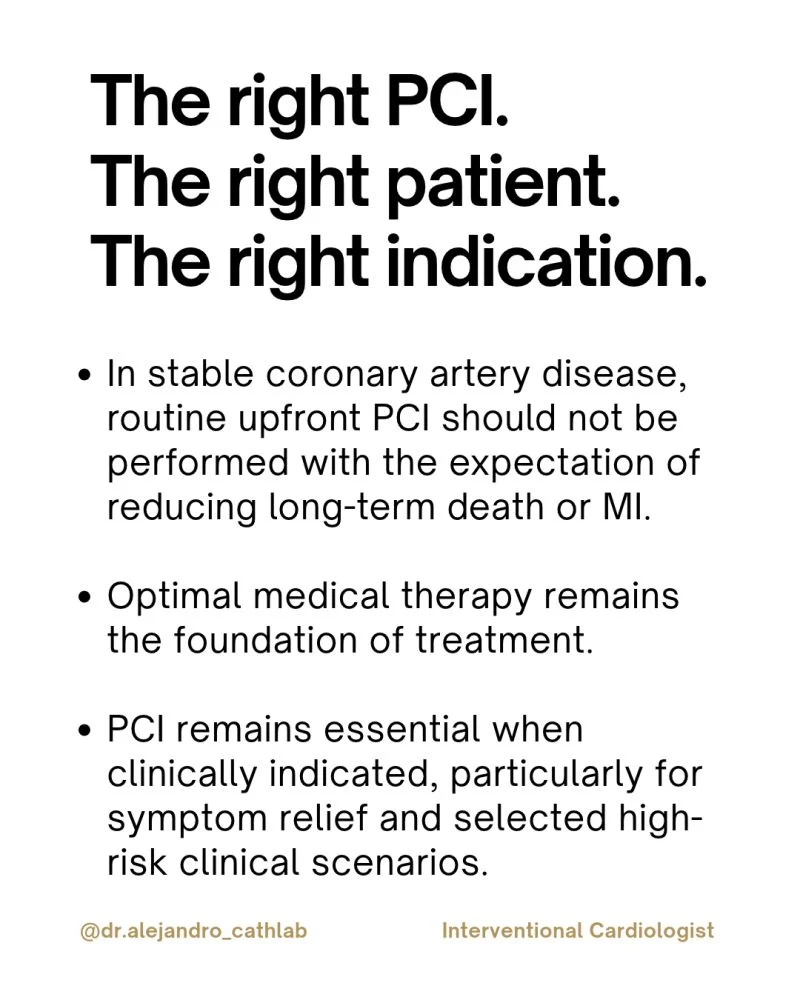
In stable coronary artery disease, routine upfront PCI should not be expected to reduce long-term mortality or myocardial infarction when added to optimal medical therapy.
PCI remains an important treatment for appropriately selected patients, particularly when symptom relief is needed.
Our goal should not simply be to achieve an excellent angiographic result, but to improve outcomes that truly matter to our patients.
A question for interventional cardiologists: Are we sometimes focusing too much on the angiographic result and not enough on the clinical indication?”
Stay updated with Hemostasis Today.
-
Nov 11, 2026, 15:42Tareq Abadl: The Clinical Impact of Kell Alloimmunization
-
Nov 11, 2026, 15:25Preparing for the SoHO Regulation – EBA Board Convenes in Vienna – European Blood Alliance
-
Nov 11, 2026, 15:20Vaidehi Prasanth: IV Iron in Heart Failure – Exploring Hospitalisation Benefits vs. Infection Risk in Open Heart
-
Nov 11, 2026, 15:18Stefan Prendić: Can Algorithms Support Antibody Identification in Immunohematology?
-
Nov 11, 2026, 15:12Perioperative Challenges in Hemophilia Patients on Rebalancing Therapies
-
Nov 11, 2026, 15:03Maria Elisa Mancuso: World-Renowned Faculty and 33 Global Participants Unite at Hemophilia Academy 2026
-
Nov 11, 2026, 15:01Hassan Raza: The JAK2 V617F Revolution
-
Nov 11, 2026, 14:57Edward Lee Carter: Factor Xla Inhibition Enters Clinical Practice – FDA Approval of Asundexian
-
Nov 11, 2026, 14:45ITP Is More Than a Platelet Count: Why Patient Perspectives Matter – ITP Australia and New Zealand