


Abdul Mannan/LinkedIn
Jun 27, 2026, 14:01
Abdul Mannan: DOACs in Cancer-Associated VTE – When to Avoid Them, And When LMWH Wins
Abdul Mannan, Consultant Haematologist at Betsi Cadwaladr University Health Board, shared a post on LinkedIn:
“‘A DOAC is the right answer for cancer clots, until it suddenly isn’t. Here are the lines you don’t cross.’
DOACs have quietly become first-line for many cancer-associated clots. But reach for one in the wrong patient and you can cause the bleed you were trying to prevent.
NCCN 2026 splits the cautions into two groups. Worth knowing both cold.
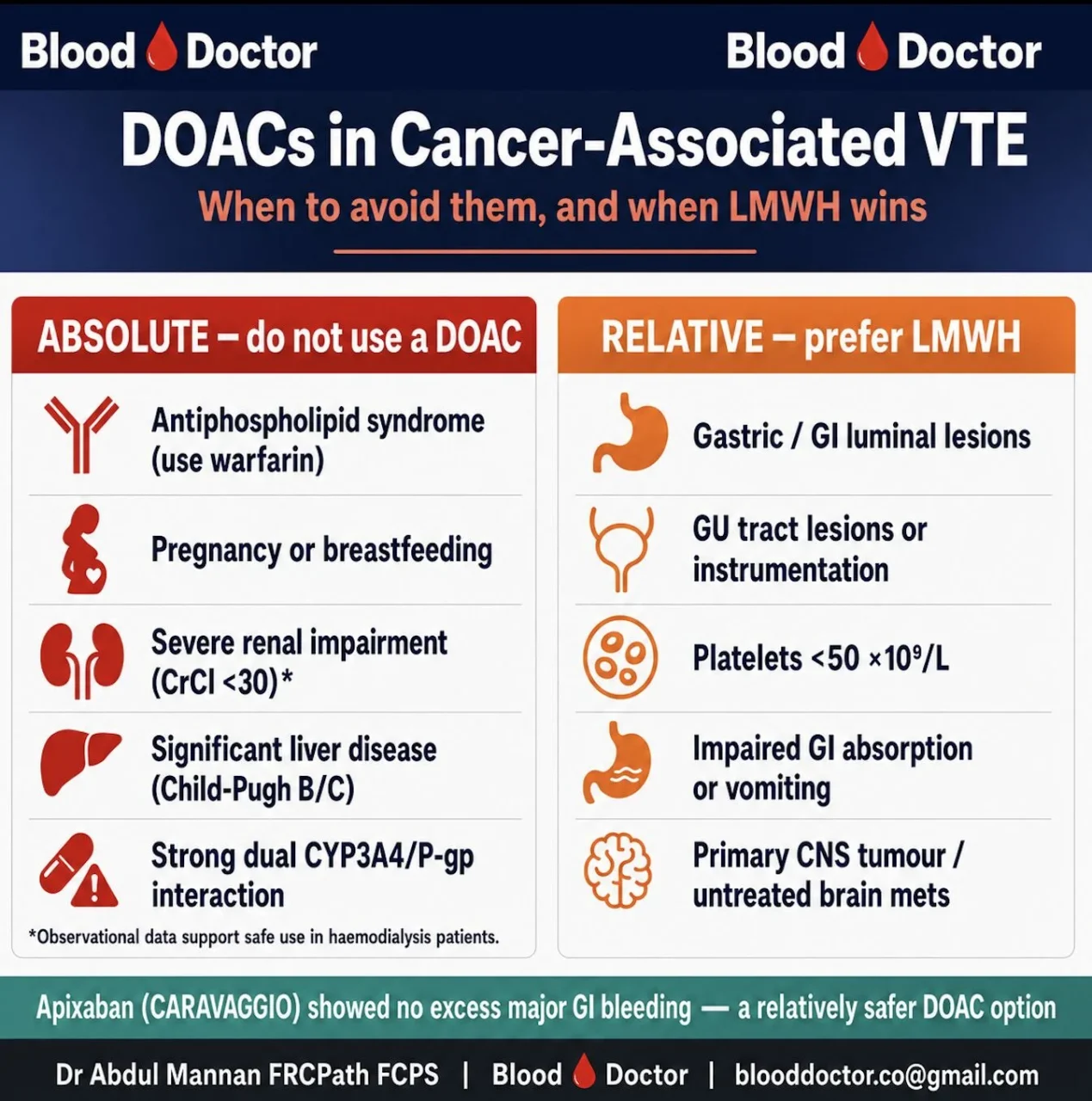
Absolute, pick another drug:
- Antiphospholipid syndrome, especially triple-positive. Warfarin still wins here.
- Pregnancy or breastfeeding.
- CrCl under 30 mL/min.
- Child-Pugh B/C liver disease.
- Strong dual CYP3A4 and P-gp interactions.
Relative, prefer LMWH:
- Luminal GI or gastro-oesophageal lesions. Edoxaban and rivaroxaban raised GI bleeding in Hokusai VTE Cancer and SELECT-D. Apixaban looked kinder on the gut in CARAVAGGIO.
- Genitourinary tract lesions or recent instrumentation.
- Platelets under 50.
- Poor gut absorption, or vomiting, which hits up to half of cancer patients.
- Primary brain tumours or untreated brain metastases.
The pattern is simple. If the drug cannot be absorbed, cleared, or kept away from a raw mucosal surface, the oral route stops being the clever choice.
Which of these trips people up most on your wards?”
Stay updated with Hemostasis Today.
-
Sep 29, 2026, 17:31Rajnikant Patel: Bridging Ayurvedic Concepts and Modern Toxin-Mediated Disease
-
Sep 29, 2026, 17:13Nicholas Lang։ A Meaningful Case of Immune Thrombocytopenia
-
Sep 29, 2026, 16:55Ayatullah Gamal Wahab: When the CBC Lies
-
Sep 29, 2026, 16:35Jonathan Douxfils: Navigating the VTE Risk Continuum in Reproductive Medicine
-
Sep 29, 2026, 16:35Chaima Rajeh: Types of Anemia and Their Laboratory Features
-
Sep 29, 2026, 16:27Scott Isaacs: How GLP-1 RAs Target Systemic Inflammation to Drive Cardio, Autoimmune, and Gut Health
-
Sep 29, 2026, 16:21Yitshak Kreiss: From Treating Patients to Defining the Standard of Knowledge
-
Sep 29, 2026, 16:18Edward Lee Carter: Why Periprocedural DOAC Guidance Needs a Common Output Standard
-
Sep 29, 2026, 16:07Yasmine Laraba: Deep Vein Thrombosis Causes, Signs and Management