


AbQader Bedil: Donor Ferritin Testing and Iron Care
AbQader Bedil, Medical Laboratory Technologist at French Medical Institute for Mothers and Children- FMIC, Laboratory Incharge at Stanikza Diagnostic clinic, shared a post on LinkedIn:
”Donor Ferritin Testing and Iron Care
Blood donation is generous — but repeated donations quietly drain iron stores. Measuring serum ferritin (not just hemoglobin) is the fastest way to spot iron depletion and act before donors develop symptoms or get deferred. Practical ferritin programs now show you can protect donors and keep the supply stable.
Quick facts:
- Many blood operators now add selective or routine ferritin testing to their donor-wellness programs to identify donors at risk of iron deficiency.
- Expert reviews and working groups recommend ferritin-guided policies (testing, tailored donation intervals, and iron supplementation) as the best way to prevent iron depletion in frequent donors.
- Recent trials show ferritin-guided donation intervals or ferritin-based supplementation significantly raise donors’ ferritin and hemoglobin and reduce iron-deferral rates.
What a practical ferritin program looks like:
- Decide scope: pilot high-risk groups first (premenopausal females, young donors, repeat donors), then expand if capacity allows.
- Pick action thresholds: many programs flag ferritin ≲25 µg/L for intervention (deferred interval or iron offer), but define locally with lab vendors and clinical leads.
- Define actions: short donor pause (eg, 3–6 months), offer oral iron with instructions, or schedule follow-up ferritin testing. Put the action in SOPs and donor letters.
- Measure outcomes: track percent low-ferritin donors, donor return rates, iron-related deferrals, and the program’s effect on supply — iterate from data.
Why this matters:
Ferritin testing is donor-centred and evidence-based: it prevents iron deficiency, reduces unexpected deferrals, and keeps more healthy donors in the pool — that’s a win for donors and patients.”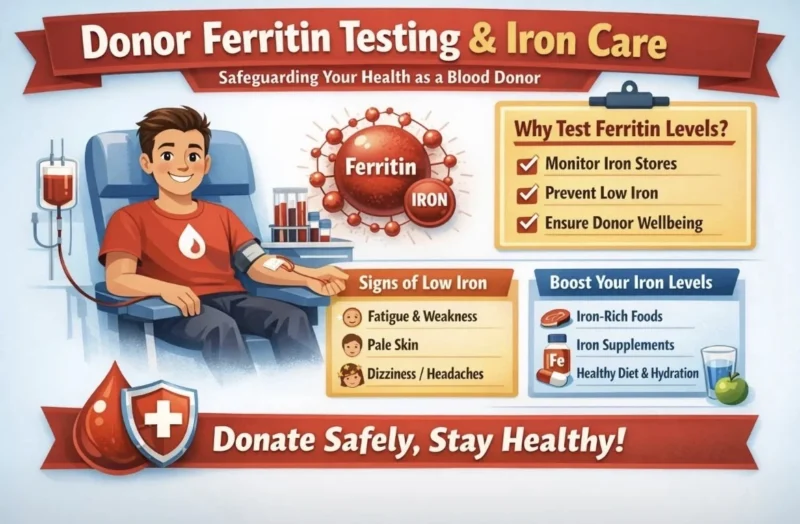
Stay updated with Hemostasis Today.
-
Oct 10, 2026, 09:05Wolfgang Miesbach: Moving from Bleed Control to Comprehensive Joint Health
-
Oct 10, 2026, 07:59Leila Caroline Souza Reis: Enoxaparin Dosing for VTE Prevention in Adults With Obesity
-
Oct 10, 2026, 07:41Adeeb Bazuhair: New Evidence for Catheter Directed Thrombolysis in Acute PE
-
Oct 10, 2026, 07:22Poppy Clarke: Turning Steps Into Support for Thrombosis Awareness
-
Oct 10, 2026, 07:12Hamzah Khan: The Role of Genuine Curiosity in Driving High-Impact Academic Research
-
Oct 10, 2026, 06:58Nita Radhakrishnan: Turning Evidence Into Action for Hemophilia Care in India
-
Oct 10, 2026, 06:48Nutan Kaushik: HemeNext 2.0 Brings Global Perspectives to Hematology
-
Oct 10, 2026, 06:43Suthesh Sivapalaratnam: Advancing Bleeding Disorder Care at EHC 2026
-
Oct 10, 2026, 02:38Brianne D.: Sex Differences in RIPK1 Signaling Following Intracerebral Hemorrhage