


Adil Aftab: Acute VTE Treatment and Anticoagulation Considerations in Renal Dysfunction
Adil Aftab, Postgraduate Trainee at People’s University of Medical and Health Sciences for Women, Nawabshah, shared a post on LinkedIn:
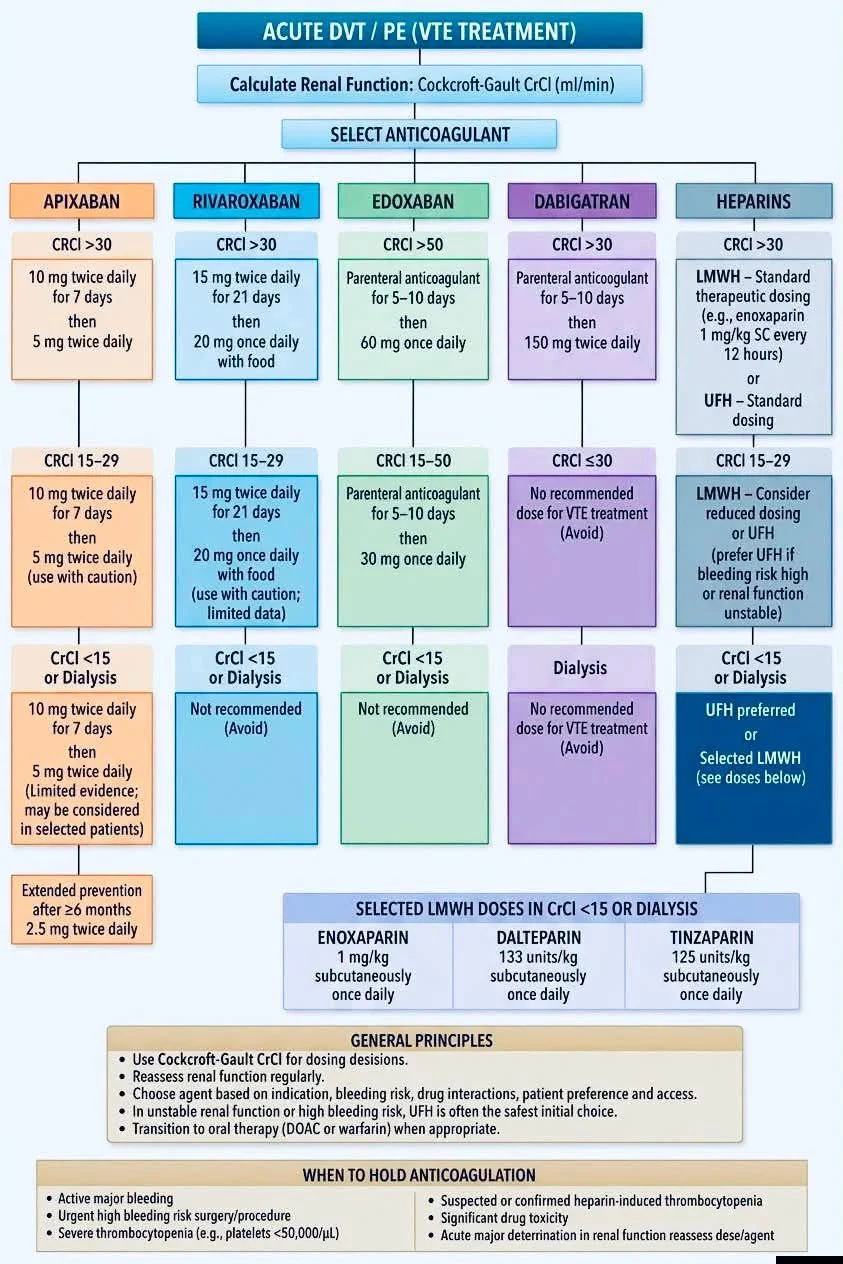
“Acute DVT or PE (VTE) Treatment, Anticoagulation and Renal Function
Anticoagulation is the cornerstone of acute venous thromboembolism management. Choosing the right agent requires careful consideration of renal function, bleeding risk, drug interactions, clinical stability, and patient preference.
This quick reference chart highlights commonly used options including Apixaban, Rivaroxaban, Edoxaban, Dabigatran, LMWH, and UFH, with important renal function considerations.
Key clinical points:
- Use Cockcroft Gault CrCl when making anticoagulant dosing decisions.
- Reassess renal function regularly.
- UFH is often preferred when renal function is unstable or bleeding risk is high.
- DOAC selection should be individualized according to renal function and clinical circumstances.
- Always assess contraindications and situations requiring temporary interruption of anticoagulation.
Continuous learning and evidence based prescribing are essential for safe VTE management.”
Stay updated with Hemostasis Today.
-
Oct 16, 2026, 17:03Only 5 Days Left to Submit Your Research for EAHAD 2027
-
Oct 16, 2026, 16:48Abdul Rahman: Reticulocyte Count and Bone Marrow Activity
-
Oct 16, 2026, 16:44DOAC Adherence in Stroke Patients With Atrial Fibrillation – International Journal of Stroke
-
Oct 16, 2026, 16:22Shannon Farmer: Driving Patient Blood Management Forward in Australia and New Zealand
-
Oct 16, 2026, 16:01Obi Light Ogbonnia: The Greatest Reward Is Changing Lives, Not Winning Awards
-
Oct 16, 2026, 15:18Carmine Liberatore: Limited Accuracy of VTE Risk Scores in Multiple Myeloma
-
Oct 16, 2026, 14:55Alex Borstein and the Bleeding Phenotype of Hemophilia A Carriers
-
Oct 16, 2026, 13:59Aya Akmal Amin: Antiphospholipid Syndrome Management and Risk Stratification
-
Oct 16, 2026, 13:10Emanuel Sueldo: CAHT 2026 Celebrates Scientific Progress and Team Achievements