

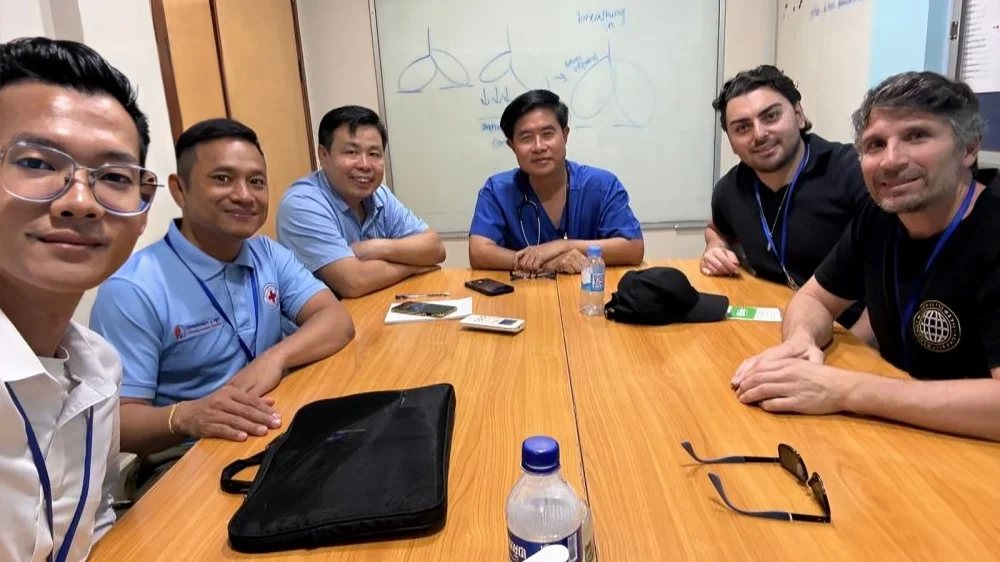
Alan Dursun: When Haemophilia Care Becomes a Reality
Alan Dursun, President of Haemophilia Foundation Australia and Senior Case Manager at Allianz Australia, shared a post on LinkedIn:
”Siem Reap, Cambodia| Part 4: Seeing the reality of haemophilia care
Monday started with Claudio and I travelling from Phnom Penh to Siem Reap with Noeurn Syneang, Vice-President of CHA, and Sath Dara, CHA Head of Volunteers.
After landing, we checked into the same hotel and then headed almost straight to Angkor Hospital for Children.
This was probably one of the most confronting parts of the trip for me.
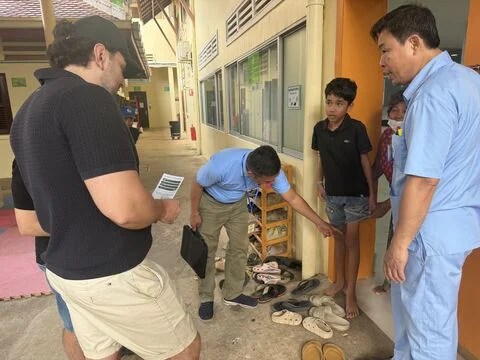
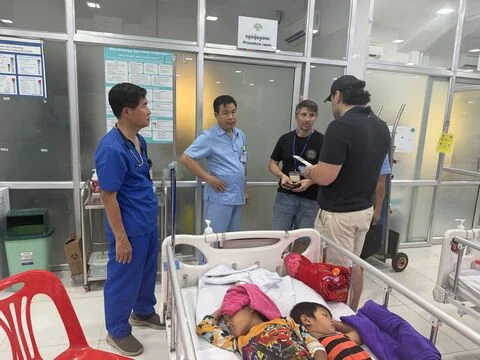
We spent time with Dr Sing Heng and haemophilia nurse Sung Sreng, who showed us through the hospital and spoke openly about the realities of caring for children with haemophilia in Cambodia.
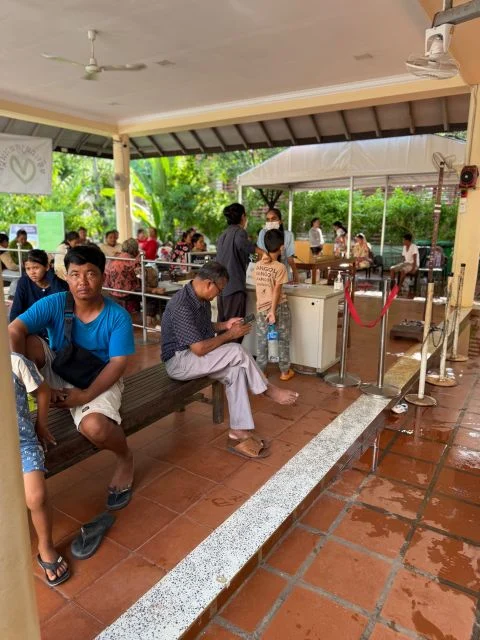
The hospital environment was very different to what we are used to in Australia. Waiting areas extended outside, with families sitting wherever space was available, including hallways and floors.
During the visit we met several young people living with haemophilia.
One patient had experienced a significant bleed around his groin and hip area and had already been in hospital for more than a month, still struggling to move.
Another was just 13 years old and had been in hospital for around two months after a serious bleed into his knee, known as a haemarthrosis. His movement was significantly limited.
We also met another patient with a joint bleed affecting his knuckle, making it difficult to fully close and move his hand.
Seeing this firsthand hit very differently.
In Australia, access to prophylaxis and modern treatment means severe and prolonged joint bleeds like these are far less common. In Cambodia, access, resources and treatment remain very different, and the impact on patients and families can be enormous.
What stood out just as strongly, though, was the dedication of the hospital team. Dr Heng and Sung Sreng were incredibly generous with their time and clearly deeply committed to the children and families they care for.
It was a powerful reminder of why our work with CHA matters.
Governance, advocacy, education and stronger patient organisations can sound like concepts in a meeting room. Visiting the hospital and meeting these patients reminded me exactly who that work is ultimately for.
A difficult day in many ways, but an incredibly important one.”
Stay uodated with Hemostasis Today.
-
Oct 1, 2026, 15:31Andreas Calatzis: The Power of Teamwork in Postpartum Hemorrhage
-
Oct 1, 2026, 15:09Halimat Olaniyan: The Role of Transfusion Medicine in Sickle Cell Disease Care
-
Oct 1, 2026, 14:58Samir Kumar Beura: Modern Approaches to Platelet Structure and Function
-
Oct 1, 2026, 14:39Understanding the FDA Pathway for Hematology Product Development – American Society of Hematology
-
Oct 1, 2026, 13:56Ravi C Dara: Advancing Red Cell Exchange in Sickle Cell Disease
-
Oct 1, 2026, 13:50Mateo Marin-Cuartas: What Matters After Aortic Valve Replacement in Younger Patients?
-
Oct 1, 2026, 13:17Anirban Sen Gupta: Sharing Ideas, Advancing Biomedical Innovation
-
Oct 1, 2026, 13:01Michael Honigberg: Clonal Hematopoiesis as a Driver of Aortic Valve Calcification
-
Oct 1, 2026, 12:22Augustina Isioma Ikusemoro: Kell Blood Group System – Clinical Significance and Transfusion Practice