


Alejandro González Veliz: Not Every Acs Patient Needs 12 Months of Dapt
Alejandro González Veliz, Interventional Cardiologist at Institute of Cardiology and Cardiovascular Surgery, shared a post on LinkedIn:
“Not Every Acs Patient Needs 12 Months of Dapt.
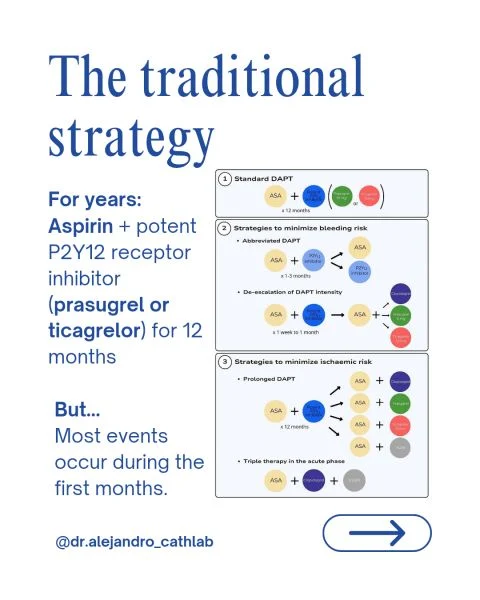
For years, the standard approach after ACS treated with PCI was simple:
Aspirin plus a potent P2Y12 inhibitor
For 12 months
But cardiology is evolving.
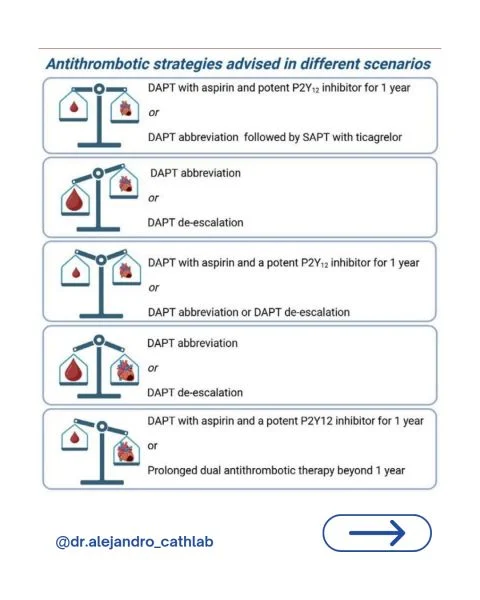
The new ESC Clinical Consensus reminds us that antiplatelet therapy should not be a ‘one-size-fits-all’ strategy anymore.
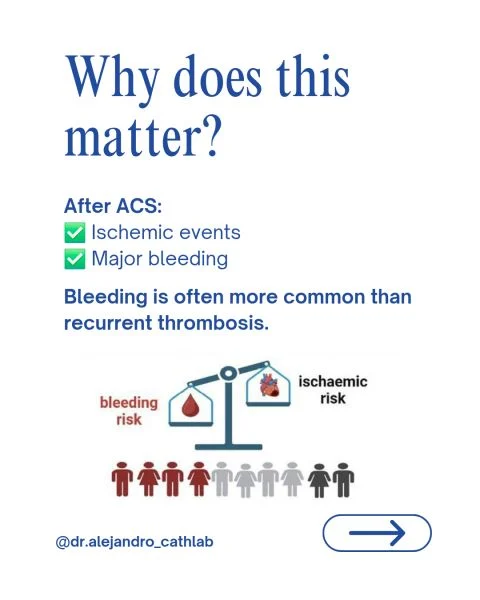
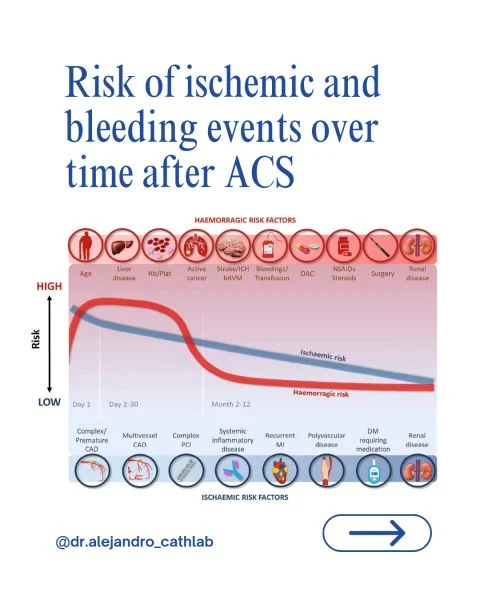
The real challenge is balancing:
- Ischemic risk
- Bleeding risk
And surprisingly…
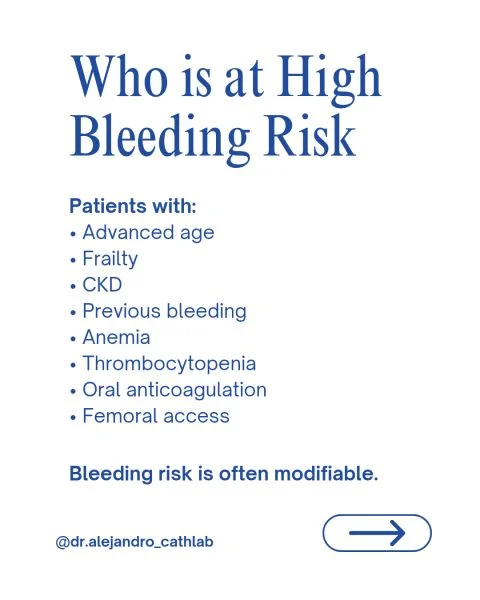
Bleeding risk is often More common than high ischemic risk.
Why is this important?
Because major bleeding is not a minor complication.
It is associated with:
- Higher mortality
- More hospitalizations
- Treatment discontinuation
- Worse long-term outcomes
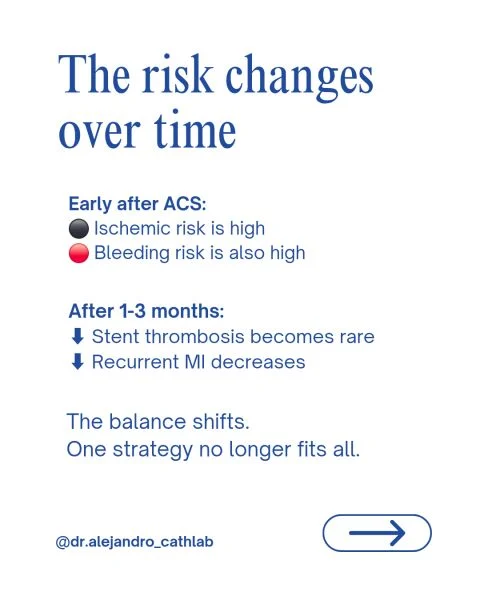
Meanwhile, with modern drug-eluting stents:
- Stent thrombosis is uncommon
- Most ischemic events occur early
- Risk decreases substantially after the first months
This has opened the door to new strategies:
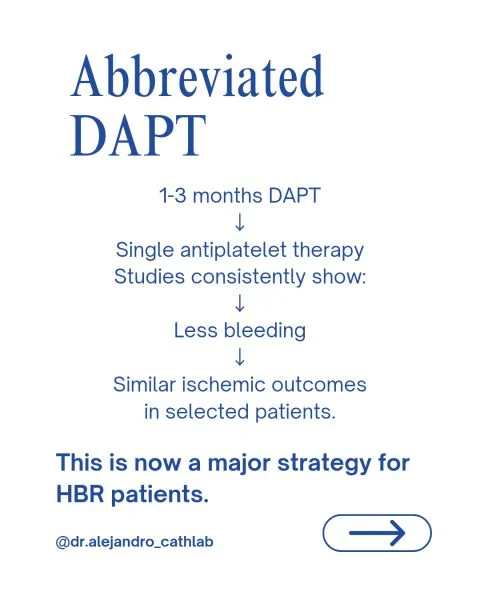
- Shorter DAPT duration
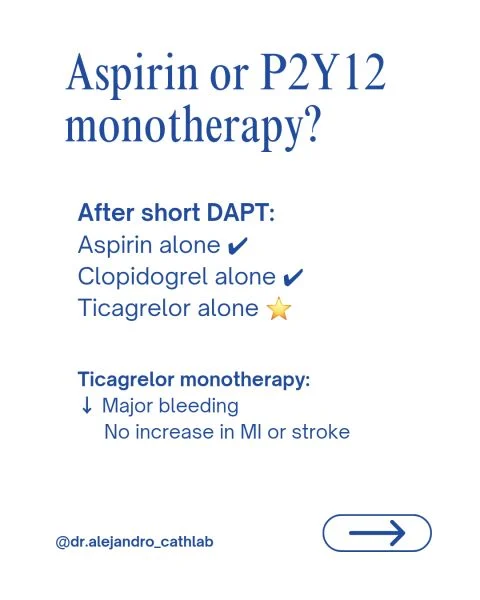
- P2Y12 inhibitor monotherapy
- DAPT de-escalation
- Extended therapy only for selected high ischemic-risk patients
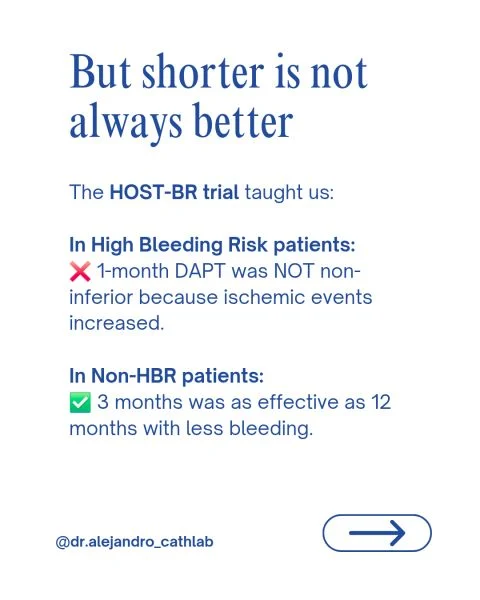
But shorter is not always better.
The message of this consensus is clear:
- Assess the patient.
- Identify bleeding risk.
- Identify ischemic risk.
- Individualize treatment.
Because the best antiplatelet strategy is not necessarily the most aggressive…
It’s the one that provides the best balance between efficacy and safety.
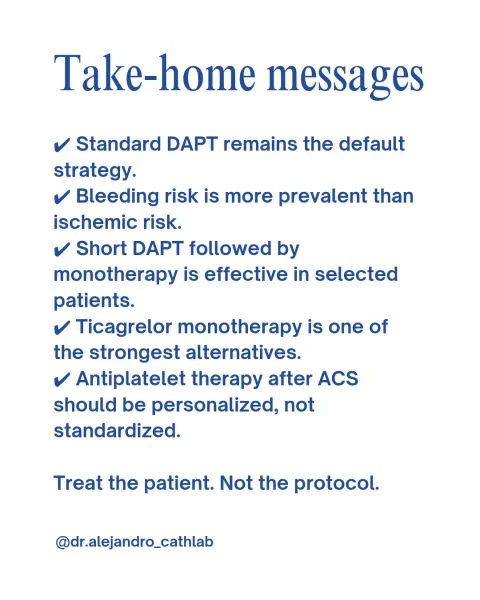
Key take-home messages:
- Standard DAPT remains the default strategy.
- Bleeding risk is more prevalent than ischemic risk.
- Short DAPT followed by monotherapy is effective in selected patients.
- Ticagrelor monotherapy is among the strongest alternatives after abbreviated DAPT.
- Antiplatelet therapy after ACS should be personalized, not standardized.
- Treat the patient. Not the protocol.
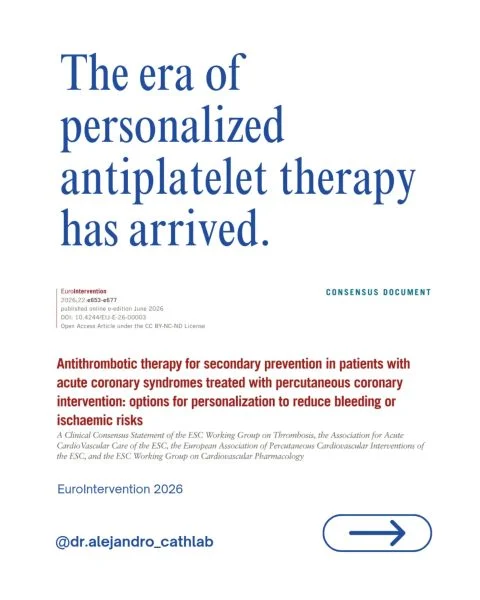
EuroIntervention 2026
DOI: 10.4244/EIJ-E-26-00003.
Other posts featuring Alejandro González Veliz on Hemostasis Today.

-
Jun 17, 2026, 16:43Aleksandra Pikula: Canada’s First Women in Midlife Brain Health and Stroke Prevention Program Is Officially Launched
-
Jun 17, 2026, 16:29Adrian Harel: Medicortex’s Review on Diagnostic Biomarkers of Ischemic Stroke Is Live Now
-
Jun 17, 2026, 16:23Dima Shulkin: Can a Computer Learn to Read Blood the Way a Doctor Does?
-
Jun 17, 2026, 16:11Extremely Rare Bleeding Disorder of the Month – Bernard–Soulier Syndrome – EHC
-
Jun 17, 2026, 16:11Raquel Enciso Serradilla: The Nutritional Gaps Behind Millions of Heart Attacks and Strokes
-
Jun 17, 2026, 16:04Waqas Mehmood: Exploring Disseminated Intravascular Coagulation
-
Jun 17, 2026, 15:35Alexis Guédon: Cancer-Associated Upper-Extremity Deep Vein Thrombosis
-
Jun 17, 2026, 15:28Gaurav Wagh: Hemophilia Gene Therapy Market – Request a Sample Report
-
Jun 17, 2026, 15:14Sonal Sonu: Who Are the Donors We Need the Most?