


Anna Oleksiak: Is Thrombocytopenia in Critical Cardiac Care HIT?
Anna Oleksiak, Cardiologist at National Institute of Cardiology Stefan Cardinal Wyszyński – National Research Institute, shared a post on LinkedIn:
”At ICCU often patient’s platelets drop…
The clinical question – is this HIT, drugs interaction, mechanical injury, MCS, clotting, sepsis or something else?
But there is not much time for the right decisions.
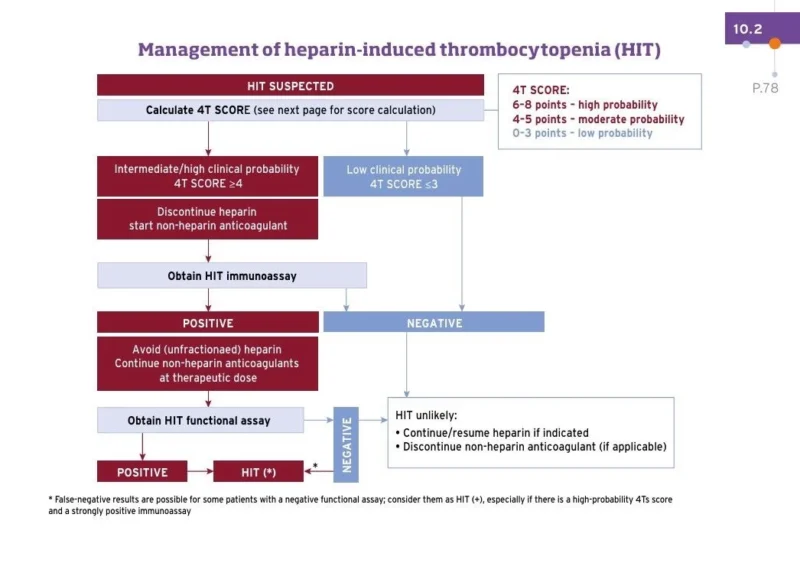
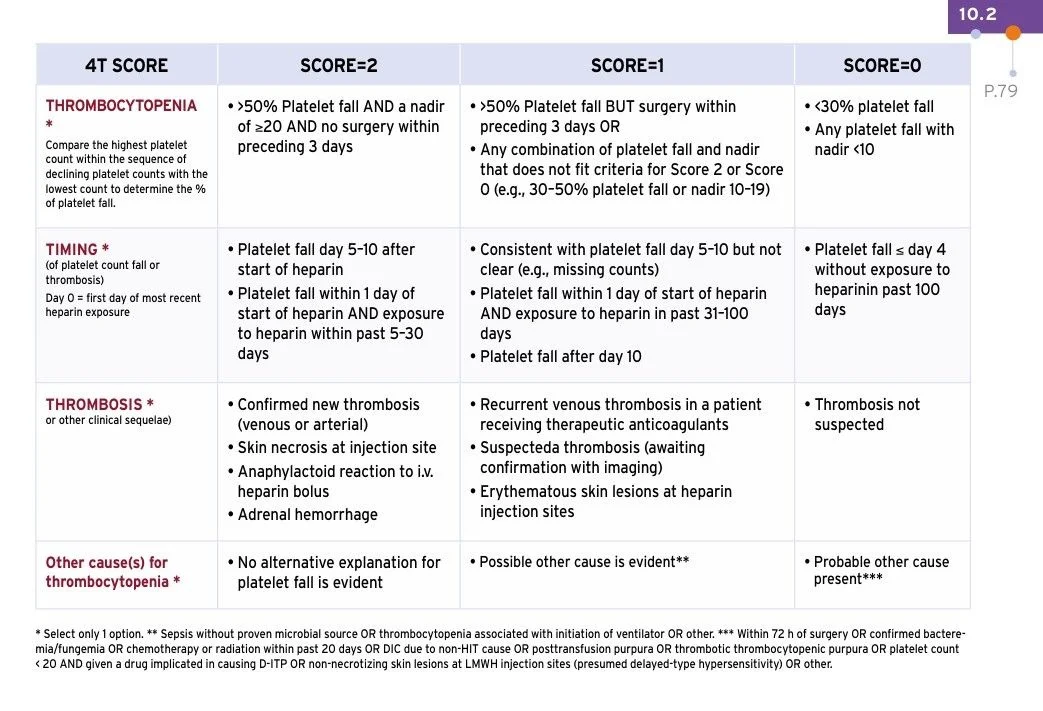
Here are some pages from Association for Acute CardioVascular Care – ACVC Clinical Decision Making Toolkit, chapter about anticoagulation in critically ill, written by me and Christophe Vandenbriele last year.
Some hot points about heparin-induced thrombocytopenia:
- T Score is the most widely used and well-validated risk-prediction score and has excellent negative predictive value.
- An important problem in diagnosing thrombocytopenia is the exclusion of pseudothrombocytopenia, resulting from platelet agglutination in blood collected in an EDTA.
- HIT should be suspected in patients receiving heparin if, for an unknown reason:
1) the platelet count has decreased by ≥50% from the baseline (even if it is 150,000/µL);
2) ≥5 days have passed since the start of heparin administration;
3) a thromboembolic event has occurred;
4) no other causes of thrombocytopenia are identified.
- UFH conveys a HIT risk 10 times greater than that of LMWH.
- Frequently, post-surgical patients exhibit a unique bimodal pattern of platelet decline.
- Although thrombocytopenia is usually a serious problem in the context of bleeding, the occurrence of HIT type II is associated with a 20-40 fold increase in the risk of venous or arterial thrombosis, with an incidence of thrombosis ranging from 50% to 89% in untreated patients.
- The most common cause of death in patients with HIT is pulmonary embolism, less frequently stroke.
- Typically, the heparin-dependent antibodies fall to undetectable levels after 50 to 85 days.”
Stay updated with Hemostasis Today.
-
Sep 30, 2026, 01:52Javed Anees: DADA2 – When a Young Stroke Is More Than a Stroke
-
Sep 30, 2026, 01:51How a Venous Thrombus Becomes Revascularized – ISTH
-
Sep 29, 2026, 22:45Victor Agunyego: Paracetamol – The Most Common Drug We Underestimate
-
Sep 29, 2026, 22:42Nova Sinclair: Advancing the Future of Hematology – Meet Our 2027 Organizing Committee
-
Sep 29, 2026, 22:41Lorenz Räber: Intracoronary Imaging in PCI – Why, When, How, and Which Modality?
-
Sep 29, 2026, 22:31Selma Turkovic: Pleased to Deliver the Opening Presentation at Kingston Hospital
-
Sep 29, 2026, 22:31Miguel Teran: Ultrasound and Simulation in Arterial Blood Sampling
-
Sep 29, 2026, 22:28Mohammad Refaei: Navigating Your Career in Hematology From Training to Practice
-
Sep 29, 2026, 22:27Matteo Foschi: 10 Clinical Pearls for Antithrombotic Therapy in Secondary Stroke Prevention