

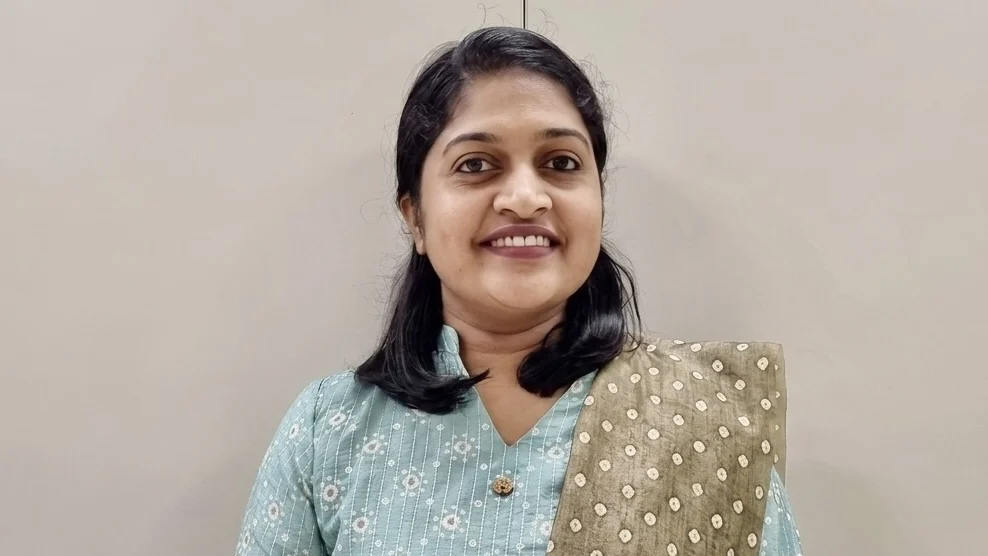
Anu Thomas: Understanding the ABO Blood Group System and Its Formation
Anu Thomas, Assistant Professor at Government Medical College, Kozhikode, shared a post on LinkedIn:
“Understanding the ABO Blood Group System and Its Formation
The ABO blood group system is one of the most important classifications in transfusion medicine.
It plays a critical role in ensuring safe blood transfusions and organ transplants.
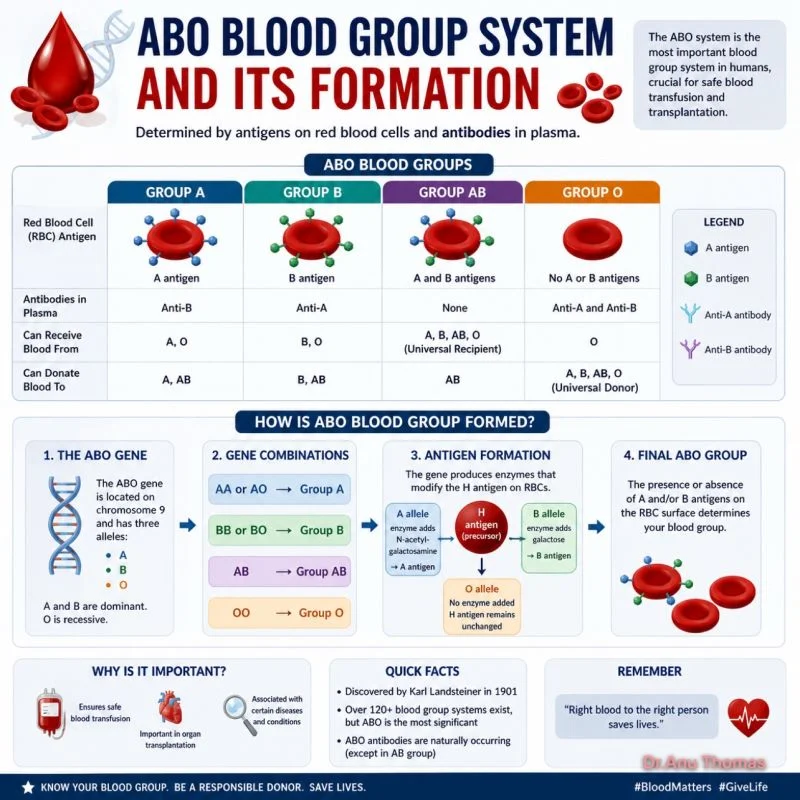
This system is based on the presence or absence of specific antigens – A and B antigens – on the surface of red blood cells:
- Group A – Has A antigen and anti-B antibodies
- Group B – Has B antigen and anti-A antibodies
- Group AB – Has both A and B antigens and no antibodies
- Group O – Has no antigens but both anti-A and anti-B antibodies
How is it formed?
The ABO blood group is genetically determined and inherited from parents.
It is controlled by the ABO gene, which exists in three forms (alleles): A, B, and O.
- The A and B alleles are co-dominant, meaning both are expressed if present together.
- The O allele is recessive, meaning it only appears when both inherited alleles are O.
These genes influence the production of enzymes that modify the surface of red blood cells, leading to the formation of A or B antigens – or neither in the case of group O.
Why is it important?
Compatibility in the ABO system is crucial. Mismatched transfusions can lead to serious, even life-threatening reactions due to immune responses.
Understanding this system is fundamental in clinical practice, blood banking, and patient safety.”
Stay updated with Hemostasis Today.
-
Sep 18, 2026, 05:48Julie Taylor: Navigating Tech Glitches to Deliver Engaging BBTS Presentation
-
Sep 18, 2026, 05:42Emma Copperwaite: BBTS Conference Presentation Highlights Power of Peer Support and Pushing Past Fear
-
Sep 18, 2026, 05:34Suhasini Sil: RGSSH Joins Mega Blood Donation Camp at Thyagaraj Stadium
-
Sep 18, 2026, 05:25Lisa Laun: Spleen Clears Activated Platelets to Limit Thrombosis and Inflammation
-
Sep 18, 2026, 05:16Louise St. Germain Bannon: ISTH Advocates for Enhanced Patient Safety in Blood Disorder Care
-
Sep 18, 2026, 05:08Vikas Veer: Exploring Sickle Cell Anemia at the Molecular Level
-
Sep 18, 2026, 01:35Matthew Hazell: From Platelet Refractoriness to Protecting Transplanted Organs
-
Sep 18, 2026, 01:23Apple Joy A. Valenzuela: Exploring How Neutrophil Develops from the Myeloblast to the Mature Segmented Neutrophil
-
Sep 18, 2026, 01:13Su Someh: Gaps and Variation in Global Plasma Donor Protection Policies