


Arun V J: Can You Be A Doctor And Still Be Stupid?
Arun V J, Consultant in the Department of Transfusion Medicine at Malabar Medical College, shared a post on LinkedIn:
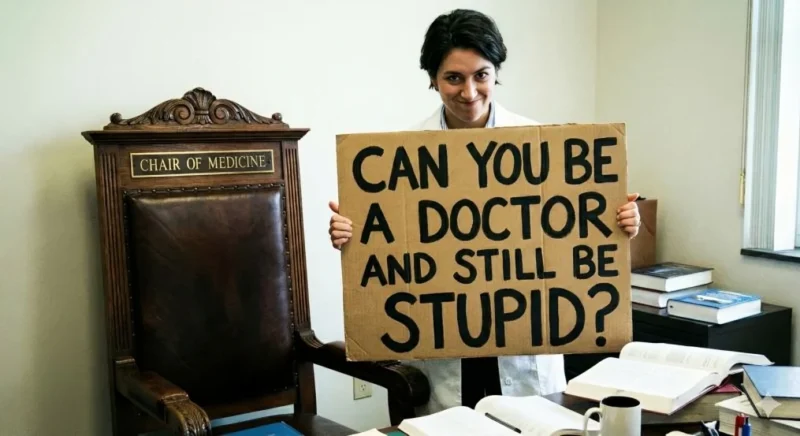
”Can You Be A Doctor And Still Be Stupid?
Short answer: Yes. Have You Come Across A Well Educated Idiot?
I’ve been practicing and studying for a while now. I’ve seen the exams. I’ve seen the degrees. I have been taught by idiots, too. And I’ve seen the absolute lack of common sense that sometimes comes with them.
We need to stop pretending that a piece of paper equals intelligence. It doesn’t.
The 3 Types of ‘Smart’ Idiots I’ve Met:
- The Theory Idiot: Somehow passed the exams. Knows the textbook by heart. But put them in front of a patient or a colleague? Disaster. They make everyone miserable because they can’t apply the basics to real life.
- The Social Idiot: Brilliant clinically. Knows every diagnosis. But they have the emotional intelligence of a rock. Patients feel unheard; colleagues feel like punching them in the face.
- The Total Package: Just an idiot in all aspects. (Rare, but they exist).
The superior designation? The chair you sit in? The plaque on the door?
That is just furniture.
It doesn’t belong to you. It belongs to the position. You will be replaced. The hospital will go on. The clinic will go on.
If you attach your ego to a piece of furniture, you have nothing.
Actionable Steps to Avoid Being ‘That’ Doctor:
- Detach from the Title: Your degree gets you in the room. Your character keeps you there.
- The ‘Hard Day’ Rule: It is easy to be kind when things are going well. Real leadership is being kind when you are exhausted and frustrated. That is when it counts 100%.
- Read the Room, Not Just the Chart: Emotional intelligence (EQ) saves more careers than IQ ever will.
Be kind to your colleagues. Be kind to your patients.
Have You Come Across An idiot? How Do You Handle Them?
Don’t let your degree fool you into thinking you’re better than everyone else.
I write about the intersection of real life and professional growth. Join the conversation.”
Stay updated with Hemostasis Today.
-
Oct 19, 2026, 19:44Where You Live Should not Determine Whether You Receive Care – World Federation of Hemophilia
-
Oct 19, 2026, 19:42Belen Bianco: Prevention, Early Suspicion and an Interdisciplinary Approach Save Lives
-
Oct 19, 2026, 19:40Christina Chrysohoou: Catheter-Based LAAC vs OAC for Stroke Prevention in Atrial Fibrillation
-
Oct 19, 2026, 19:38Matthew Flick: A Two-Day Research Meeting on Fibrinogen, Hemostasis and Thrombosis
-
Oct 19, 2026, 19:37Hayat Saeed: Excited to Share Our Publication on the FGL1–Hepcidin Axis in Iron Homeostasis and Disease
-
Oct 19, 2026, 19:08IPAW 2026 Comes to a Close, but the Work Continues – PPTA
-
Oct 19, 2026, 17:44Paul Riley: Moderating a Webinar on Anticoagulation Monitoring
-
Oct 19, 2026, 16:36Christopher Pittman: Blood Clot Prevention Cannot End at Hospital Discharge
-
Oct 19, 2026, 16:13Javier M. Floren: When Immune Cells Move With Their Environment