


Mahesan Subramaniam: The Protective Switch in Brain Immune Cells Could Slow Alzheimer’s Disease
Mahesan Subramaniam, Co-Founder of United Health Tourism, posted on LinkedIn about a recent article by Pinar Ayata et al, published in Nature:
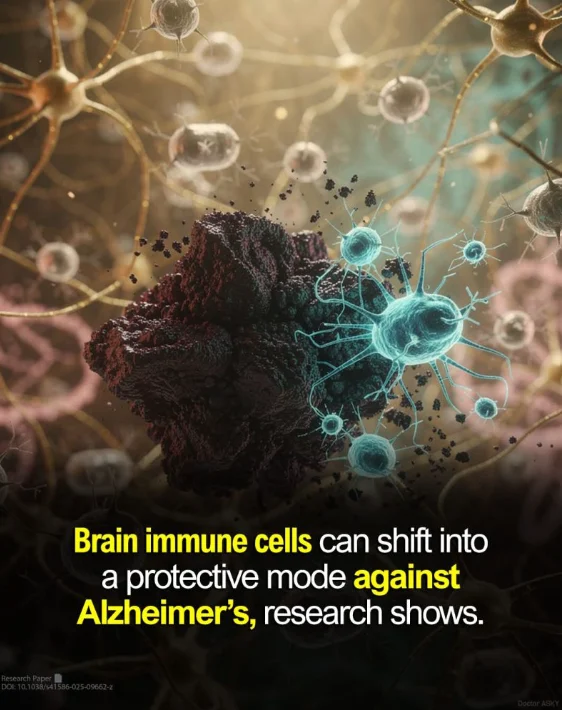
”For years, immune cells in the brain were thought to mainly worsen Alzheimer’s disease by increasing inflammation. New research suggests a more complex picture. Scientists have found that microglia, the brain’s resident immune cells, can shift between harmful and protective states. In the protective mode, these cells help limit damage instead of amplifying it. This switch appears to influence how quickly toxic proteins linked to Alzheimer’s build up in brain tissue.
Microglia constantly monitor the brain for trouble. When pushed into an inflammatory state, they release chemicals that can harm neurons and accelerate disease progression. Researchers discovered that changing specific internal signals inside microglia can steer them toward a calmer, protective role. In this state, microglia reduce inflammation and help control the accumulation of amyloid and tau proteins that disrupt brain communication. When this protective switch was blocked in experimental models, brain damage increased and disease features worsened.
Most of this work comes from laboratory studies and animal models, not human treatments. It does not mean Alzheimer’s can be stopped today. However, the findings suggest that strengthening the brain’s own defense mechanisms may be as important as removing toxic proteins. Instead of fighting the immune system, future therapies may aim to guide it. Helping microglia stay in a protective mode could slow damage and preserve brain function earlier in the disease process.”
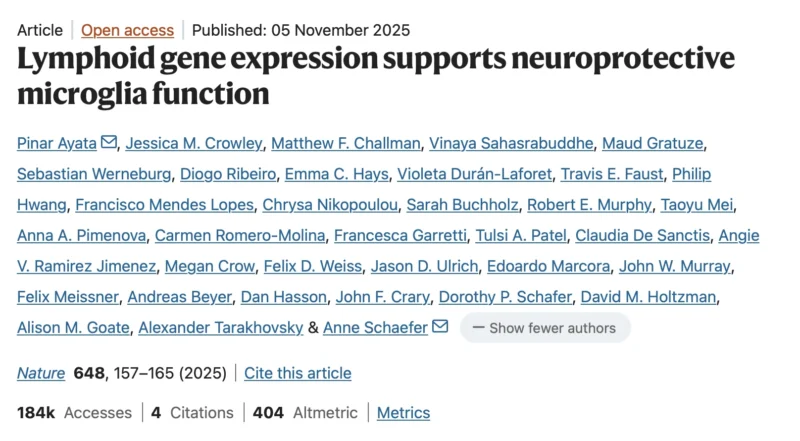
Title: Lymphoid gene expression supports neuroprotective microglia function
Authors: Pinar Ayata, Jessica M. Crowley, Matthew F. Challman, Vinaya Sahasrabuddhe, Maud Gratuze, Sebastian Werneburg, Diogo Ribeiro, Emma C. Hays, Violeta Durán-Laforet, Travis E. Faust, Philip Hwang, Francisco Mendes Lopes, Chrysa Nikopoulou, Sarah Buchholz, Robert E. Murphy, Taoyu Mei, Anna A. Pimenova, Carmen Romero-Molina, Francesca Garretti, Tulsi A. Patel, Claudia De Sanctis, Angie V. Ramirez Jimenez, Megan Crow, Felix D. Weiss, Jason D. Ulrich, Edoardo Marcora, John W. Murray, Felix Meissner, Andreas Beyer, Dan Hasson, John F. Crary, Dorothy P. Schafer, David M. Holtzman, Alison M. Goate, Alexander Tarakhovsky, Anne Schaefer
Read the Full Article on Nature.
Stay updated with Hemostasis Today.
-
Oct 9, 2026, 10:40What New U.S. Data Reveal About GT – Glanzmann’s Research Foundation
-
Oct 9, 2026, 10:32Anjali Pandey: The Morphologic Clues to MDS With del(5q)
-
Oct 9, 2026, 10:13Reza Shojaei: 5 Leadership Responsibilities for a Sustainable Plasma Ecosystem
-
Oct 9, 2026, 08:38Johannes Gratz: Perioperative Care in Factor VII Deficiency – Treating the Patient, Not the Number
-
Oct 9, 2026, 08:28Ghanim Fajish: Vascular Cells May Retain a Prothrombotic Memory of Oxidative Stress
-
Oct 9, 2026, 07:43Mehmet Cilingiroglu: The First Diagnosis of Coronary Thrombosis in a Living Patient
-
Oct 9, 2026, 07:21Federico Ravaioli: 40 kPa Spleen Stiffness May Help Avoid Endoscopy in Chronic PVT
-
Oct 9, 2026, 07:00Danny Reardon: Closing the Global Awareness Gap on Blood Clots
-
Oct 9, 2026, 00:54Mary Catherine Moffett: Advancing Advocacy Together – Highlights from the Sanofi Bleeding Disorders Summit