


Augustina Isioma Ikusemoro: ABO Discrepancies in Transfusion Practice
Augustina Isioma Ikusemoro, Hematology and Transfusion Medicine Specialist at Sharjah Blood Transfusion and Research Center, shared a post on LinkedIn:
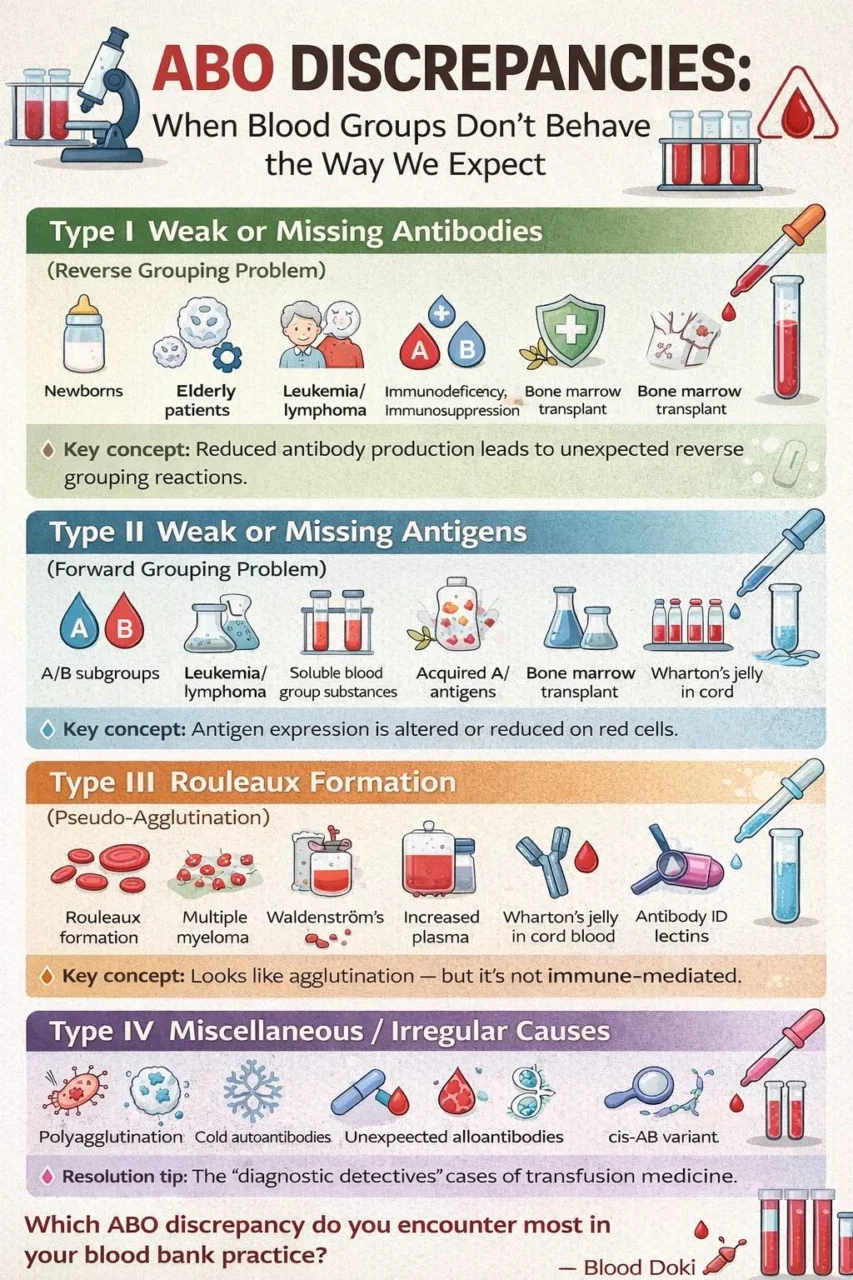
“Abo Discrepancies: When Blood Groups Don’t Behave the Way We Expect
Every transfusion professional has faced that moment:
Forward group says one thing.
Reverse group says another.
And the results don’t match.
That’s an Abo discrepancy – and recognizing its type can make the difference between safe transfusion practice and serious clinical risk.
Why Abo discrepancy recognition matters
Because transfusion safety begins before the blood leaves the blood bank.
Every discrepancy resolved correctly protects:
- trauma patients
- oncology patients
- neonates
- transplant recipients
- and every life that depends on accurate compatibility testing.
In transfusion medicine, details save lives.
If you’re working in a blood bank or transfusion service, tell me:
Which type of Abo discrepancy do you encounter most often in your practice?
Blood Doki, Blood Knowledge, Saving lives.”
Stay updated with Hemostasis Today.
-
Nov 17, 2026, 15:26Hereditary Hemorrhagic Telangiectasia: The Molecular Connection Between Vascular Malformations and Bleeding
-
Nov 17, 2026, 14:54Cindy Neunert: Beyond Platelet Counts – Addressing Fatigue and Whole-Person Care in ITP
-
Nov 17, 2026, 14:44Strengthening Haemophilia Diagnosis Through Hands-On Laboratory Training – IAHAD
-
Nov 17, 2026, 14:40Platelet Membrane Protrusions Beyond Their Role in Hemostasis – JTH
-
Nov 17, 2026, 14:10Wolfgang Miesbach: Aspirin vs Anticoagulants – Who Needs More Than Aspirin?
-
Nov 17, 2026, 14:08Chaza Alaji: Soluble Transferrin Receptor – A Key to Uncovering Hidden Iron Deficiency
-
Nov 17, 2026, 14:03Shadi Tabibian: Fibrinogen – From Molecular Structure to Clinical Decision Making
-
Nov 17, 2026, 13:54Gabrielle Sarlon: Breaking the Silence on Menstrual Bleeding During Anticoagulant Therapy
-
Nov 17, 2026, 13:47Ksenia Guznova Kats: Advanced Venous Stenting in May–Thurner Syndrome