


Bastu Odoka: Closing the Gap on Anti-D Prophylaxis in Maternal Care
Bastu Odoka, Transfusion Scientist at Effia-Nkwanta Regional Hospital, shared a post on LinkedIn:
“Anti-D Prophylaxis: A Preventable Gap in Maternal Care
In a recent pre-print review:
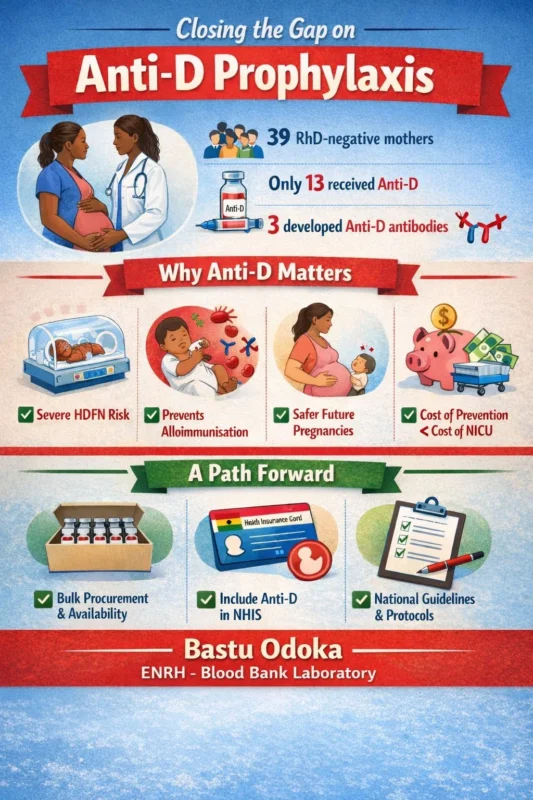
- 39 RhD-negative mothers with previous pregnancies
- Only 13 received Anti-D prophylaxis
- 3 of the 13 later developed anti-D antibodies
This is not about blame. It is about systems.
Why Anti-D matters
Anti-D immunoglobulin prevents RhD alloimmunisation when:
- The mother is not already sensitised
- It is administered at routine antenatal timing (around 28 weeks per protocol)
- It is given within 72 hours postpartum when indicated
- All sensitising events are recognised and treated
- Appropriate dosing is used (including for significant fetomaternal haemorrhage)
- Antibody screening (Indirect Antiglobulin Test) is properly documented
If Anti-D is given late, after sensitisation has already occurred, or in inadequate dose, it will not prevent alloimmunisation.
Why this matters clinically
Missed or delayed prophylaxis can lead to:
- Preventable maternal sensitisation
- Haemolytic disease of the fetus and newborn (HDFN)
- High-risk future pregnancies
- Increased neonatal morbidity and healthcare costs
Prevention is safer and far more cost-effective than managing severe neonatal complications.
A systems opportunity in Ghana and similar settings
Strengthening Anti-D access and standardisation could significantly reduce preventable alloimmunisation.
Potential areas for improvement:
- National bulk procurement to ensure consistent availability and reduce unit cost
- Inclusion of Anti-D under NHIS to remove financial barriers
- Development or update of a clear national guideline to standardise timing, dosing, documentation and follow-up
- Strengthening routine antibody screening and documentation practices
This is not only a laboratory issue. It is a maternal and neonatal safety priority.
Preventable alloimmunisation should not become a lifelong risk for mothers when effective prophylaxis exists.
Strong systems protect mothers.
Strong policies protect future generations.”
Stay updated with Hemostasis Today.
-
Oct 9, 2026, 16:23David Boone: Distinguishing Stroke Prevention from Rhythm Control in Atrial Fibrillation
-
Oct 9, 2026, 15:27Mohamed Hegazi: Geostatistical Modelling Maps Global β-Thalassaemia Carrier Prevalence
-
Oct 9, 2026, 15:15Maha Othman: Uncovering the Consensus on TXA in TBI – Call for Collaboration on a Landmark Umbrella Review
-
Oct 9, 2026, 15:07Daniel D. Han: How Inhalation Product Exposure Impairs Cardiac and Platelet Recovery After MI
-
Oct 9, 2026, 14:58William Toole: How Ultrasound-Guided PRP Therapy Relieves Joint and Tendon Pain
-
Oct 9, 2026, 14:50Shayan Mohammadmoradi: In Corpus Christi for the 20th Midwest Platelet Conference
-
Oct 9, 2026, 14:37Tariq Tramboo: High Platelet Concentrate for Osteoarthritis Knee – Recent Meta-Analyses
-
Oct 9, 2026, 14:26Yousma Khan: Hematology Series – Beyond RBCs, WBCs and Platelets
-
Oct 9, 2026, 14:13Jesus Ardila Novoa: Why the WHO’s Historic Essential Medicines List Decision Is Just the Beginning