


Ewa Fiorentino-Rozek on Blood Group Genotyping: Are We Ready for Routine Use?
Ewa Fiorentino-Rozek, Head of Clinical Affairs at AliveDx, shared a post on LinkedIn:
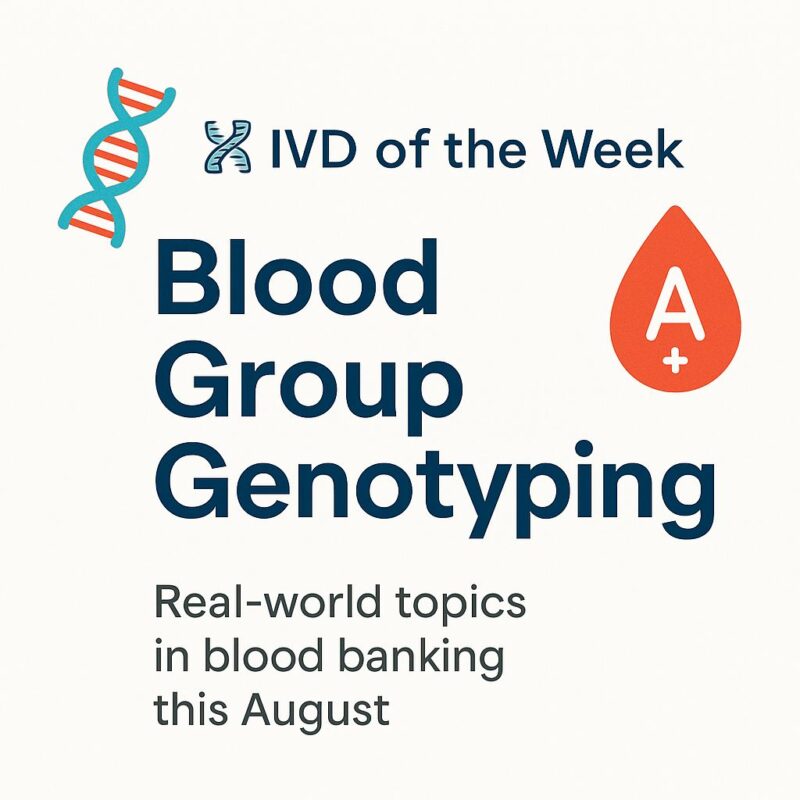
“IVD of the Week: Blood Group Genotyping – Are We Ready for Routine Use?
Blood group genotyping has come a long way in recent years. It started as a specialized tool for identifying rare donors and solving complex antibody cases, but it’s increasingly being talked about as part of routine blood bank practice.
Compared to traditional serology, genotyping can:
– Detect blood group variants that serology can miss
– Improve matching for patients who receive frequent transfusions (like those with sickle cell disease or thalassemia
– Help manage rare donor inventories more effectively
Yet despite all this progress, many labs still rely mostly on serological methods. Making genotyping a routine part of blood banking isn’t simple. There are real hurdles:
– Cost – both for instruments and ongoing reagents
– Integration – adapting workflows and training staff
– Data interpretation – translating genotyping results into clear transfusion decisions
– Guidelines – not all regions have clear recommendations on when or how to implement routine genotyping
I’d love to hear from colleagues across labs, blood services, and industry:
– Is your center already using genotyping routinely, or only for special cases?
– What barriers are slowing down broader adoption where you work?
– Do you think genotyping will become standard practice in the next five years—or is that still further off?
Let’s share real-world experiences and thoughts on how to bridge the gap between promise and practice in blood group genotyping.
________
Hi, I’m Ewa, and I help In Vitro Diagnostics companies bring innovative products to market.
Follow me for insights on IVD regulations, performance evaluation, and industry trends.”
Stay updated with Hemostasis Today.
-
Sep 22, 2026, 04:43Michael Cahillane: Highlights From BBTS2026 in Glasgow
-
Sep 22, 2026, 04:15Wolfgang Miesbach: First AAV Gene Therapy Data in Adolescents With Haemophilia B
-
Sep 22, 2026, 04:03Emmanuel J Favaloro: 100 Years of VWD – A Special Virtual Issue
-
Sep 22, 2026, 03:31Mostafa Elshazly: How Is Humidification Used During Non Invasive Ventilation?
-
Sep 22, 2026, 03:05Sumyea Kabir: Jehovah’s Witnesses Update Their Position on Blood Components
-
Sep 22, 2026, 02:33Gerardo Moscatelli: The Spike Protein Cascade – From Endothelial Binding to Vascular Collapse
-
Sep 21, 2026, 20:56George Touma: ApoB Should Be Central to All Lipid Guidlines
-
Sep 21, 2026, 20:55Christopher Robinson: Obstetric Risks Are Seen at the Extremes of Birthweight
-
Sep 21, 2026, 20:54Emicizumab for Refractory GI Bleeding in Myeloma-Associated Acquired VWD – JTH