

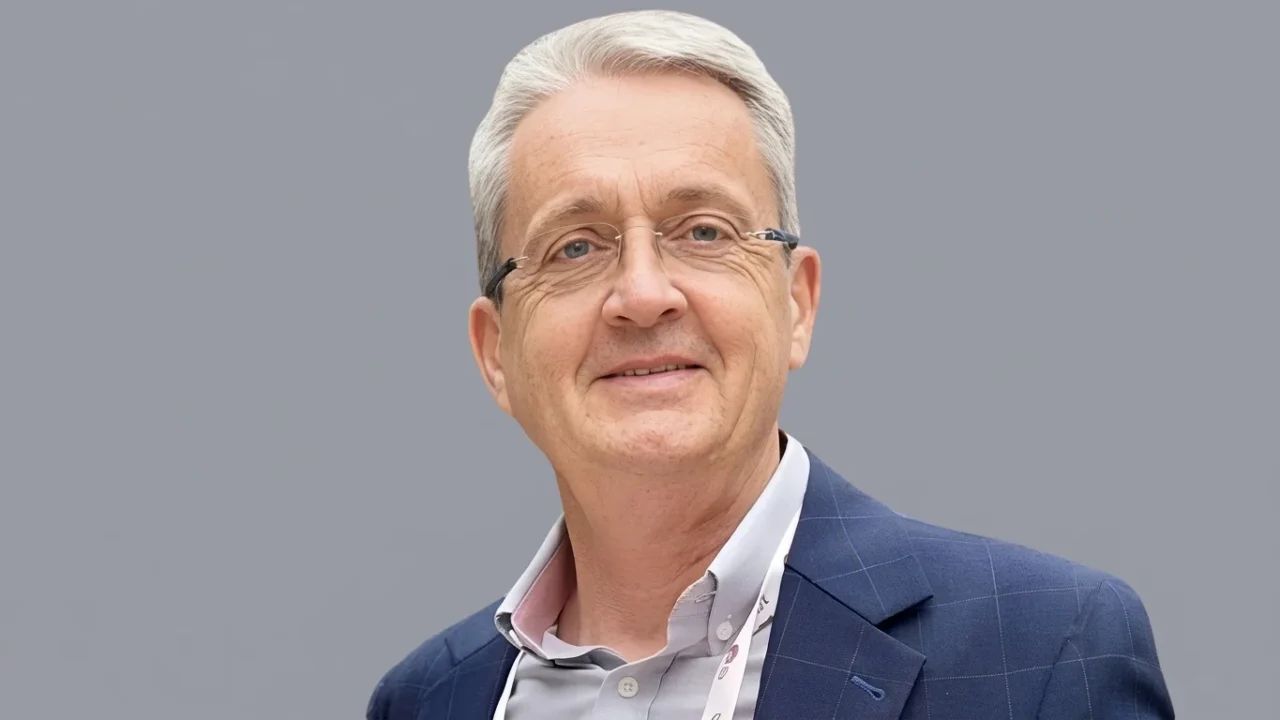
Bruno Pougault: Pregnancy and Thrombosis – Balancing Evolutionary Protection Against Clinical Risk
Bruno Pougault, Global Marketing Hemostasis Product Manager at HORIBA, shared on LinkedIn:
“Pregnancy and Thrombosis: Balancing Evolutionary Protection Against Clinical Risk
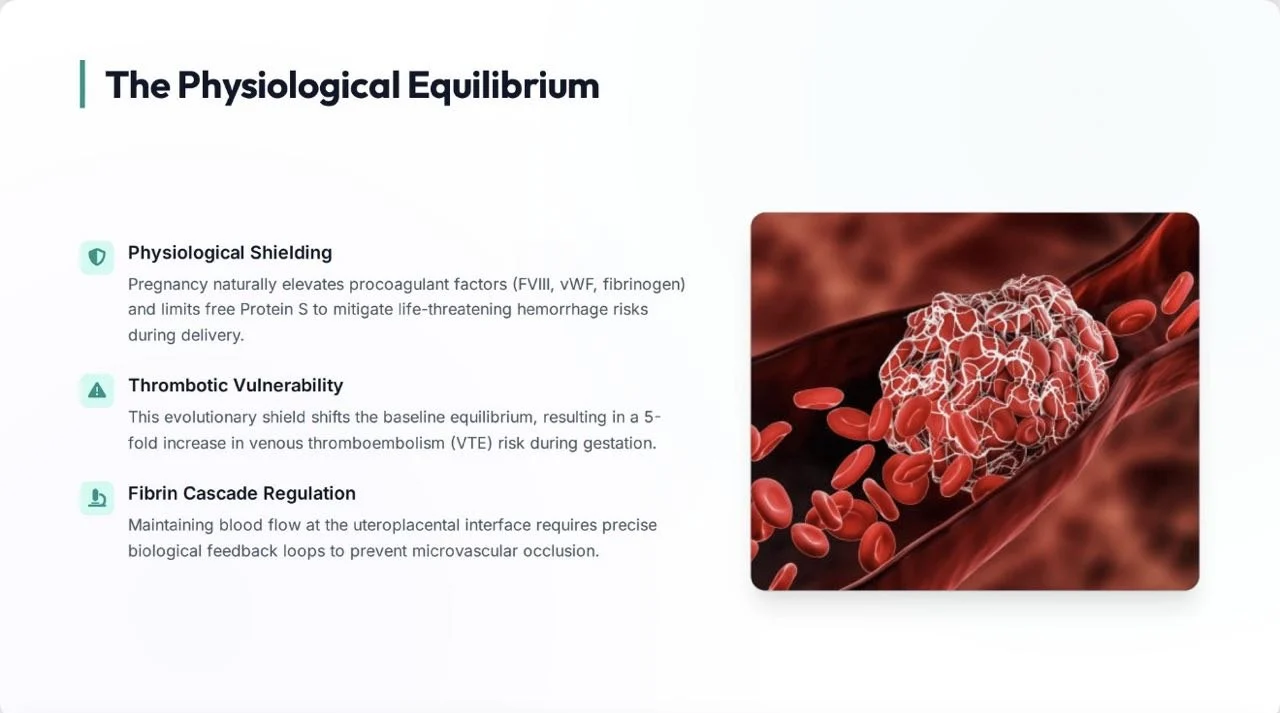
Why does pregnancy multiply a patient’s risk of Venous Thromboembolism (VTE) by 4 to 5 times?
From a physiological standpoint, it is a masterclass in evolutionary survival.
To protect the mother from lethal hemorrhage during placental delivery, the female body enters a state of profound hypercoagulability.
However, this protective mechanism pushes the hemostatic curve to a razor-thin edge, fulfilling all three pillars of Virchow’s Triad:
- Hypercoagulability: A systemic shift favoring clotting, driven by an increase in procoagulant factors (Fibrinogen, FVIII, VWF) paired with a physiological decline in natural anticoagulants like Protein S.
- Stasis: Mechanical compression of the inferior vena cava and pelvic veins by the gravid uterus severely impedes lower extremity venous return.
- Endothelial Alterations: Micro-vascular stress induced by rapid hemodynamic fluctuations during gestation and delivery.
The clinical stakes are high, and the window of maximum vulnerability is counterintuitive: the risk peaks not during the third trimester, but during the first 6 weeks of the postpartum period.
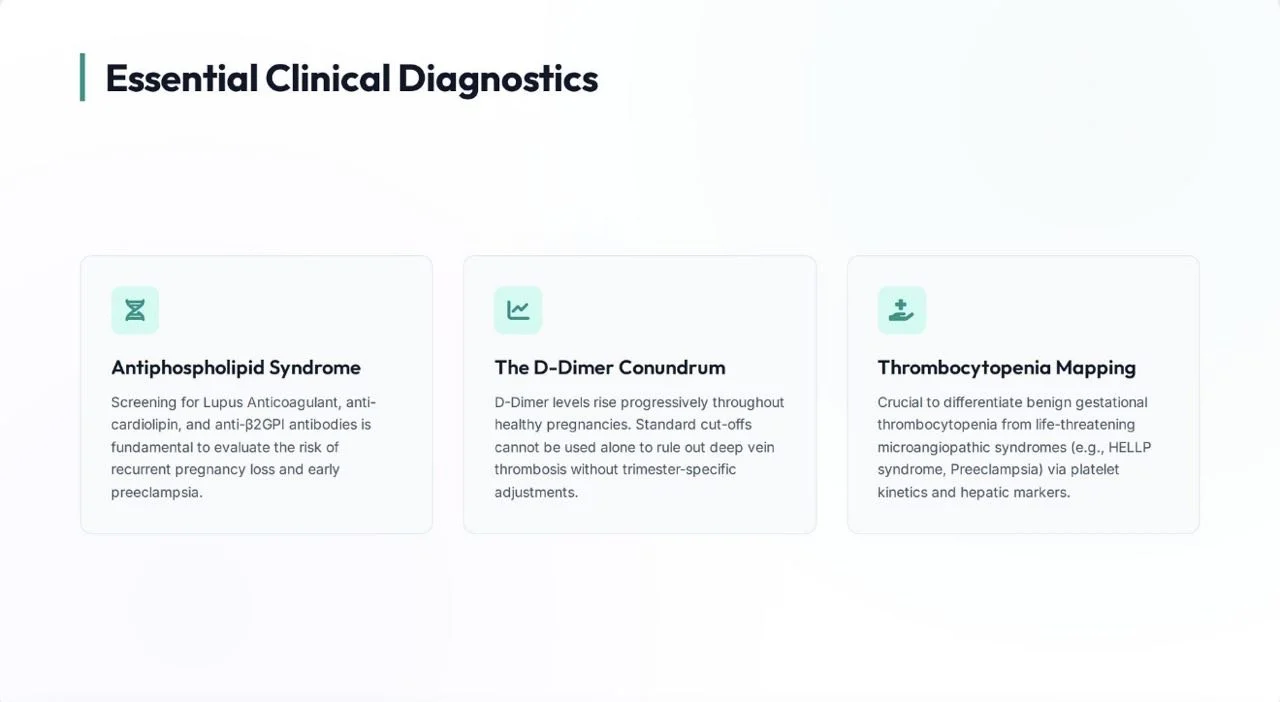
Evaluating underlying thrombophilia (such as Factor V Leiden, Prothrombin G20210A mutations, or Antiphospholipid Syndrome) without being misled by normal, pregnancy-induced biochemical baselines remains one of the most delicate challenges in laboratory medicine today.
Bridging Laboratory Insights and Bedside Decisions
Because this balance between life-saving hemostasis and life-threatening thrombosis remains a critical puzzle, it will be a focal point of global clinical discussion this summer.
The ISTH 2026 Congress (International Society on Thrombosis and Haemostasis), taking place in Paris from July 11–15, 2026, is dedicating multiple specialized sessions to
Hemostasis and Women’s Health.
Top global experts will present the latest clinical trials, long-term safety data on low-molecular-weight heparin (LMWH) prophylaxis, and emerging molecular biomarkers for early risk stratification.
If you are attending ISTH2026, these sessions are unmissable for anyone looking to refine their clinical protocols in obstetric hematology.
Let’s advance the science of maternal health together.
See you in Paris!”
Find more posts featuring Bruno Pougault on Hemostasis Today.

-
Sep 28, 2026, 19:14Aditya Sharma: An Outstanding Start to the Final Day of VSS 2026!
-
Sep 28, 2026, 19:07Dhargam Aljebouri: AIHA Subclassification Research Presented at the 14th Iraqi Society of Hematology Conference
-
Sep 28, 2026, 19:02William Wallace: Your Cholesterol Test is Missing a Particle that May Matter More than the One it Measures
-
Sep 28, 2026, 18:57Indu Thakur: Honoring Sickle Warriors and Advancing Diverse Blood Donation at Sickle Ball 2026
-
Sep 28, 2026, 18:48Orly Leiva: Rethinking JAK Inhibitor Cardiovascular Safety in MPNs
-
Sep 28, 2026, 18:42Wael Saad: Honored to Be Part of Portal and Mesenteric Vein Thrombosis Session at CIRSE 2026
-
Sep 28, 2026, 18:35Alejandro González Veliz: The Unbroken Connection Between Heart and Brain
-
Sep 28, 2026, 16:43Scott Sutton: Community and Connection in Immune Thrombocytopenia
-
Sep 28, 2026, 16:24Pankti Solanki: ISBT Recognized JAMA as the 49th Human Blood Group System