

AI generated
Apr 2, 2026, 08:22
Chokri Ben Lamine: Laboratory Findings and Management of Severe Type 3 von Willebrand Disease
Chokri Ben Lamine, Adult Hematology and SCT Assistant Consultant at Oncology Center of Excellence at King Faisal Specialist Hospital and Research Center, shared a post on X:
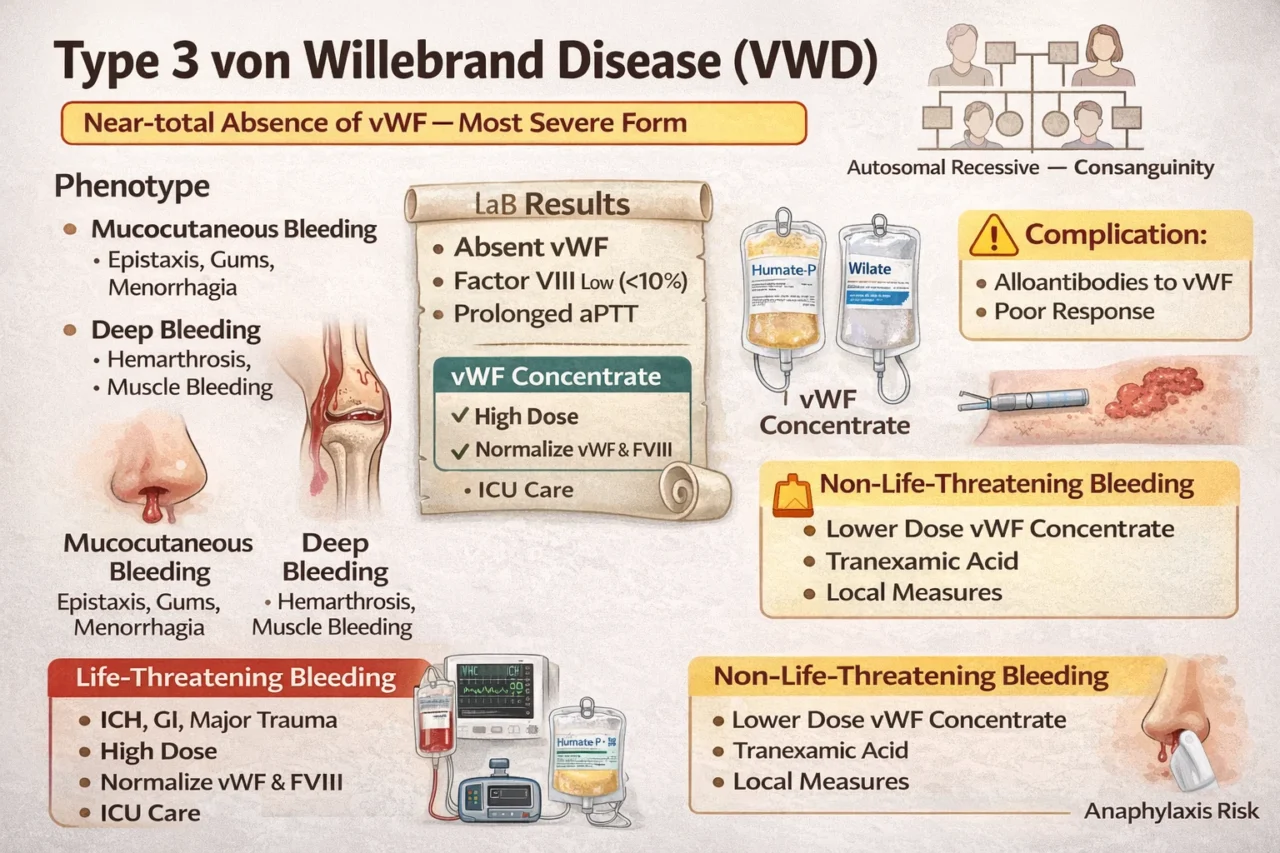
“Type 3 VWD equals near‑total absence of vWF, which is the most severe form.
Family – autosomal recessive; think consanguinity.
Phenotype
- Mucocutaneous bleeding (epistaxis, gums, menorrhagia)
- Deep bleeding, such as hemarthrosis and muscle bleeding, results in a clinical picture that mimics hemophilia A.
Labs
- vWF:Ag and activity absent
- Factor VIII very low – less than ten percent.
- aPTT prolonged
- PT normal
Pearl: DDAVP is ineffective because there is no endogenous von Willebrand factor available to release.
Life-threatening bleeding (ICH, GI, major trauma)
- Immediate vWF-containing concentrate (Humate-P, Wilate) high dose
- Target: normalize vWF activity and FVIII rapidly
- Repeat dosing q8-12h based on levels/clinical response
- Add FVIII if levels critically low or delayed response
- ICU-level care plus local hemostatic measures
Non–life-threatening bleeding (epistaxis, menorrhagia, minor procedures)
- vWF-containing concentrate (lower dose / shorter duration)
- Tranexamic acid for mucosal bleeding
- Local measures (pressure, topical TXA, nasal packing, etc.)
Complication: Alloantibodies to vWF lead poor response / anaphylaxis risk change symbols to words.”
Stay updated with Hemostasis Today.
-
Oct 16, 2026, 18:12Adil Nawaz: Extended Dual Antiplatelet Therapy After Coronary Stenting
-
Oct 16, 2026, 17:50Elad Asher։ STORM-PE Shows Functional Benefits of Thrombectomy
-
Oct 16, 2026, 17:32Shruthi Narayan: STORM-PE and STRIKE-PE Studies Advance Understanding of Recovery After Pulmonary Embolism
-
Oct 16, 2026, 17:22Wolfgang Miesbach։ What a Near-Perfect FISH Score Fails to See
-
Oct 16, 2026, 17:06Troels Wienecke: Connecting Myeloproliferative Disease and Ischemic Stroke
-
Oct 16, 2026, 17:03Only 5 Days Left to Submit Your Research for EAHAD 2027
-
Oct 16, 2026, 16:48Abdul Rahman: Reticulocyte Count and Bone Marrow Activity
-
Oct 16, 2026, 16:44DOAC Adherence in Stroke Patients With Atrial Fibrillation – International Journal of Stroke
-
Oct 16, 2026, 16:22Shannon Farmer: Driving Patient Blood Management Forward in Australia and New Zealand