


Chokri Ben Lamine: Ruxolitinib Safety – Practical Reminders for Hematologists Monitor Blood Counts
Chokri Ben Lamine, Hematologist at King Faisal Specialist Hospital and Research Center, shared a post on X:
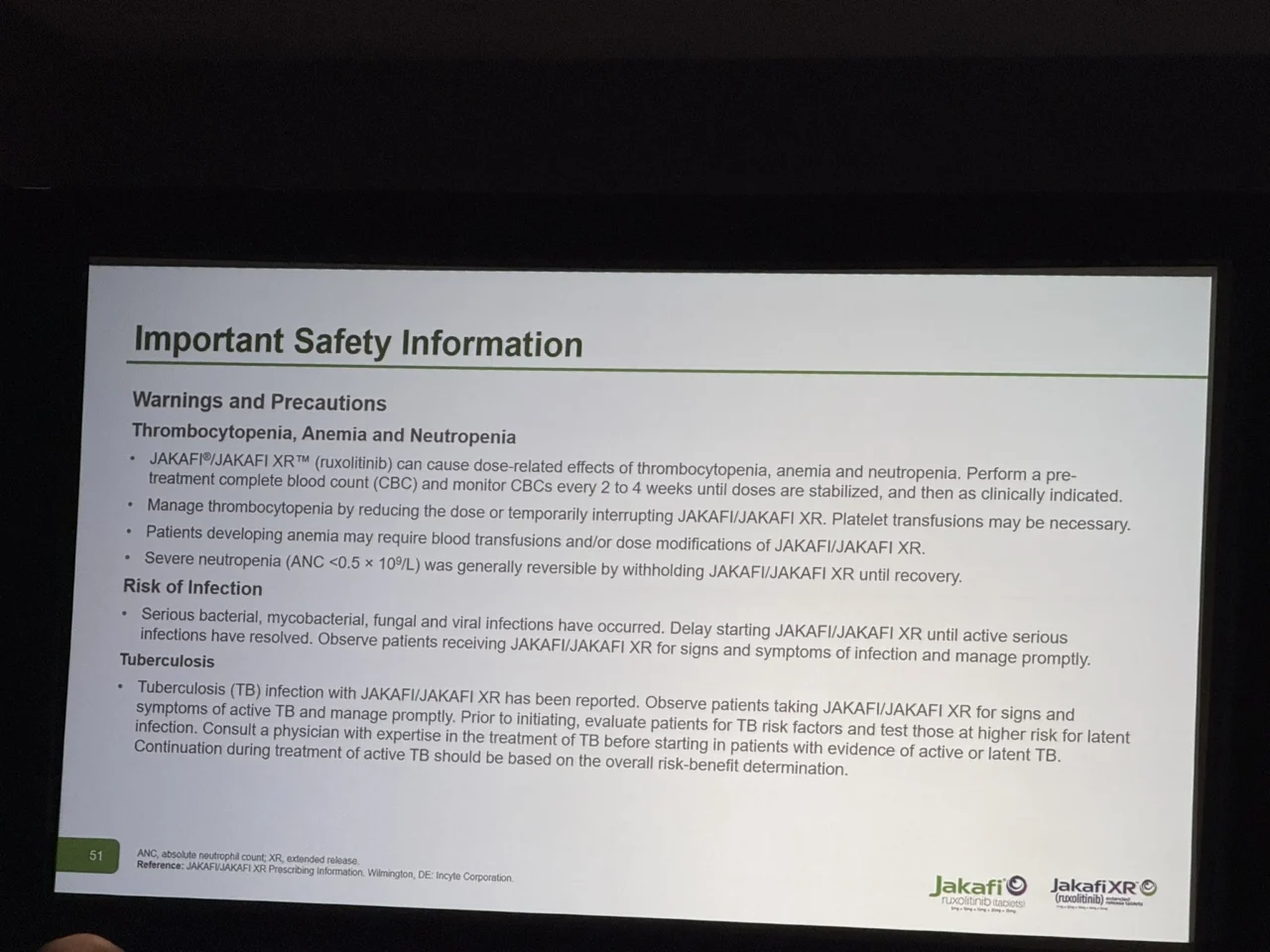
“Ruxolitinib safety: practical reminders for hematologists Monitor blood counts
Dose-related anemia, thrombocytopenia and neutropenia can occur.
CBC before treatment, then every 2–4 weeks until the dose stabilizes.
Adjust or interrupt treatment according to counts and indication; provide transfusion support when needed.
Severe neutropenia—ANC <0.5 ×10⁹/L—usually improves with withholding treatment.
Watch for infections
Serious bacterial, mycobacterial, fungal and viral infections have been reported.
Delay initiation until active serious infection resolves.
Assess TB risk; test higher-risk patients for latent TB.
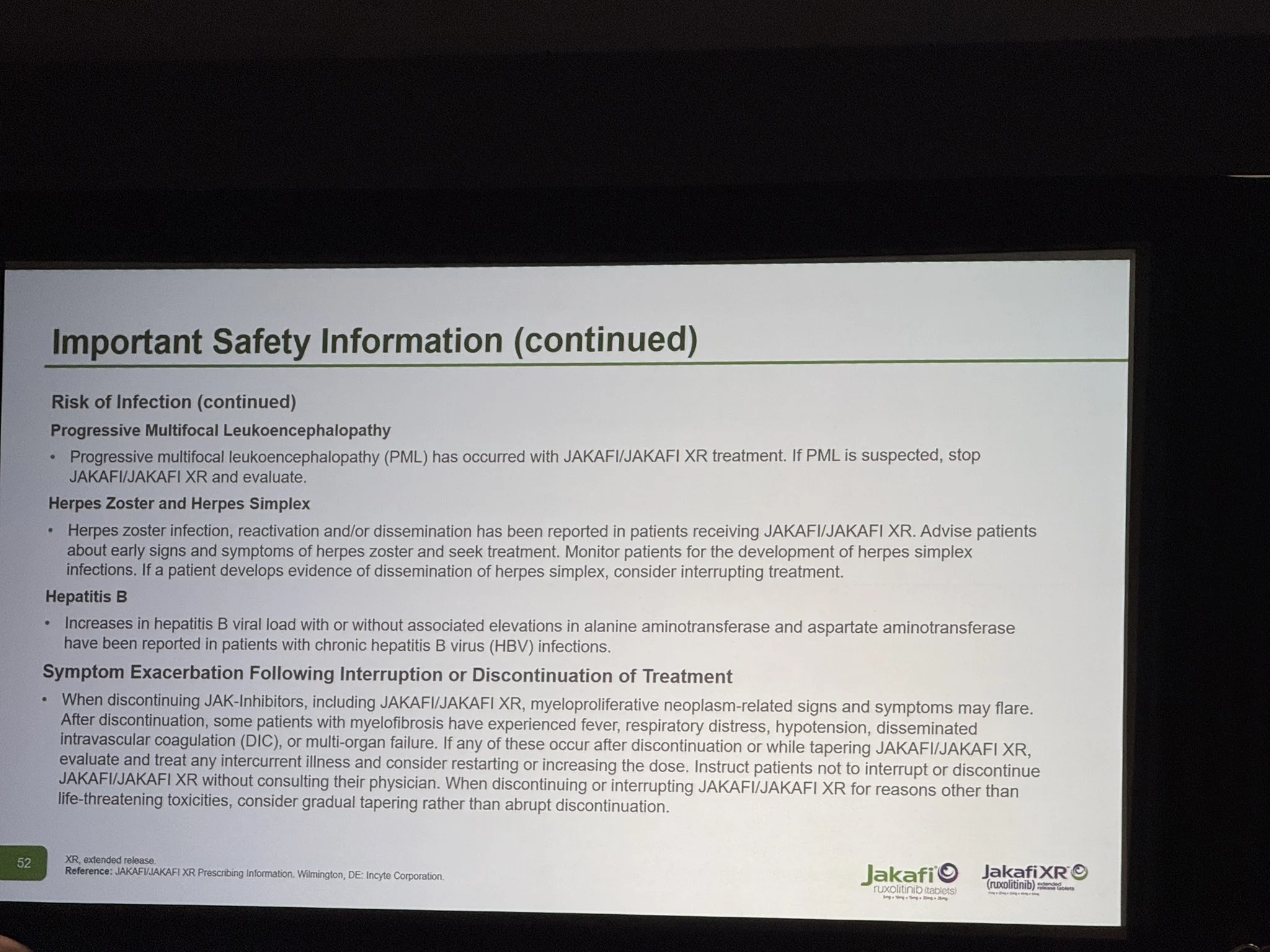
Counsel about early herpes zoster symptoms; monitor for HSV.
HBV viral-load increases can occur in chronic infection—monitor and manage appropriately.
Remember PML
New progressive neurological symptoms warrant urgent assessment. If progressive multifocal leukoencephalopathy is suspected, stop ruxolitinib and investigate.
Plan treatment interruption
Withdrawal can trigger rapid symptom exacerbation, occasionally with: Fever Respiratory distress Hypotension DIC or multiorgan failure
Consider gradual tapering when clinically feasible.
Life-threatening toxicity may require immediate interruption.
Deterioration during withdrawal also requires evaluation for infection and other causes.
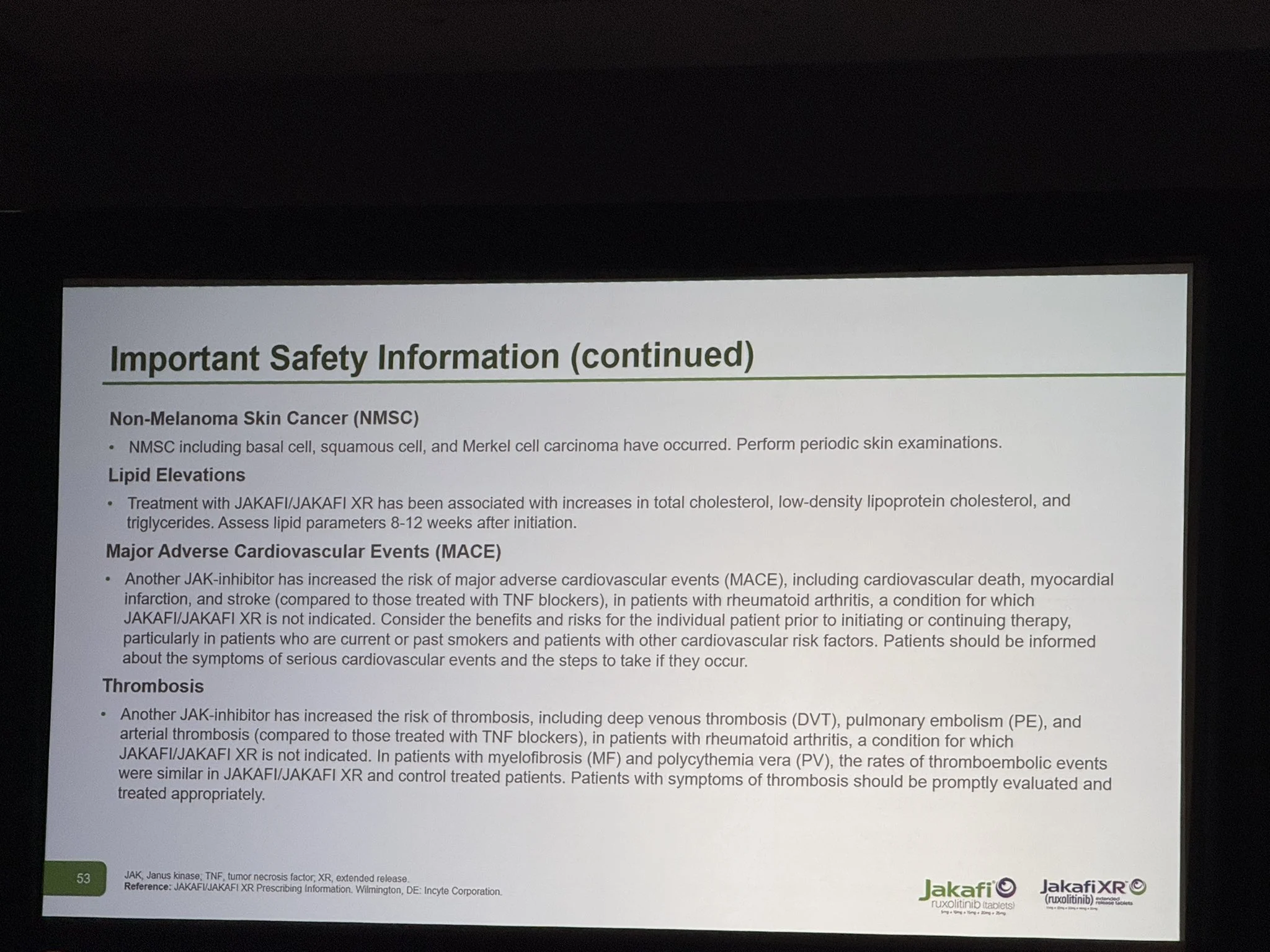
Skin surveillance
Basal cell, squamous cell and Merkel cell carcinomas have been reported.
Perform periodic skin examinations.
Lipids and cardiovascular risk Check lipid parameters 8–12 weeks after initiation.
Review smoking history and cardiovascular risk factors.
The MACE, thrombosis and secondary-malignancy warnings include evidence from another JAK inhibitor studied in rheumatoid arthritis.
That does not establish an identical risk magnitude with ruxolitinib in MPNs.
In MF/PV trials, thromboembolic event rates were similar between ruxolitinib and controls.
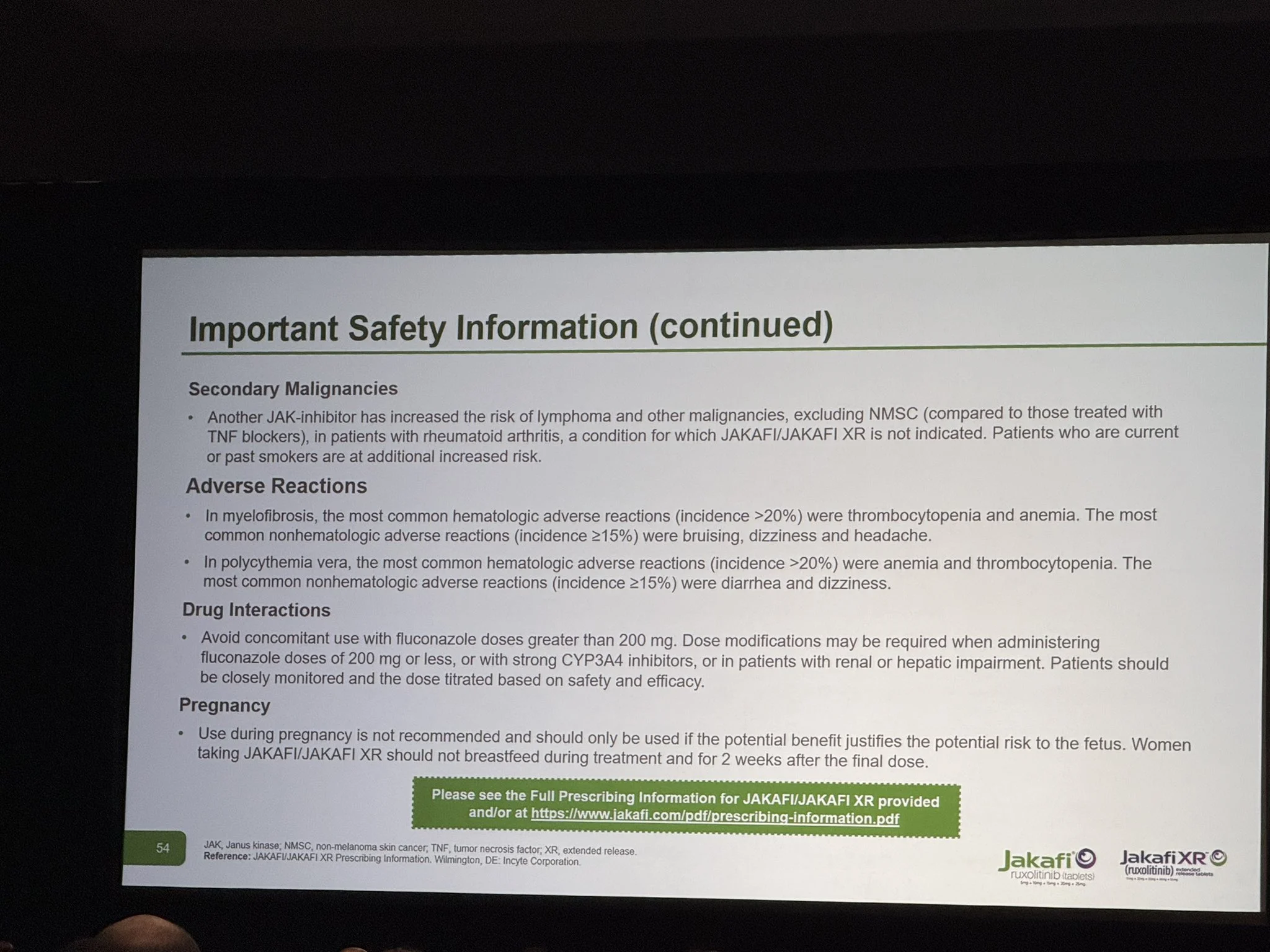
Check interactions Avoid concomitant fluconazole more than 200 mg/day.
Fluconazole lower or equal 200 mg/day or strong CYP3A4 inhibitors may require dose modification.
Review renal and hepatic function.
Adjustments depend on indication, formulation and clinical circumstances – consult the relevant dosing guidance.
Pregnancy and breastfeeding
Pregnancy use requires careful benefit–risk assessment.
Avoid breastfeeding during treatment and for 2 weeks after the final dose.
Source: supplied prescribing-information slides; full prescribing information.”
Other posts featuring Chokri Ben Lamine on Hemostasis Today.
-
Sep 12, 2026, 13:53Marta Velia Antonini: Incidence and Outcomes of ECMO Circuit Failure in Children
-
Sep 12, 2026, 13:47Rob Mac Sweeney: How Venoarterial ECMO Can Affect the Gastrointestinal System
-
Sep 12, 2026, 13:46Ishac Nazy: A Newly Uncovered Mechanism Behind a Dangerous Blood-Clotting Disorder
-
Sep 12, 2026, 13:43Latchumanadhas Kalidoss: PETROS vs Infusion Thrombolysis in Mitral Valve Thrombosis
-
Sep 12, 2026, 13:38Claudio Mauro: The Protective Role of Hyodeoxycholic Acid in Liver Cancer
-
Sep 12, 2026, 13:14Jamie Nash: Honoured With the Race and Sanger Award
-
Sep 12, 2026, 13:04James P. Crowley: Blood Thinners After Fracture – Weighing Clot and Bleeding Risks
-
Sep 12, 2026, 12:53Ocima Richard Draza: A Guide to Stroke Types and Complications
-
Sep 12, 2026, 11:55Susan Shea: Can Coagulation Changes Predict Kidney Injury After Trauma?