


Daniel Ben-Mordechay: Portal Vein Thrombosis – Recognizing a Potentially Life-Threatening Diagnosis with Ultrasound
Daniel Ben-Mordechay, Chief Executive Officer at Orimed GTD, shared a post on LinkedIn:
“Portal Vein Thrombosis (PVT): Recognizing a Potentially Life-Threatening Diagnosis with Ultrasound
Portal Vein Thrombosis (PVT) occurs when a thrombus forms within the portal venous system, leading to partial or complete obstruction of blood flow to the liver. While some patients may present with subtle or nonspecific symptoms, failure to recognize this condition can result in serious complications, including portal hypertension, variceal hemorrhage, intestinal ischemia, and progressive hepatic dysfunction.
Ultrasound plays a central role in the initial evaluation of suspected PVT. It is non-invasive, readily available, free of ionizing radiation, and provides real-time assessment of both vascular anatomy and blood flow dynamics.
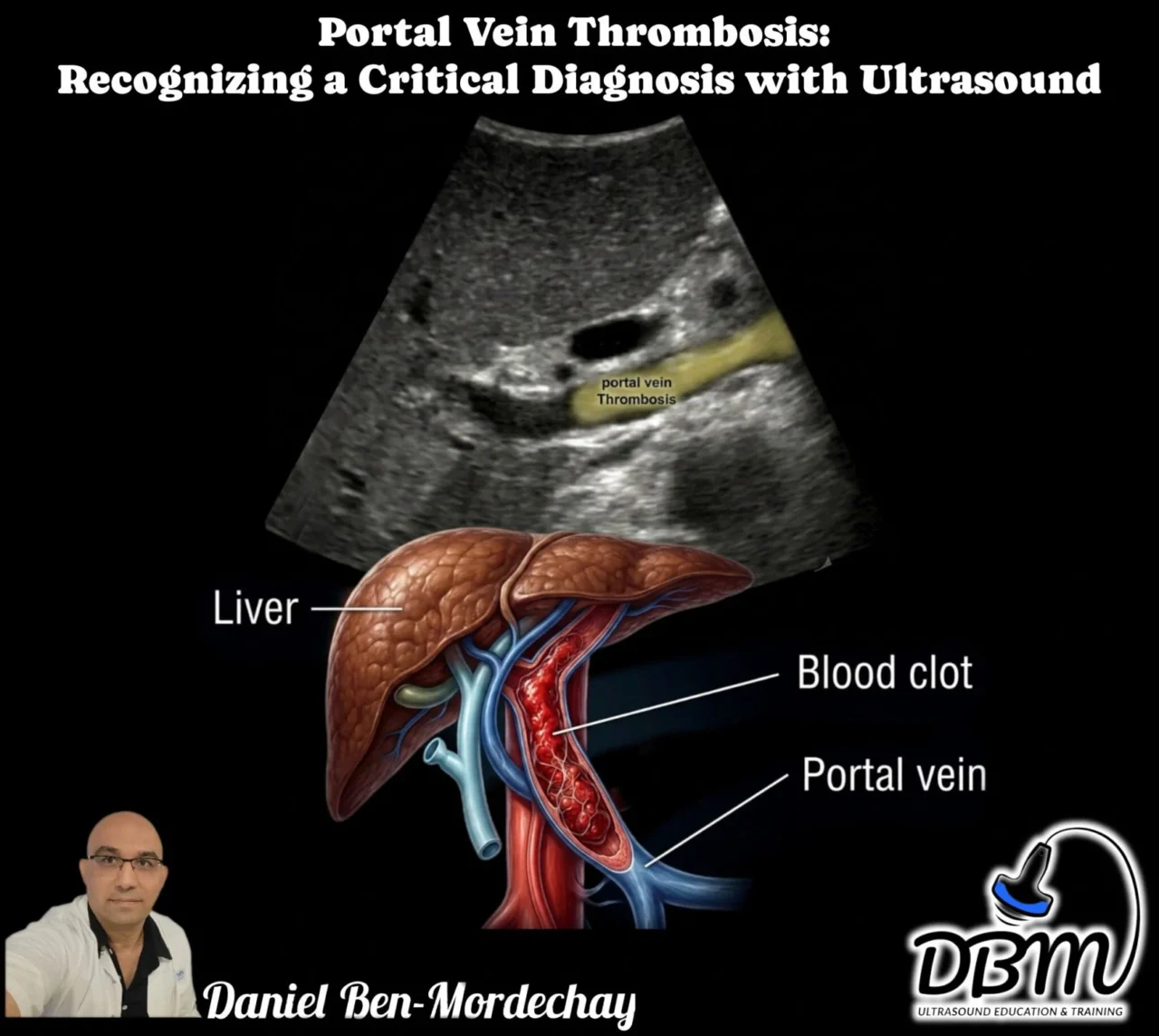
The image demonstrates thrombotic material within the portal vein. On grayscale ultrasound, acute thrombi may appear hypoechoic or only mildly echogenic, whereas chronic thrombi often become increasingly echogenic. Color and spectral Doppler evaluation are essential, as they can reveal absent, reduced, or altered portal venous flow.
Key sonographic features of Portal Vein Thrombosis:
- Intraluminal thrombus within the portal vein
- Partial or complete absence of color Doppler flow
- Expansion of the portal vein in acute thrombosis
- Increased echogenicity of chronic thrombus
- Cavernous transformation of the portal vein in chronic cases
- Secondary signs of portal hypertension, including splenomegaly and collateral vessels
Common causes and risk factors include:
- Liver cirrhosis
- Hepatocellular carcinoma and other malignancies
- Hypercoagulable states
- Pancreatitis and intra-abdominal infections
- Inflammatory bowel disease
- Recent abdominal surgery or liver transplantation
A systematic assessment of the portal vein should be part of every comprehensive liver ultrasound examination.
Identifying abnormal portal venous flow patterns and recognizing thrombus early can significantly impact clinical management and patient outcomes.
For POCUS users and ultrasound practitioners alike, evaluating the portal vein extends beyond simply identifying blood flow.
It requires careful attention to vessel caliber, luminal contents, Doppler characteristics, and associated signs of portal hypertension. Early detection remains one of the most important contributions ultrasound can make in patients at risk for portal vein thrombosis.”
Other posts featuring Daniel Ben-Mordechay on Hemostasis Today.
-
Sep 24, 2026, 18:43Hugh Nguyen: Honored to Accept the Friend of Singapore Red Cross Award
-
Sep 24, 2026, 18:42Titilope Fasipe: Proud to Support American Society of Hematology’s SCD Initiative
-
Sep 24, 2026, 18:34Ifeanyichukwu Ifechidere: Why Coagulation Samples Can Be “Too Valuable to Throw Away”?
-
Sep 24, 2026, 18:33Aswin K. Mohan: When a Superpower Hears the Call for Blood
-
Sep 24, 2026, 18:31Mercy Lung’aho: Anemia Is Not Only An Iron Problem
-
Sep 24, 2026, 18:29Nick Hanson: Before a Dementia Diagnosis Check Vitamin B12
-
Sep 24, 2026, 18:28Rachel McBryan: Nearly One in Five Older Canadians Has Low Vitamin B12
-
Sep 24, 2026, 18:27Kemal Karaagac: Early DOAC Initiation After Acute Ischaemic Stroke in Atrial Fibrillation
-
Sep 24, 2026, 18:26Mohammed A. AlOmar: What Characterizes Young Stroke in the UAE?