


Deepak Lodha: PT and aPTT Mixing Study is a Key Tool in Coagulation Diagnosis
Deepak Lodha, Lab Technician at Dr Lal PathLabs, shared a post on LinkedIn:
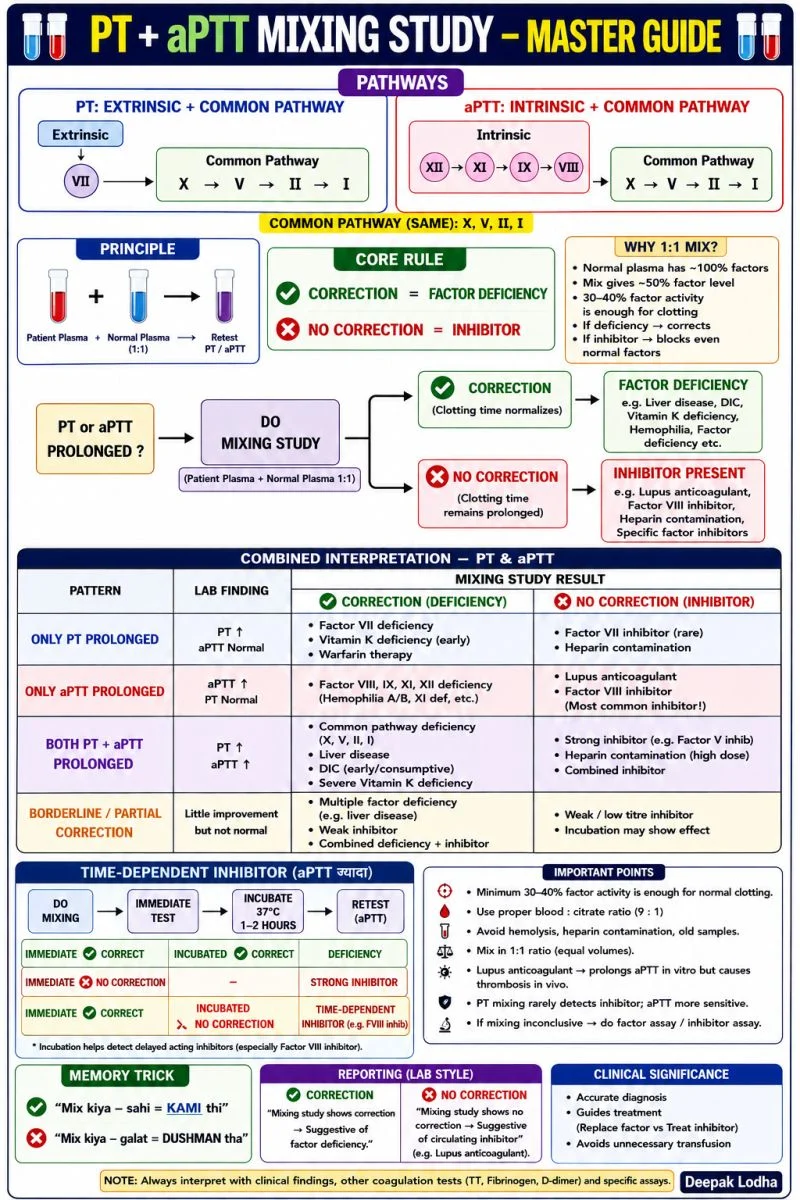
“PT and aPTT Mixing Study – A Key Tool in Coagulation Diagnosis
In routine laboratory practice, prolonged PT or aPTT often creates diagnostic confusion.
Is it a factor deficiency or the presence of a circulating inhibitor?
This is where the Mixing Study becomes essential.
By mixing patient plasma with normal plasma (1:1) and reassessing clotting time, we can identify the underlying cause:
- Correction of PT/aPTT suggests factor deficiency. Seen in conditions like Vitamin K deficiency, liver disease, Hemophilia, or early DIC
- No correction ndicates presence of inhibitor, such as Lupus anticoagulant, Factor VIII inhibitor, or heparin effect
Incubated mixing study further helps detect time-dependent inhibitors, which may not be evident immediately.
This simple yet powerful test:
- Improves diagnostic accuracy
- Guides appropriate treatment (factor replacement vs inhibitor management)
- Prevents unnecessary transfusions
In coagulation testing, correct interpretation is just as important as performing the test. Always correlate with clinical findings and additional tests like TT, fibrinogen, and D-dimer.”
Stay updated with Hemostasis Today.
-
Sep 23, 2026, 16:04Monia Ezzalfani: Advancing Patient-Centered Care in Hemophilia A and B
-
Sep 23, 2026, 15:49Bilge Başak: How Activated PRP Modulates Osteoarthritic Chondrocyte Function
-
Sep 23, 2026, 14:50Mbonjo Bitsie Dora: Strengthening Sickle Cell Care Through Education, Awareness and Innovation
-
Sep 23, 2026, 13:58The New B12 Diagnostic Algorithm: From Serum Cobalamin to Functional Deficiency
-
Sep 23, 2026, 13:56Noha Soror: Preparing for Hematology and Medical Oncology Board Certification
-
Sep 23, 2026, 13:46Ugochi Ogu: What Can Platelet Proteomics Reveal about Pain and Neurocognitive Vulnerability in Sickle Cell Disease?
-
Sep 23, 2026, 13:42Melissa Hollo: Connecting Obesity and Anemia for Earlier Maternal Risk Intervention
-
Sep 23, 2026, 13:16Beverley Hunt: Advances in Haemostatic Management of Postpartum Haemorrhage
-
Sep 23, 2026, 13:13Ioanna Mela: Recruiting a Research Associate on DNA nanotechnology