


Dhinesh Selvaraju: FDA Expands Access to HYMPAVZI in Hemophilia
Dhinesh Selvaraju, Clinical Research Assistant at Yuva Intern by Henry Harvin, shared a post on LinkedIn:
“FDA Approval (2026): Expanded Indication for HYMPAVZI (marstacimab-hncq) in Hemophilia A or B – Broader Patient Access Including Inhibitors and Younger Pediatrics
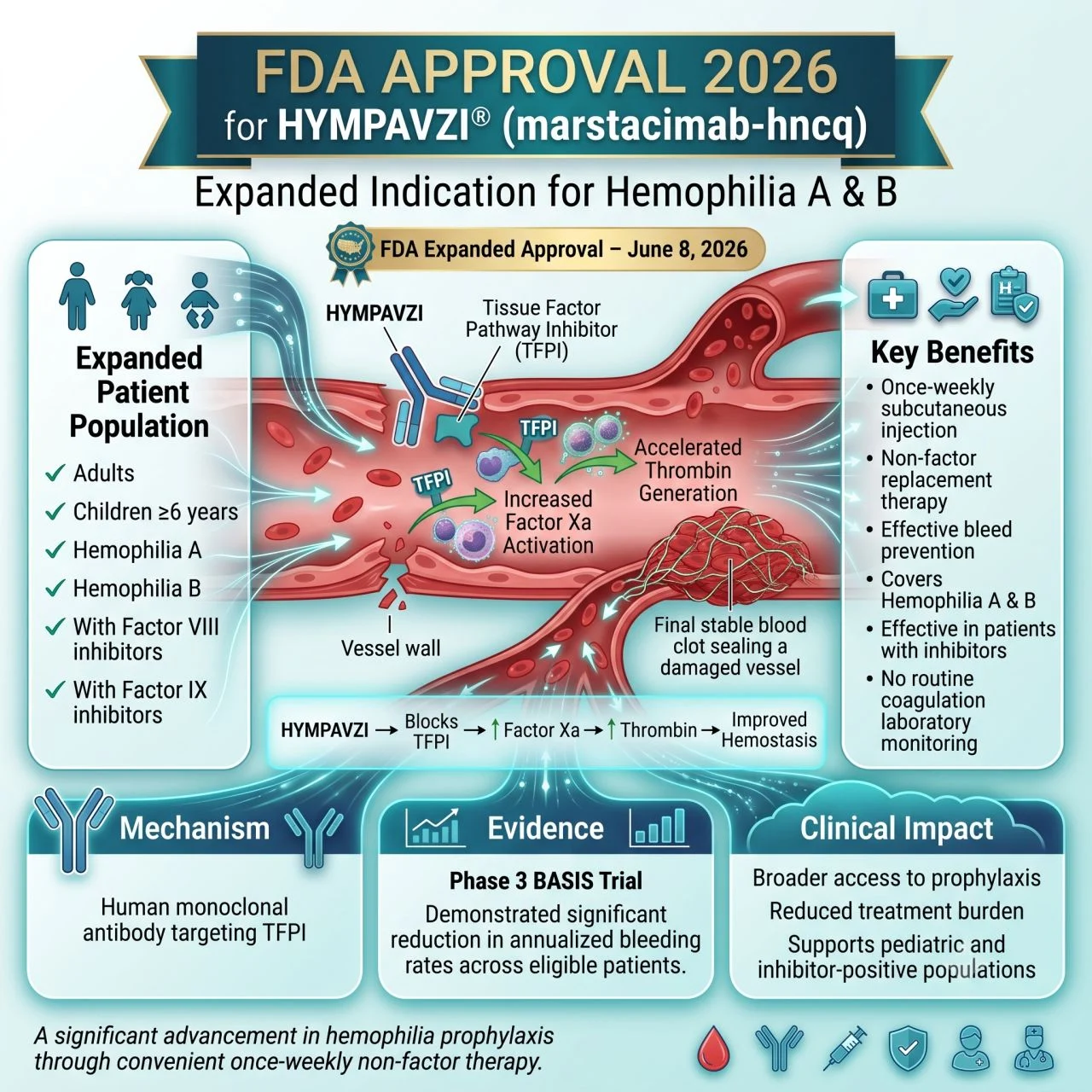
The U.S. Food and Drug Administration approved an expanded indication for Pfizer’s HYMPAVZI on June 8, 2026, providing a non-factor, once-weekly subcutaneous option to a wider population of patients with hemophilia.
FDA Approval Date (Expanded Indication): June 8, 2026
Drug Details
Brand Name: HYMPAVZI
Generic Name: marstacimab-hncq
Dosage Form: Subcutaneous injection
Indication (Expanded)
Routine prophylaxis to prevent or reduce the frequency of bleeding episodes in adults and pediatric patients 6 years of age and older with hemophilia A (congenital factor VIII deficiency) with or without factor VIII inhibitors, or hemophilia B (congenital factor IX deficiency) with or without factor IX inhibitors.
Mechanism of Action
HYMPAVZI is a human monoclonal antibody that inhibits the Kunitz 2 domain of tissue factor pathway inhibitor (TFPI). By blocking TFPI, it increases availability of factor Xa, promoting thrombin generation and rebalancing hemostasis without replacing the missing clotting factor.
Clinical Evidence
Supported by data from the phase 3 BASIS trial and other studies demonstrating bleed reduction in patients with and without inhibitors.
Offers once-weekly dosing with no routine laboratory monitoring required for treatment.
Provides bleed protection across hemophilia A and B, including difficult-to-treat populations with inhibitors.
Safety and Monitoring
Common adverse events consistent with hemophilia population. Monitor for thrombotic events as with other hemostatic agents. No routine coagulation laboratory monitoring needed for dosing adjustments.
Why this approval is important
This expansion significantly broadens access to a convenient, non-factor therapy for patients with hemophilia A or B, including those with inhibitors and younger pediatric patients (ages 6–11).
It addresses unmet needs in hemostasis management by offering reduced treatment burden while maintaining effective bleed prevention — a clinically meaningful advancement for practitioners supporting comprehensive care in hemophilia.”
Stay updated with Hemostasis Today.
-
Oct 9, 2026, 16:23David Boone: Distinguishing Stroke Prevention from Rhythm Control in Atrial Fibrillation
-
Oct 9, 2026, 15:27Mohamed Hegazi: Geostatistical Modelling Maps Global β-Thalassaemia Carrier Prevalence
-
Oct 9, 2026, 15:15Maha Othman: Uncovering the Consensus on TXA in TBI – Call for Collaboration on a Landmark Umbrella Review
-
Oct 9, 2026, 15:07Daniel D. Han: How Inhalation Product Exposure Impairs Cardiac and Platelet Recovery After MI
-
Oct 9, 2026, 14:58William Toole: How Ultrasound-Guided PRP Therapy Relieves Joint and Tendon Pain
-
Oct 9, 2026, 14:50Shayan Mohammadmoradi: In Corpus Christi for the 20th Midwest Platelet Conference
-
Oct 9, 2026, 14:37Tariq Tramboo: High Platelet Concentrate for Osteoarthritis Knee – Recent Meta-Analyses
-
Oct 9, 2026, 14:26Yousma Khan: Hematology Series – Beyond RBCs, WBCs and Platelets
-
Oct 9, 2026, 14:13Jesus Ardila Novoa: Why the WHO’s Historic Essential Medicines List Decision Is Just the Beginning