

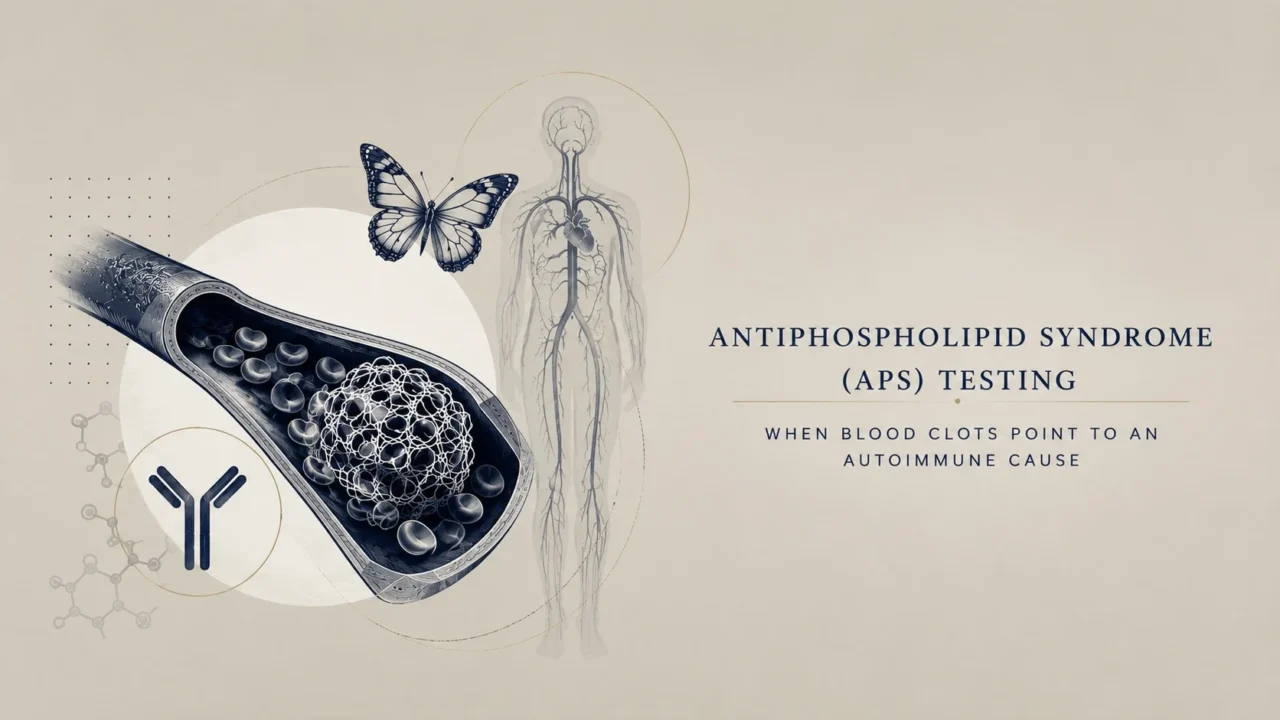
Haileraguel Hailemichael: Antiphospholipid Syndrome Testing – When Blood Clots Point to an Autoimmune Cause
Haileraguel Hailemichael, Laboratory Project Manager at Micro pharma PLC, shared a post on LinkedIn:
“Antiphospholipid Syndrome (APS) Testing: When Blood Clots Point to an Autoimmune Cause
A young patient develops a deep vein thrombosis (DVT) with no obvious risk factors.
Or a woman experiences recurrent miscarriages despite otherwise normal health.
Could an autoimmune disorder be the underlying cause?
This is where Antiphospholipid Syndrome (APS) testing becomes essential.
What is Antiphospholipid Syndrome (APS)?
APS is an autoimmune disorder in which the body produces antibodies against phospholipid-binding proteins, increasing the risk of:
- Venous thrombosis (e.g., DVT, pulmonary embolism)
- Arterial thrombosis (e.g., stroke)
- Recurrent pregnancy loss
- Pregnancy complications (such as preeclampsia or fetal growth restriction)
APS may occur on its own (primary APS) or in association with autoimmune diseases such as Systemic Lupus Erythematosus (SLE).
The Three Main Laboratory Tests
1.Lupus Anticoagulant (LA)
Despite its name, Lupus Anticoagulant is associated with an increased risk of clotting, not bleeding.
It is detected using clot-based coagulation assays.
2.Anticardiolipin Antibodies (aCL)
Measured as:
- IgG
- IgM
Persistent moderate-to-high levels support the diagnosis of APS.
3.Anti-β2 Glycoprotein I (Anti-β2GPI)
Measured as:
- IgG
- IgM
Highly specific for APS and an important part of the diagnostic criteria.
Real Clinical Scenario
A 32-year-old woman presents with:
- Three consecutive first-trimester miscarriages
- No structural uterine abnormalities
- No hormonal cause identified
Laboratory results:
Lupus Anticoagulant: Positive
Anticardiolipin IgG: Positive
These findings strongly support Antiphospholipid Syndrome (APS) when confirmed with repeat testing.
Important Clinical Pearls
- APS testing should not be performed during an acute thrombotic event or while on certain anticoagulants without considering their effect on test interpretation.
- A diagnosis of APS requires persistent positivity—the same antibody should be positive on two occasions at least 12 weeks apart, together with an appropriate clinical event.
- A single positive antibody result does not confirm APS.
- Patients who are ‘triple positive’ (LA and aCL and Anti-β2GPI) are generally at the highest risk for thrombosis and pregnancy complications.
Key Clinical Message
- Think about APS testing in patients with:
- Unexplained venous or arterial thrombosis at a young age
- Recurrent pregnancy loss
- Stroke without traditional cardiovascular risk factors
- Suspected or confirmed SLE with thrombotic complications
- The right antibody test can explain what routine coagulation tests cannot—and may prevent future thrombotic events and pregnancy complications.”
Stay updated with Hemostasis Today.

-
Sep 30, 2026, 21:50Jagat Narula: Connecting Cardiovascular Health and Sickle Cell Disease on World Heart Day 2026
-
Sep 30, 2026, 21:38John Kastelein: Exploring the Biology of Cardiovascular Disease at BioCentury Grand Rounds Europe
-
Sep 30, 2026, 21:36Mark Murphy: Irish Heart Foundation Meets With Senator Teresa Costello on World Heart Day
-
Sep 30, 2026, 21:34Sadashiva Pai: How Pancreatic Cancer Uses Blood Clotting to Evade Immune Attack
-
Sep 30, 2026, 15:58Bernhard Merget: New Frontiers in Thrombosis and Stroke Research
-
Sep 30, 2026, 15:39Ifeanyichukwu Ifechidere: The Molecular Orchestra of Primary Hemostasis
-
Sep 30, 2026, 15:28Reassessing the Benefit–Risk Balance of Extended Anticoagulation in Cancer Patients – ESC Working Group on Cardiovascular Pharmacotherapy
-
Sep 30, 2026, 15:07Chiranjeev Sharma: Targeting Factor XIa with the Synthetic Inhibitor SB-01
-
Sep 30, 2026, 14:41Bruna Gigante: Balancing Thrombosis and Bleeding in Cardiovascular Care