


Harshdeep Singh: Why Platelet Counts Matter Less Than the Cause
Harshdeep Singh, Silver Investor at PC Jeweller Ltd, shared a post on LinkedIn:
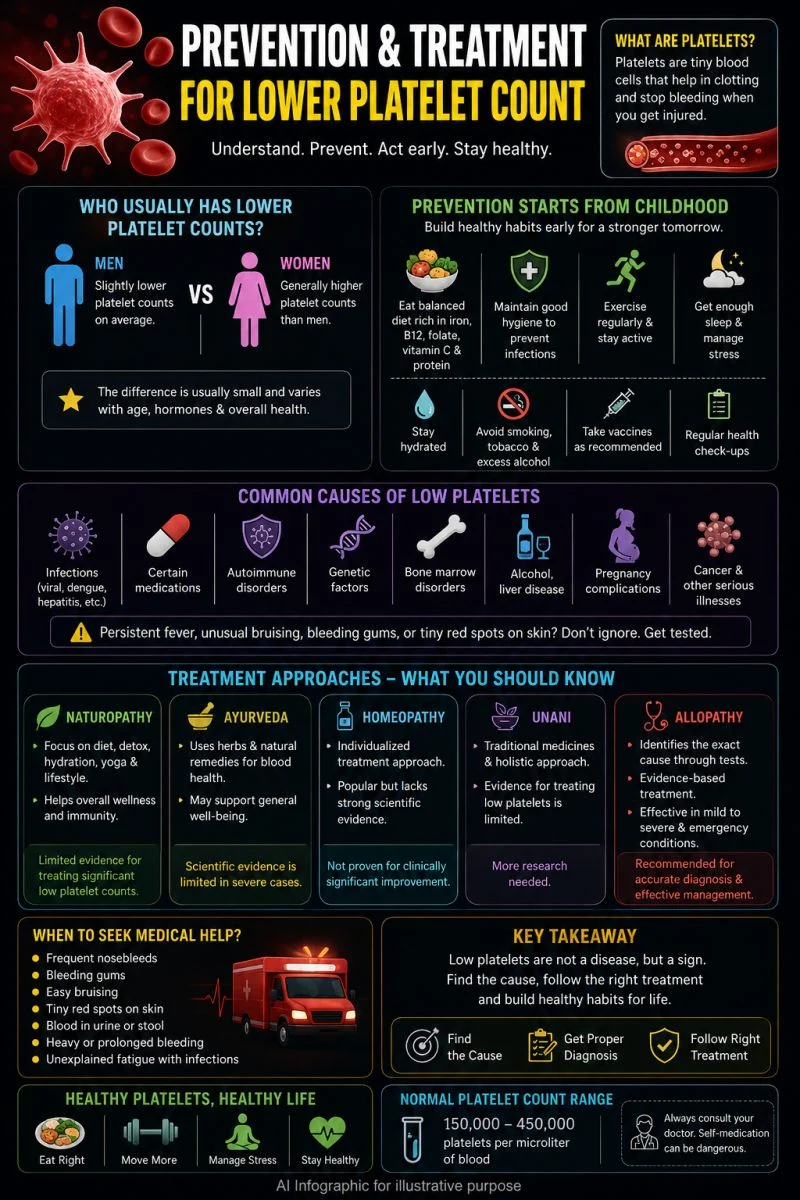
“Prevention and Treatment for Lower Platelet Count
Many people ask: Who usually has lower platelet counts – men or women?
Studies show that men generally have slightly lower platelet counts than women, while women tend to have somewhat higher platelet levels on average.
But the more important question is:
How can we prevent platelet reduction from childhood?
Here are some simple habits:
- Eat foods rich in iron, vitamin B12, folate, vitamin C, and protein
- Maintain good hygiene to prevent infections
- Get adequate sleep and regular exercise
- Stay hydrated
- Avoid tobacco, smoking, and excessive alcohol
- Get timely treatment for infections and illnesses
- Have regular health check-ups if there is a family history of blood disorders
Treatment Options for Low Platelets:
- Naturopathy
Focuses on nutrition and lifestyle improvements.
Can support overall health but is not proven to treat serious low platelet conditions.
- Ayurveda
Uses traditional herbs and dietary approaches.
May support general well-being, but evidence for treating significant platelet deficiency is limited.
- Homeopathy
Popular among many people, but scientific evidence for increasing low platelet counts is lacking.
- Unani
Traditional treatment system with various remedies.
Limited scientific evidence for treating clinically important thrombocytopenia.
- Allopathy (Modern Medicine)
Diagnoses the exact cause of low platelets.
Provides evidence-based treatment based on the underlying condition.
Can manage mild, moderate, and severe platelet disorders, including emergencies.
My Key Takeaway
Low platelets are not a disease by themselves — they are often a sign that something else is happening inside the body.
The best approach is:
- Prevention through healthy habits from childhood
- Early testing when symptoms appear
- Evidence-based diagnosis and treatment of the root cause
Because when it comes to platelets, understanding ‘why they are low’ is more important than simply trying to increase the number.”
Stay updated with Hemostasis Today.
-
Sep 29, 2026, 19:00Caitlin Raymond: Can Artificial Blood Solve Blood Supply Shortages?
-
Sep 29, 2026, 18:51Chaza Alaji: Dyslipidemia, Thrombosis and the DIC Diagnostic Trap
-
Sep 29, 2026, 17:31Rajnikant Patel: Bridging Ayurvedic Concepts and Modern Toxin-Mediated Disease
-
Sep 29, 2026, 17:13Nicholas Lang։ A Meaningful Case of Immune Thrombocytopenia
-
Sep 29, 2026, 16:55Ayatullah Gamal Wahab: When the CBC Lies
-
Sep 29, 2026, 16:35Jonathan Douxfils: Navigating the VTE Risk Continuum in Reproductive Medicine
-
Sep 29, 2026, 16:35Chaima Rajeh: Types of Anemia and Their Laboratory Features
-
Sep 29, 2026, 16:27Scott Isaacs: How GLP-1 RAs Target Systemic Inflammation to Drive Cardio, Autoimmune, and Gut Health
-
Sep 29, 2026, 16:21Yitshak Kreiss: From Treating Patients to Defining the Standard of Knowledge