


Heghine Khachatryan: Hematologic Causes of Cryptogenic Stroke
Heghine Khachatryan, Editor-in-Chief of Hemostasis Today, Head of Hemophilia and Thrombosis Center at Yeolyan Hematology and Oncology Center, shared a post on LinkedIn:
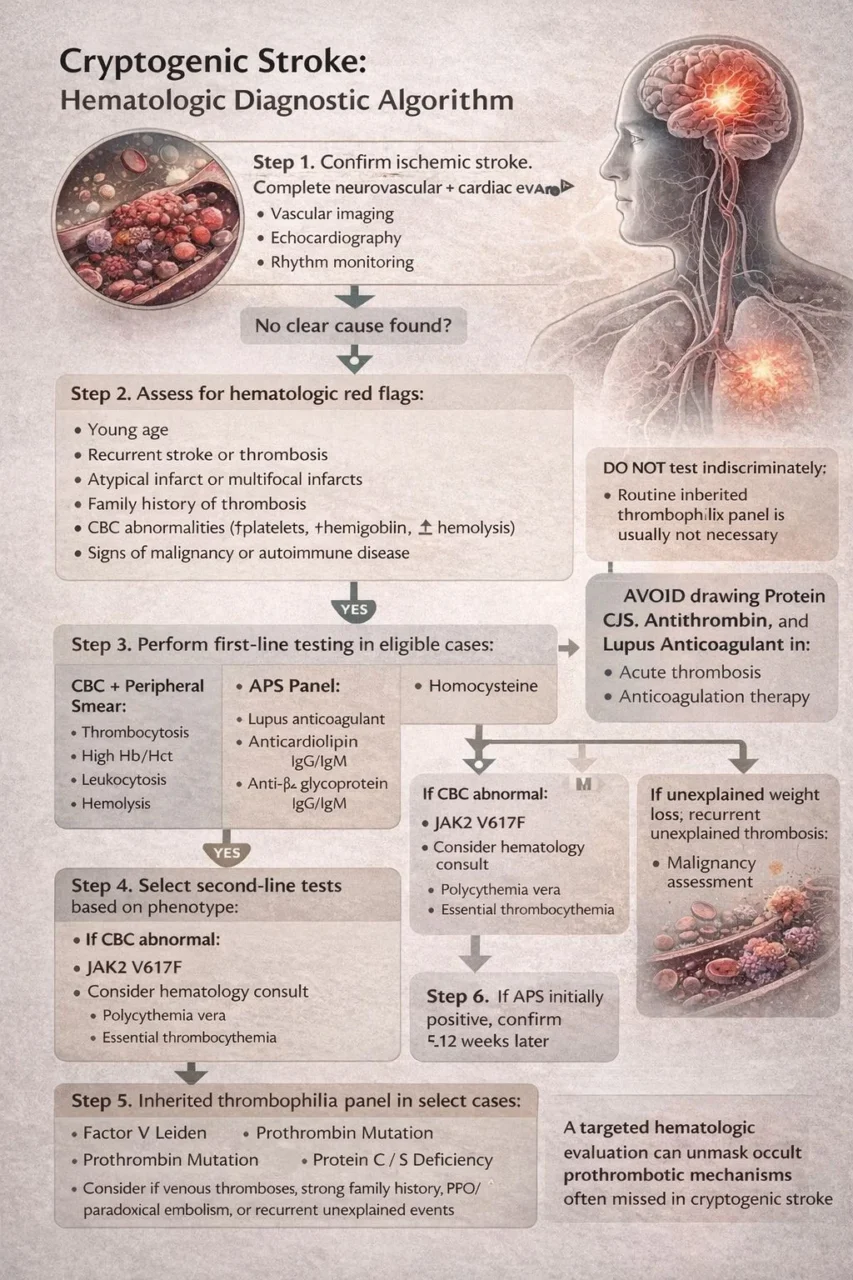
“Cryptogenic Stroke: When the Cause May Be Hematologic
Despite comprehensive evaluation, approximately twenty to thirty percent of ischemic strokes remain classified as cryptogenic.
In a meaningful proportion of these patients, the underlying mechanism may lie within the hemostatic or hematologic system.
A targeted diagnostic approach is therefore essential.
Before initiating extensive thrombophilia testing, clinicians should first complete the standard evaluation for ischemic stroke, including:
- Brain imaging
- Vascular imaging
- ECG and cardiac rhythm monitoring
- Echocardiography when indicated
Once common causes have been excluded, hematologic investigation becomes particularly relevant in selected patients, especially when the following features are present:
- Young age
- Recurrent stroke or unexplained thrombosis
- Multifocal or atypical infarct patterns
- Family history of thrombosis or early stroke
- Abnormalities on CBC (thrombocytosis, erythrocytosis, hemolysis)
- Clinical suspicion of malignancy or autoimmune disease
Practical first-line hematologic testing may include:
- Complete blood count and peripheral smear
- Antiphospholipid antibody panel
- Homocysteine level
Further testing should be guided by clinical phenotype.
For example:
- Antiphospholipid syndrome remains one of the most important immune-mediated causes of arterial thrombosis.
- Myeloproliferative neoplasms associated with JAK2 mutations may present with arterial events, including stroke.
- Rare disorders such as Paroxysmal nocturnal hemoglobinuria should be considered in patients with hemolysis or cytopenias.
- Malignancy-related hypercoagulability, including Trousseau syndrome, may also manifest as cryptogenic stroke.
Importantly, inherited thrombophilia panels should not be ordered indiscriminately.
Testing for conditions such as Factor V Leiden mutation or Prothrombin G20210A mutation is generally reserved for carefully selected cases.
Clinical takeaway
A targeted hematologic evaluation—rather than routine broad thrombophilia screening- can help identify occult prothrombotic states that may otherwise remain undetected in patients with cryptogenic stroke.
Recognizing these mechanisms is critical for improving secondary prevention strategies and long-term patient outcomes.”
Stay updated with Hemostasis Today.
-
Sep 22, 2026, 19:02Blocking Histone-Induced Platelet-Erythrocyte Interactions With Polyanions – Platelets Journal
-
Sep 22, 2026, 18:49Abdul Rahman Hamad: Early Action for Better Outcomes in Deep Vein Thrombosis
-
Sep 22, 2026, 18:37Carmine Siniscalchi: Age-Adjusted D-Dimer Cutoffs in DVT Diagnosis
-
Sep 22, 2026, 18:37Stefano Romeo: The Cardiovascular Patient Journey is Still Full of Gaps
-
Sep 22, 2026, 18:11Bharath Kumar V.։ Advancing Safer Anticoagulation for Cancer-Associated Thrombosis
-
Sep 22, 2026, 18:10Fatima Zahra: ASH Released New Guidelines on the Diagnosis of Iron Deficiency
-
Sep 22, 2026, 17:49Nirav Dhanesha: Targeting FXI for Safer Anticoagulation
-
Sep 22, 2026, 17:17Eric Lambert: Intravascular Imaging and the Future of Precision PCI
-
Sep 22, 2026, 16:45Claudiu Stoicescu: Are We Starting Cardiovascular Risk Assessment Too Late?