


Ifeanyichukwu Ifechidere: A Prolonged APTT Is Not Always a Bleeding Disorder
Ifeanyichukwu Ifechidere, Specialist Biomedical Scientist at Sheffield Teaching Hospitals NHS Foundation Trust, shared a post on LinkedIn:
” The routine coagulation test looked abnormal… but the patient was clotting, not bleeding.
That contradiction is often the first clue that something important is being missed. As biomedical scientists, we frequently encounter prolonged APTT results during routine coagulation screening. The immediate thought may be a clotting factor deficiency or anticoagulant therapy.
But what if the patient has a history of thrombosis?
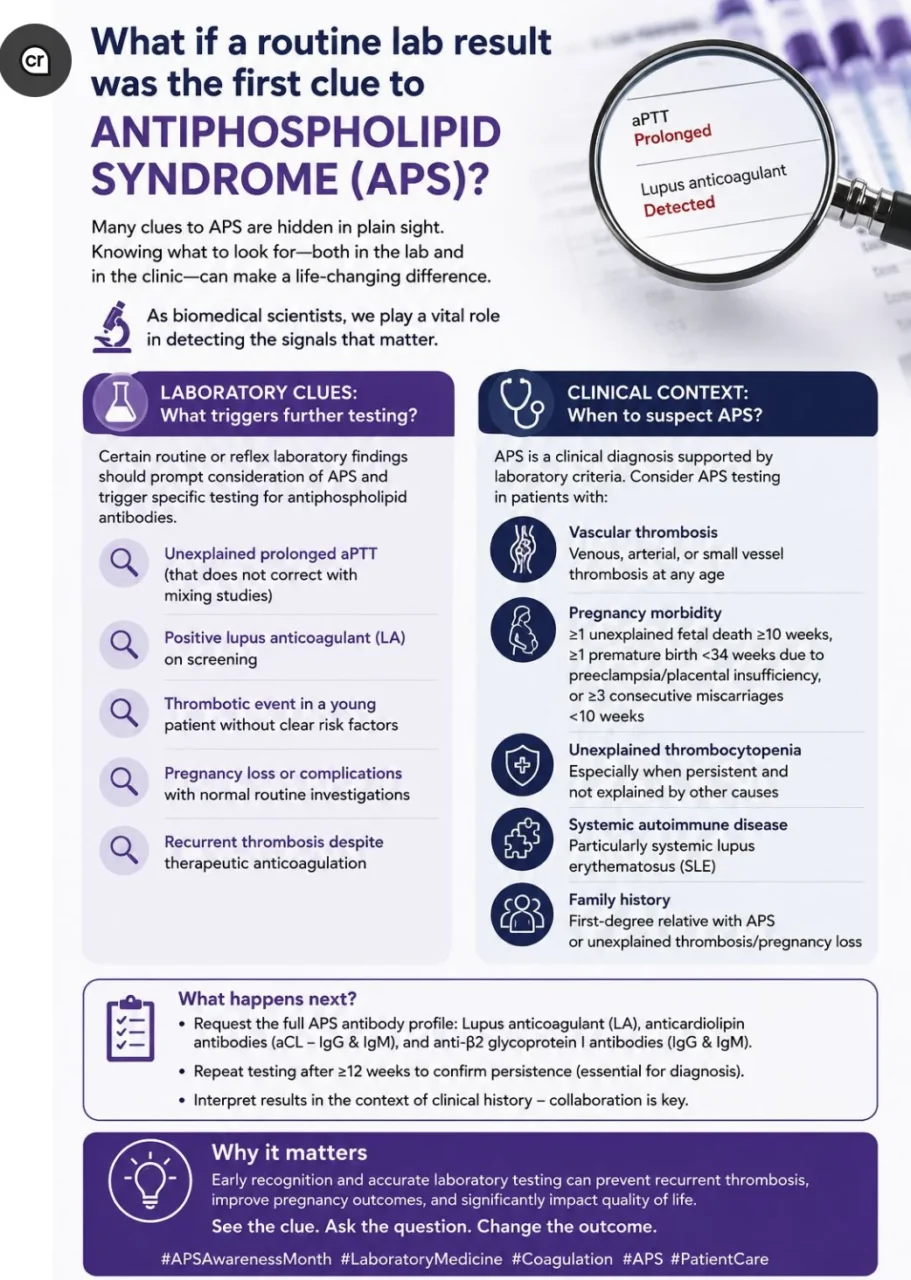
This is where Antiphospholipid Syndrome (APS) should enter the differential. Laboratory clues that should trigger further APS investigation:
- Unexplained prolonged APTT
- APTT that fails to correct on mixing studies
- Presence of a lupus anticoagulant pattern
- Persistent positivity for antiphospholipid antibodies on repeat testing (≥12 weeks apart)
The paradox is fascinating: Although lupus anticoagulants prolong phospholipid-dependent clotting assays in vitro, they are associated with an increased risk of thrombosis in vivo.
When should APS be suspected clinically?
Consider APS when laboratory findings align with any of the following:
- Unprovoked venous thromboembolism, particularly in younger patients
- Ischaemic stroke or TIA without obvious risk factors
- Recurrent pregnancy loss
- Unexplained fetal death
- Severe pre-eclampsia or placental insufficiency
- Thrombosis occurring at unusual sites
- Persistent thrombocytopenia alongside thrombotic events
A case worth remembering:
A 34-year-old woman is referred for investigation following her third unexplained miscarriage. Routine coagulation screening reveals a prolonged APTT.
A mixing study fails to correct. Further testing confirms lupus anticoagulant positivity, which remains positive 12 weeks later. The prolonged APTT was not a marker of bleeding risk.
It was the laboratory clue that led to the diagnosis of APS.
Key learning point:
Not every prolonged APTT points towards a bleeding disorder. Sometimes it is the laboratory’s first warning sign of an autoimmune thrombophilia. As scientists, recognising when a routine result deserves a deeper investigation can directly influence patient outcomes.
Have you ever encountered a laboratory result that seemed contradictory until the clinical picture completed the story?
Share your experience below in the comment section as we celebrate APS awareness month (June).”
Find more posts featuring Ifeanyichukwu Ifechidere on Hemostasis Today.
-
Sep 29, 2026, 19:00Caitlin Raymond: Can Artificial Blood Solve Blood Supply Shortages?
-
Sep 29, 2026, 18:51Chaza Alaji: Dyslipidemia, Thrombosis and the DIC Diagnostic Trap
-
Sep 29, 2026, 17:31Rajnikant Patel: Bridging Ayurvedic Concepts and Modern Toxin-Mediated Disease
-
Sep 29, 2026, 17:13Nicholas Lang։ A Meaningful Case of Immune Thrombocytopenia
-
Sep 29, 2026, 16:55Ayatullah Gamal Wahab: When the CBC Lies
-
Sep 29, 2026, 16:35Jonathan Douxfils: Navigating the VTE Risk Continuum in Reproductive Medicine
-
Sep 29, 2026, 16:35Chaima Rajeh: Types of Anemia and Their Laboratory Features
-
Sep 29, 2026, 16:27Scott Isaacs: How GLP-1 RAs Target Systemic Inflammation to Drive Cardio, Autoimmune, and Gut Health
-
Sep 29, 2026, 16:21Yitshak Kreiss: From Treating Patients to Defining the Standard of Knowledge