


Joshua Penrod: 35 Years of Progress in Plasma Safety
Joshua Penrod, Senior Vice President at Plasma Protein Therapeutics Association (PPTA), shared a post on LinkedIn:
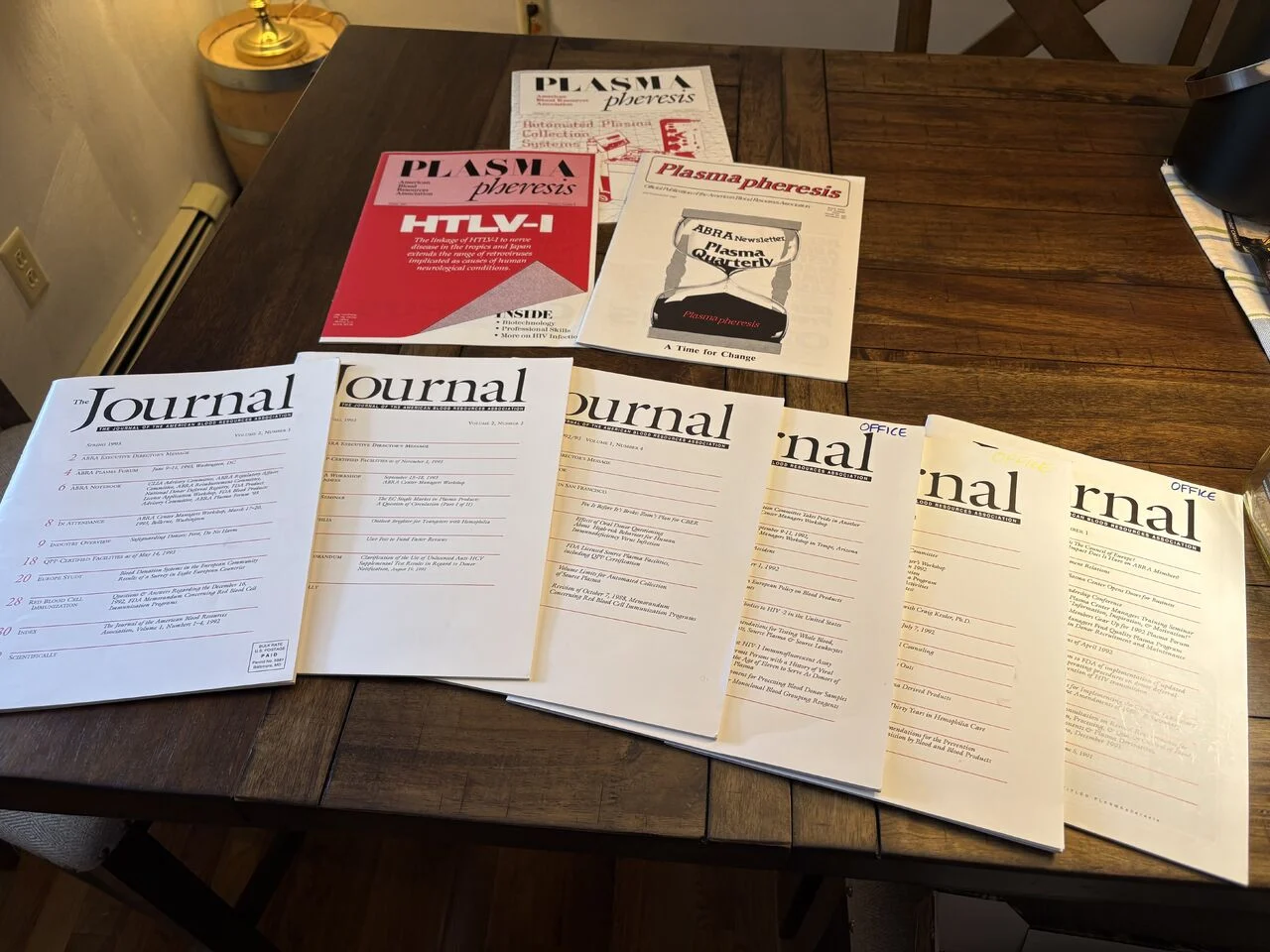
“I spent some time recently looking through old issues of Plasmapheresis and The Journal of the American Blood Resources Association from the late 1980s and early 1990s.
I graduated from high school in 1992, so there was something faintly amusing about realizing that these publications were already in circulation then – and that one of my current colleagues, Catherine Izzi, appears on the masthead. (Sorry, Cathy – but it is rather striking!)
What struck me most, though, was not nostalgia.
It was continuity.
Across these issues, the industry was already grappling with many of the same fundamental questions we still discuss today: donor safety, compensated donation, infectious disease risk, standards development, FDA and CDC updates, and the practical implications of evolving regulation.
There is a clear through-line showing that quality and safety have been central concerns for decades, long before I entered the industry in 2003 with the Plasma Protein Therapeutics Association (PPTA).
The role that I’ve played in it for many years now sits within a larger spectrum and continuum of work by people who came before me, and will continue by those who will carry it after.
At the same time, the contrast with today is just as important.
The science is more advanced.
Regulatory structures are more developed.
Donors, on the whole, are more closely monitored, and our understanding of risk, harm reduction, and quality systems is much more refined.
Innovation has not been absent from this industry over the last 35 years; it has been constant.
The steady discipline, attention to detail, and consistent focus on improvements in protecting donor health and advancing the availability of high-quality therapies for patients with rare disease is generally not something that makes headlines or garners widespread recognition…though it should.
One small further factual note also stood out to me: one of these older publications referenced roughly 11.7 million liters of plasma globally, combining source plasma and recovered plasma.
That number is several times higher today – a reminder both of how much the field has grown and how much greater the responsibility is to maintain safety, quality, and public trust.
For me, that may be the most interesting lesson from the archives.
The details change.
The tools improve.
The scale expands.
But the core obligation remains the same: protect donors, support a safe and reliable supply of these life-saving medicines, and help ensure that patients with rare and serious conditions can continue to access the therapies they need.”
Stay updated with Hemostasis Today.
-
Oct 8, 2026, 04:28Jeff Molter: Electrophysiological PIEZO1 Analysis Advances Diagnosis in Hereditary Xerocytosis
-
Oct 8, 2026, 04:23Barbara Adams Krolak: Women and Blood Clots Are We Missing the Warning Signs
-
Oct 8, 2026, 04:10Rutendo Muzambi: Hospital Admission Patterns and Care Disparities in Sickle Cell Disease
-
Oct 8, 2026, 03:50Olfat Berro: Redefining the Future of Haemophilia A
-
Oct 8, 2026, 03:35Tasnia Tarana: Heavy Menstrual Bleeding When the Cause Is Not in the Uterus
-
Oct 8, 2026, 03:28Kian Haseli: Electrophysiological PIEZO1 Analysis Advances Diagnosis in Hereditary Xerocytosis
-
Oct 8, 2026, 03:20Sthanu Subramanian: Leukopenia in Sepsis A Marker of Severe Disease
-
Oct 7, 2026, 16:44Amor Salah: 2026 NCS/SCCM Guidelines for Managing Antithrombotic-Associated ICH
-
Oct 7, 2026, 16:04NETs in Thrombosis: From Mechanism to Therapeutic Target