

Kalyan Roy: How Platelet-Rich Plasma Accelerates Tissue Repair and Regeneration
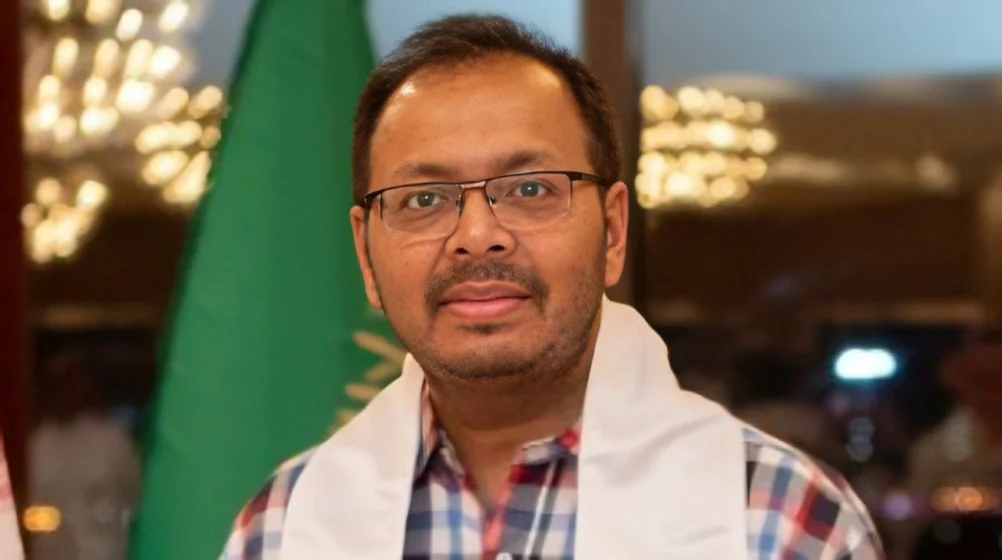
Kalyan Roy, Transfusion Medicine Specialist at Square Hospitals LTD, shared a post on LinkedIn:
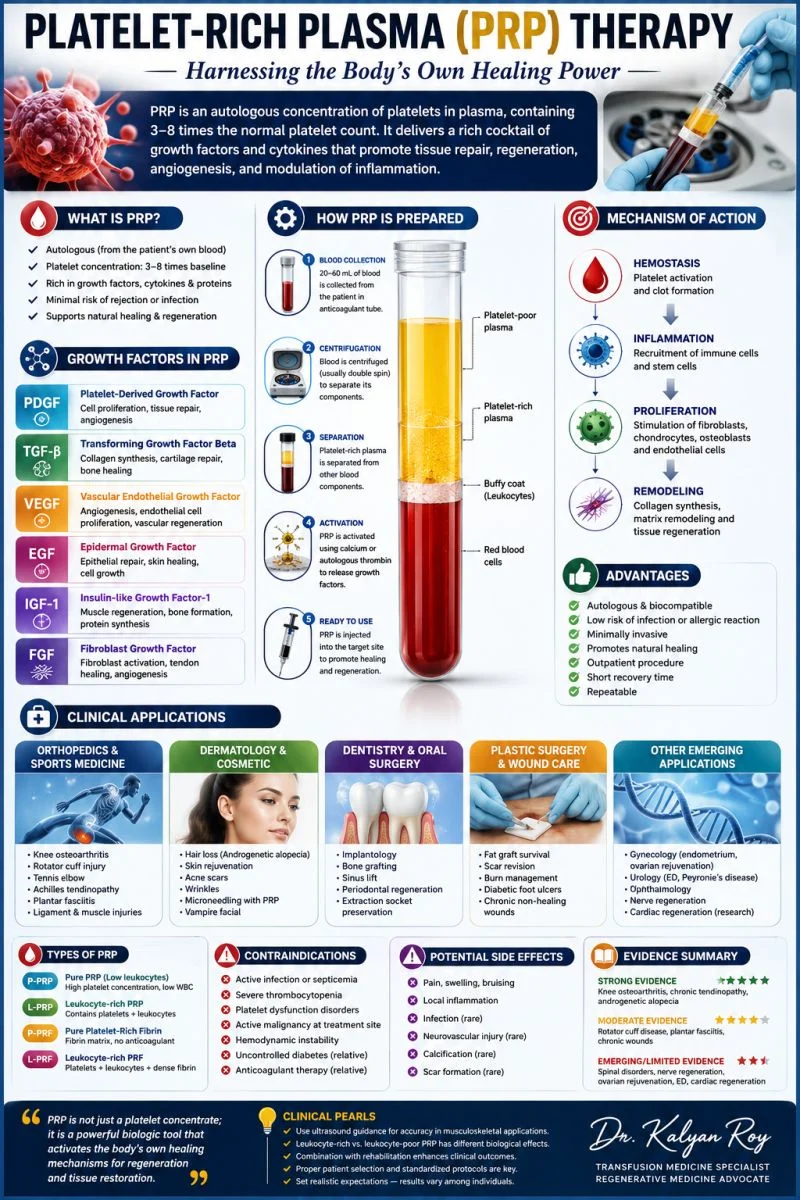
”Platelet-Rich Plasma (PRP): Harnessing the Body’s Own Healing Power
Regenerative medicine is transforming healthcare, and Platelet-Rich Plasma (PRP) has emerged as one of its most promising biologic therapies.
Unlike conventional treatments that primarily relieve symptoms, PRP promotes tissue repair by utilizing the patient’s own platelets, concentrated to 3–8 times their normal level.
These platelets release a rich cocktail of growth factors and cytokines that stimulate healing, angiogenesis, collagen synthesis, stem cell recruitment, and modulation of inflammation.
Key Growth Factors in PRP
- PDGF – Cell proliferation and tissue repair
- TGF-β – Collagen synthesis and cartilage healing
- VEGF – Angiogenesis and vascular regeneration
- EGF – Skin and epithelial repair
- IGF-1 – Muscle and bone regeneration
- FGF – Fibroblast activation and tendon healing
Clinical Applications
- Knee Osteoarthritis
- Chronic Tendinopathies (Tennis Elbow, Achilles Tendinopathy)
- Sports Injuries
- Androgenetic Alopecia (Hair Restoration)
- Chronic Non-healing Wounds
- Oral and Maxillofacial Surgery
- Plastic Surgery and Skin Rejuvenation
How Does PRP Work?
Hemostasis, followed by Controlled Inflammation, followed by Cellular Proliferation, and finally Tissue Remodeling
Current Evidence
The strongest scientific evidence supports PRP in mild-to-moderate knee osteoarthritis, chronic tendinopathies, and androgenetic alopecia. While outcomes are encouraging, standardized preparation protocols and high-quality clinical trials remain essential to optimize its therapeutic potential.
PRP is not simply a platelet concentrate—it represents a shift toward biologic, personalized, and regenerative medicine, where the patient’s own blood becomes a powerful tool for healing.
Stay updated with Hemostasis Today.
-
Oct 20, 2026, 06:45Grant Garcia: Why Does a Blood Clot Diagnosis Immediately End an Athlete’s Season?
-
Oct 20, 2026, 06:35Parag Tamhankar: Landmark Study Reveals Genetic Spectrum and Targeted Therapies for ALPS in the Indian Population
-
Oct 20, 2026, 06:26Nina Houben: Neonatal Blood Transfusion Symposium and PhD Defense
-
Oct 20, 2026, 05:46Jan T. Kielstein: DNP Poisoning and Hemoadsorption The Limits of Rescue Therapy
-
Oct 20, 2026, 05:33Giulia Di Paolo: Connecting Plasma Donation to the Patients Who Depend on It
-
Oct 20, 2026, 05:20James Knowles: Exploring Plasma Manufacturing and Strengthening Industry Collaboration
-
Oct 20, 2026, 05:11Giuseppe Lippi։ Understanding Liver Test Abnormalities After AAV Gene Therapy
-
Oct 20, 2026, 05:02Sanam Loghavi: Test Your Hematology Knowledge at ASH 2026!
-
Oct 20, 2026, 04:13Ifeanyichukwu Ifechidere: DOACs Are Not the Answer to Every Anticoagulation Question