


Krishna Kumar Dhakchinamoorthi: How AI-Powered Technologies Analyze Patient History to Detect and Predict DVT
Krishna Kumar Dhakchinamoorthi, Professor and Head at SNS Institutions, shared a post on LinkedIn:
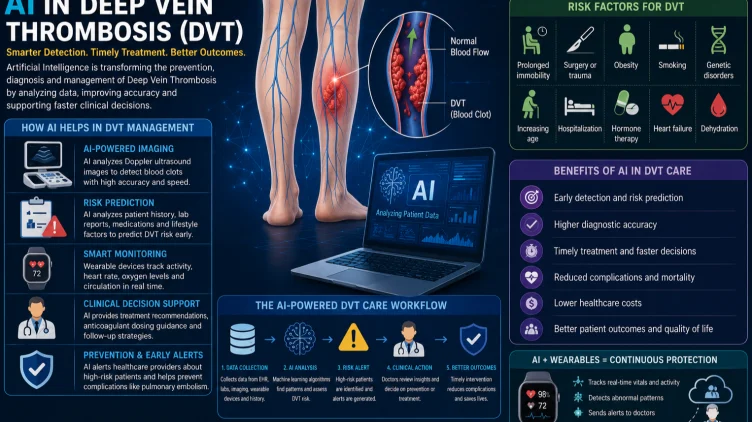
“Artificial Intelligence (AI) is transforming the prevention, diagnosis, and management of Deep Vein Thrombosis (DVT) by enabling faster detection and smarter clinical decision-making.
This infographic illustrates how AI-powered technologies analyze patient history, Doppler ultrasound images, laboratory reports, and vital signs to identify blood clots and predict DVT risk at an early stage.
It highlights the role of machine learning, wearable health monitoring, and clinical decision support systems in improving patient safety and treatment outcomes.
The infographic also emphasizes key benefits such as early diagnosis, accurate risk prediction, timely intervention, continuous monitoring, and personalized patient care.
Through advanced digital healthcare solutions, AI is helping healthcare professionals reduce complications, prevent pulmonary embolism, and improve overall vascular health management.”
Stay updated with Hemostasis Today.
-
Oct 16, 2026, 13:59Aya Akmal Amin: Antiphospholipid Syndrome Management and Risk Stratification
-
Oct 16, 2026, 13:10Emanuel Sueldo: CAHT 2026 Celebrates Scientific Progress and Team Achievements
-
Oct 16, 2026, 13:05Maha Othman: Queen’s Health Sciences Advances CAT Risk Models and Pediatric ISTH-BAT Cut-Offs
-
Oct 16, 2026, 13:03Thrombosis Awareness Must Lead to Timely Action – Roche
-
Oct 16, 2026, 12:49Wolfgang Miesbach: 5-Year CBDR Data Confirms Emicizumab Safety and Efficacy in Hemophilia A
-
Oct 16, 2026, 12:40Edward Lee Carter: How Factor XI Inhibition Could Transform Anticoagulation Therapy
-
Oct 16, 2026, 12:40Marc Carrier: Looking Ahead to ISTH 2027 in Vancouver
-
Oct 16, 2026, 12:30Bob Lempke: How One Blood Donation Can Save Up to Three Lives
-
Oct 16, 2026, 12:30Why VWF Therapies Belong on the EU Critical Medicines List – EHC