


Mariam Swidan: Hemolytic Anemia – Disease Overview
Mariam Swidan, Biomedical Science Graduate, Clinical Laboratory Professional, shared a post on LinkedIn:
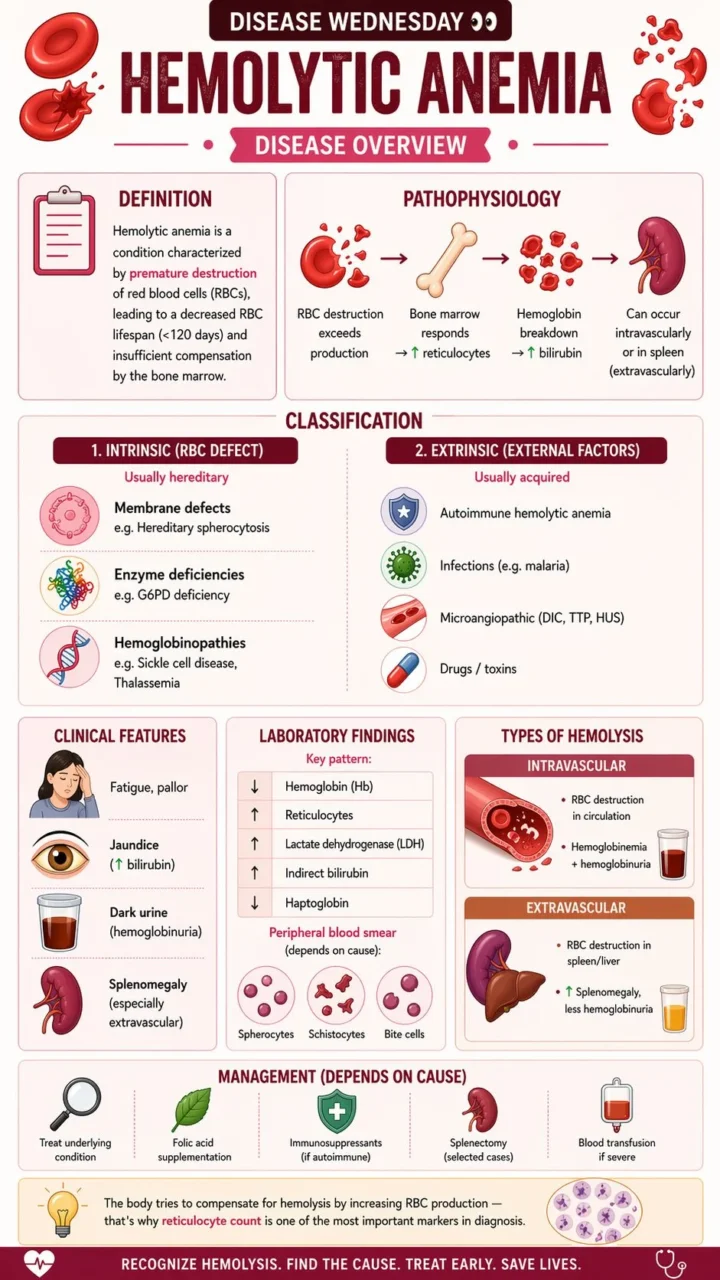
“Hemolytic Anemia – Disease Overview
Definition
Hemolytic anemia is a condition characterized by premature destruction of red blood cells (RBCs), leading to a decreased RBC lifespan (less than 120 days) and insufficient compensation by the bone marrow.
Pathophysiology
- RBC destruction exceeds production
- Bone marrow responds – increased reticulocytes
- Hemoglobin breakdown – increased bilirubin
- Can occur intravascularly or extravascularly (spleen)
Classification
1. Intrinsic (RBC defect)
Usually hereditary
- Membrane defects (e.g., spherocytosis)
- Enzyme deficiencies (e.g., G6PD deficiency)
- Hemoglobinopathies (e.g., sickle cell disease, thalassemia)
2. Extrinsic (external factors)
Usually acquired
- Autoimmune hemolytic anemia
- Infections (e.g., malaria)
- Microangiopathic (DIC, TTP, HUS)
- Drugs/toxins
Clinical features
- Fatigue, pallor
- Jaundice (increased bilirubin)
- Dark urine (hemoglobinuria)
- Splenomegaly (especially extravascular)
Laboratory findings
Key pattern:
- Hb decreased
- Reticulocytes increased
- LDH increased
- Indirect bilirubin increased
- Haptoglobin decreased
Blood smear (depends on cause):
- Spherocytes
- Schistocytes
- Bite cells
Types of hemolysis
Intravascular
- RBC destruction in circulation
- Hemoglobinemia and hemoglobinuria
Extravascular
- RBC destruction in spleen/liver
- Increased splenomegaly, less hemoglobinuria
Management (depends on cause)
- Treat underlying condition
- Folic acid supplementation
- Immunosuppressants (if autoimmune)
- Splenectomy (selected cases)
- Blood transfusion if severe
The body tries to compensate for hemolysis by increasing RBC production – that’s why reticulocyte count is one of the most important markers in diagnosis.”
Stay updated with Hemostasis Today.
-
Sep 27, 2026, 15:49Rana Al-Hrout: Iron Deficency – Is Ferritin 15ng/mL or Less Still the Cutoff?
-
Sep 27, 2026, 15:49Ayushi Sharma: What I Thought Transfusion Medicine Would Be vs What It Actually Is
-
Sep 27, 2026, 15:48William Wallace: How Much Human Research Is Behind the Supplements We Take?
-
Sep 27, 2026, 15:46Franck Perraudin: Lp(a) Lowering Alone May Not Be Enough
-
Sep 27, 2026, 15:41Ahmed Hamandi: Sharing Real-World HSCT Experience at the Iraqi Society of Haematology Conference
-
Sep 27, 2026, 15:39Co-creating Digital Support With Young Stroke Survivors – European Stroke Organisation
-
Sep 27, 2026, 15:39Eleri Schiavone: Celebrating 80 Years of the Welsh Blood Service
-
Sep 27, 2026, 15:38Jessica Garcia: Standing Where VWD Was First Recognized 100 Years Later
-
Sep 27, 2026, 15:37Heghine Khachatryan: A Meaningful Step Forward for Inherited Blood Disorders in Africa