


Mariusz Kruk: Plaque-Directed Intervention for the Prevention of Myocardial Infarction
Mariusz Kruk, Professor at National Institute of Cardiology, shared Alejandro González Veliz‘s shared post on LinkedIn adding:
”A very interesting concept.
As an invasive cardiologist working extensively with CCTA, I deleted this study from my presentations a year ago.
After witnessing so many plaques and stenoses regress, we were converted: this is an attainable therapeutic goal.
Sometimes it requires going beyond statins and ezetimibe and escalating to PCSK9 inhibitors — and this is also where CCTA Plaque Qantification matters.”
Alejandro González Veliz, Interventional Cardiologist at Institute of Cardiology and Cardiovascular Surgery, shared a post on LinkedIn:
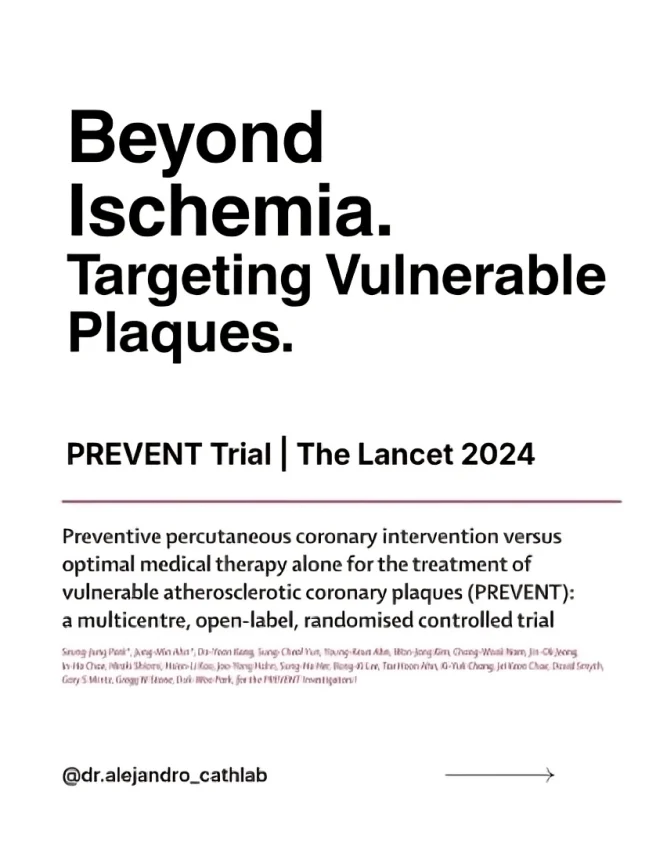
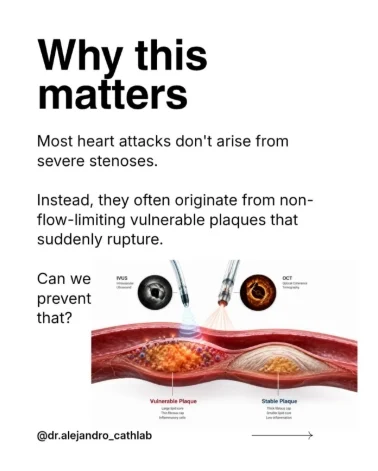
”Can we prevent myocardial infarction by treating vulnerable plaques before they rupture?
For decades, PCI has been guided primarily by ischemia. The PREVENT trial challenges that paradigm by asking a different question: should we intervene on non – flow – limiting but high – risk plaques identified by intracoronary imaging?
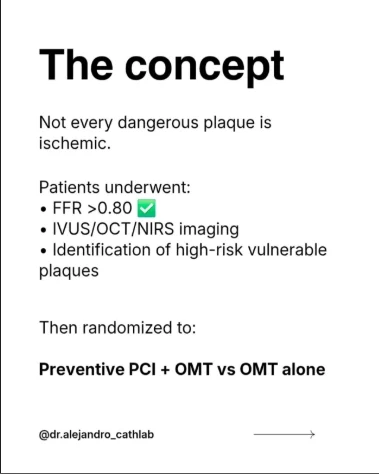
In this multicenter randomized trial, patients with FFR >0.80 and imaging-defined vulnerable plaques (identified by IVUS, OCT, or NIRS) were assigned to preventive PCI plus optimal medical therapy or optimal medical therapy alone.
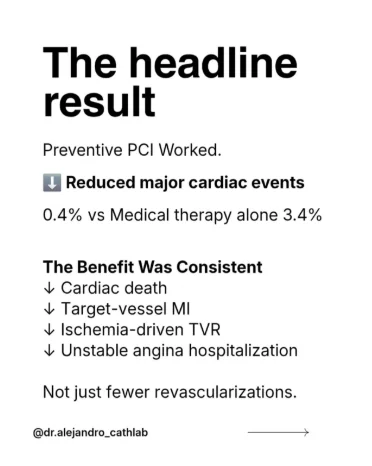
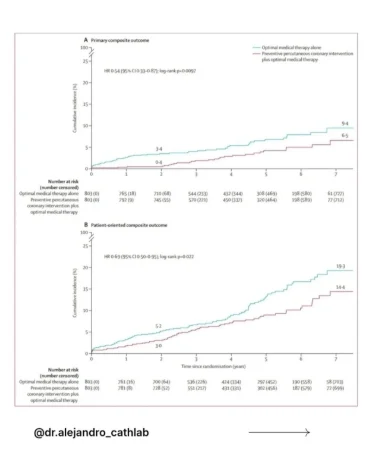
Patients in the PCI group experienced a significantly lower rate of the primary composite endpoint at 2 years (0.4% vs 3.4%), with benefits that remained evident during long-term follow – up.
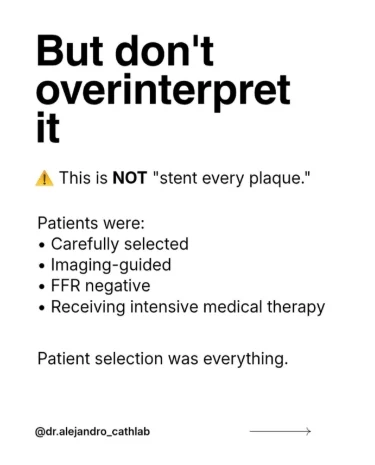
Importantly, this is not an invitation to stent every intermediate lesion.
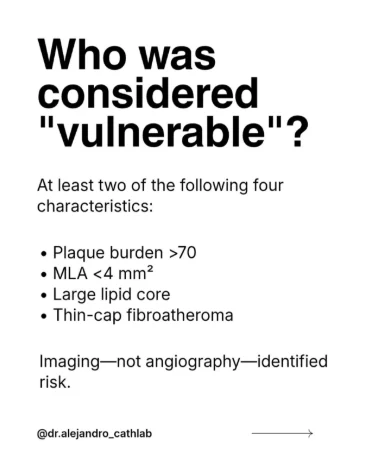
Patients were carefully selected using intracoronary imaging, received contemporary guideline – directed medical therapy, and underwent imaging – guided PCI.
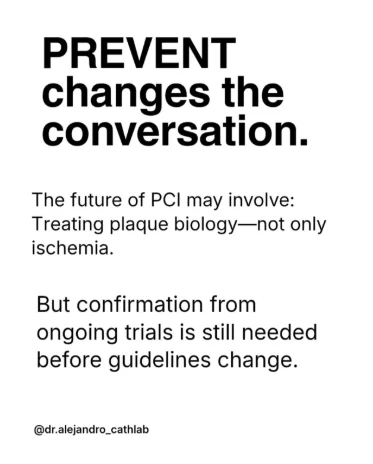
The study demonstrates the potential value of plaque characterization, not angiography alone, in identifying lesions at risk for future events.
PREVENT is the first large randomized trial to show that focal treatment of vulnerable plaques may improve outcomes beyond optimal medical therapy.
Whether this strategy should change routine clinical practice now—or awaits confirmation from ongoing trials—remains one of the most important questions in interventional cardiology.
Do you think PCI should evolve from an ischemia-guided strategy to a plaque-guided strategy?”
Stay updated with Hemostasis Today.
-
Oct 11, 2026, 22:40Bahram Alamdary Badlou: Platelets as First Responders in Hemostasis, Immunity, and Inflammation
-
Oct 11, 2026, 22:22Vipin Singh: New Publication on Hippo-YAP Signaling and Platelet Activation
-
Oct 11, 2026, 22:21Trygve Berge: New AFNOR Paper on AF-related Stroke in Norway
-
Oct 11, 2026, 22:09Omar Alomari: Our New Publication on Apixaban vs Rivaroxaban for VTE
-
Oct 11, 2026, 21:22Shayan Roshan: Happy to Share Two Research Milestones in Trauma Care and Pancreatic Cancer
-
Oct 11, 2026, 21:16Chokri Ben Lamine: Anemia in Myelofibrosis – Multiple Mechanisms, Limited Responses
-
Oct 11, 2026, 21:03Carmela Walker: Supporting Warriors Living With SCD Through Dental Care and Advocacy
-
Oct 11, 2026, 21:00Rishdha Roshad: Intraoperative Cell Salvage – Turning Blood Loss into an Opportunity for Recovery
-
Oct 11, 2026, 20:59Anthony R. Sloan: Honored to Share Our Work at the 20th Midwest Platelet Conference