

Rishdha Roshad: Intraoperative Cell Salvage – Turning Blood Loss into an Opportunity for Recovery
Rishdha Roshad, BS Cardiac Perfusion Technology Student at Dow University of Health Sciences, shared a post on LinkedIn:
“In cardiac surgery, blood conservation is more than a strategy — it is an important part of patient blood management.
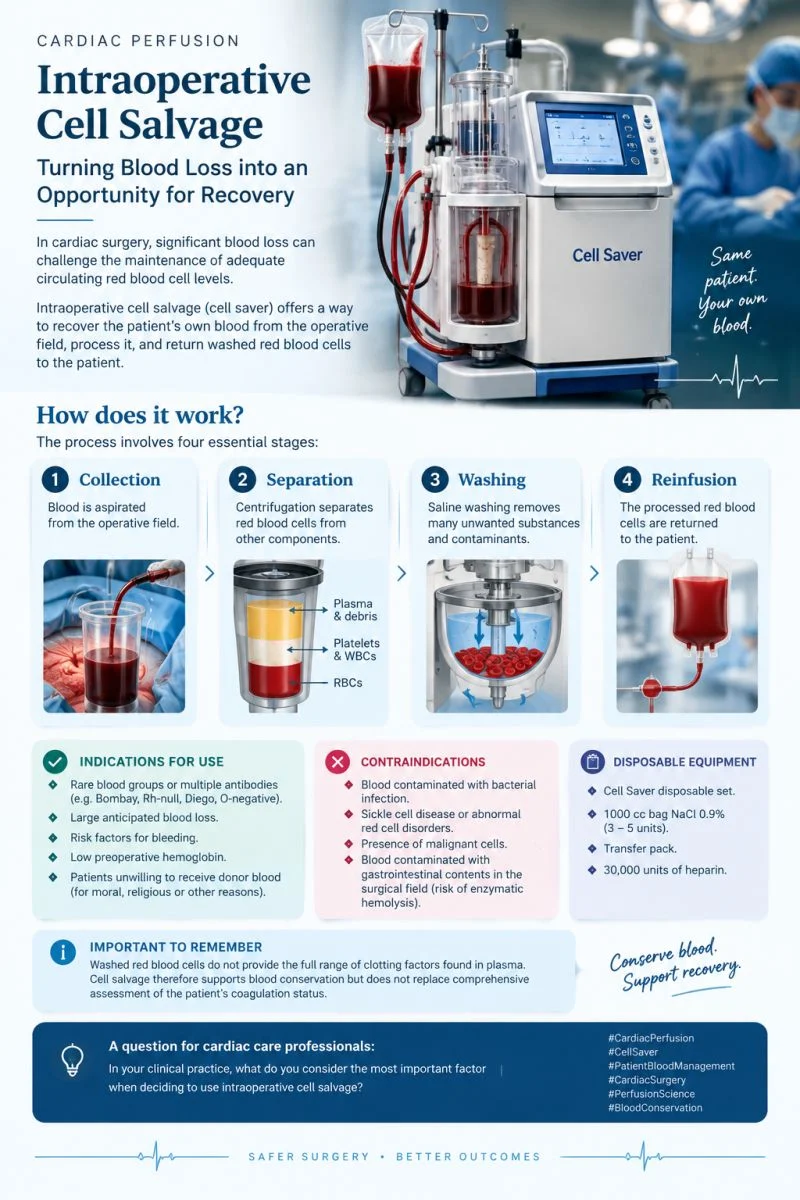
Intraoperative Cell Salvage: Turning Blood Loss into an Opportunity for Recovery
During cardiac surgery, significant blood loss can create challenges in maintaining adequate circulating red blood cell levels.
Intraoperative cell salvage (cell saver) offers a way to recover the patient’s own blood from the operative field, process it, and return washed red blood cells to the patient.
How does it work?
The process involves four essential stages:
- Collection – Blood is aspirated from the operative field.
- Separation – Centrifugation separates red blood cells from other components.
- Washing – Saline washing removes many unwanted substances and contaminants.
- Reinfusion – The processed red blood cells are returned to the patient.
An important point to remember: Washed red blood cells do not provide the full range of clotting factors found in plasma. Cell salvage therefore supports blood conservation but does not replace comprehensive assessment of the patients coagulation status.
For perfusionists and cardiac surgical teams, understanding cell salvage means understanding not only how blood is recovered, but also the importance of appropriate processing, patient selection, and safe reinfusion.
A question for cardiac care professionals: In your clinical practice, what do you consider the most important factor when deciding to use intraoperative cell salvage?”
Stay updated with Hemostasis Today.
-
Oct 11, 2026, 20:59Anthony R. Sloan: Honored to Share Our Work at the 20th Midwest Platelet Conference
-
Oct 11, 2026, 20:55Vipin M. Vashishtha: Mild COVID-19 and Malaria Leave Measurable Fingerprints on the Clotting System
-
Oct 11, 2026, 16:57Shiny K. Kajal: Japan Advances Artificial Blood via Haemoglobin Vesicles Trials
-
Oct 11, 2026, 16:45Luca Scarcia: Rescue Stenting Superior When Posterior Circulation Thrombectomy Fails
-
Oct 11, 2026, 16:27Giuseppe Bellelli: Reevaluating Anticoagulation Net Benefit in Frail Older Adults
-
Oct 11, 2026, 16:17Johnathan Whetstine: How Does MYC Go From 2 Copies to an Amplified Oncogene?
-
Oct 11, 2026, 16:03Parth Parmar: Practical Guidelines for Managing Venous Thromboembolism
-
Oct 11, 2026, 15:31Muhammad Alvi: CASPR Study Explores Treatment Response Across ESUS Phenotypes
-
Oct 11, 2026, 15:15Thalassaemia International Federation Joins ASCAT 2026 to Advance Sickle Cell and Thalassaemia Care