

Maureen Macharia: How Apixaban Transformed Modern Anticoagulation
Maureen Macharia, Student at United States International University – Africa, shared a post on LinkedIn:
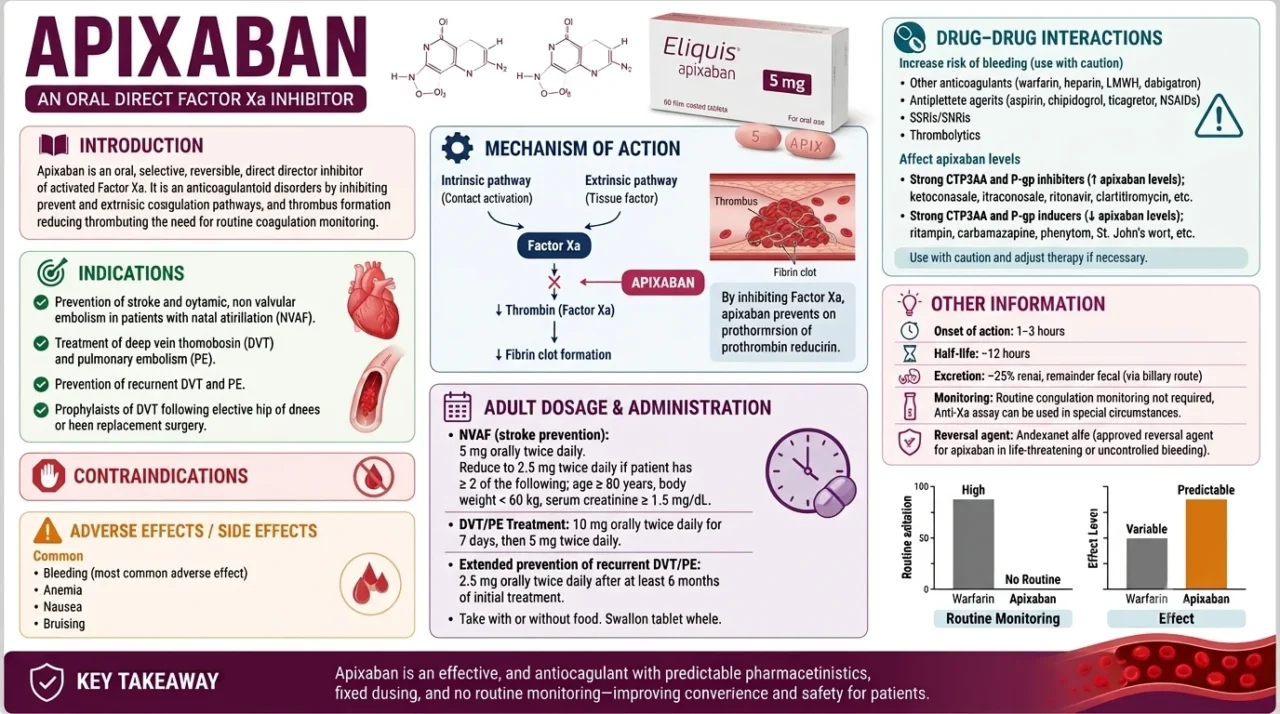
“Drug Spotlight: Apixaban
Blood clots can cause devastating complications such as stroke, deep vein thrombosis (DVT), and pulmonary embolism (PE).
Advances in anticoagulant therapy have made it possible to prevent these events by targeting specific components of the coagulation cascade.
Apixaban is a Direct Oral Anticoagulant (DOAC) that selectively inhibits Factor Xa, reducing thrombin generation and preventing the formation of harmful blood clots. Its predictable anticoagulant effect and lack of routine monitoring requirements have transformed the management of thromboembolic disorders.
- Prevents stroke and systemic embolism in patients with non valvular atrial fibrillation
- Used in the treatment and prevention of DVT and PE
- Reduces the risk of recurrent venous thromboembolism
- Fixed dose oral therapy with no routine INR monitoring required
What makes apixaban particularly interesting to me is how a single targeted action on Factor Xa can significantly reduce the risk of life-threatening thrombotic events.
It highlights the progress of modern pharmacotherapy from broad anticoagulation approaches to more selective, patient friendly treatments.
Studying apixaban reminds me that pharmacists play a critical role in balancing efficacy and safety, ensuring that patients are protected from both thrombosis and excessive bleeding.
This drug demonstrates how evidence based medicine can improve quality of life while reducing the burden of monitoring and hospital visits for patients.
Major adverse effect: Bleeding
Reversal agent: Andexanet alfa
‘Behind every dose of apixaban is an opportunity to prevent a stroke, preserve a life, and improve a patient’s future. Understanding its mechanism is not only about learning pharmacology it is about appreciating the impact that rational drug therapy has on patient outcomes.'”
Stay updated with Hemostasis Today.
-
Sep 20, 2026, 03:22The Voices of People Living With Bleeding Disorders – EHC
-
Sep 20, 2026, 01:18Sebastian Mafeld: Has 2026 Changed How We Treat Pulmonary Embolism?
-
Sep 20, 2026, 01:16Pall T. Onundarson: DOACs – Monitoring, Tailoring Dose and Identifying Problems
-
Sep 20, 2026, 01:15Thierry Fumeaux: From Efficacy to Effectiveness – The Value of Real-World Evidence
-
Sep 20, 2026, 01:14Said El Shamieh: VEGFA Genetic Variants and Bleeding Risk During Warfarin Therapy
-
Sep 20, 2026, 01:04Omar Danoun: Levetiracetam May Increase Thromboembolic Risk With DOACs
-
Sep 20, 2026, 01:02Mohamed Abo-Aly: Which Antiseizure Medication is Safest for Patients on DOACs?
-
Sep 20, 2026, 00:58Hamza Rafiq: How Does a Deep Vein Thrombosis Become a PE?
-
Sep 20, 2026, 00:50A Shared Platelet Factor 4–Targeted Immune Mechanism in Adenovirus Infection – NEJM