

Muhammad Amjad Sohail: Stroke – Recognize the Signs, Save a Life
Muhammad Amjad Sohail, Physiotherapist, shareda post on LinkedIn:
“Stroke: Recognize the Signs, Save a Life.
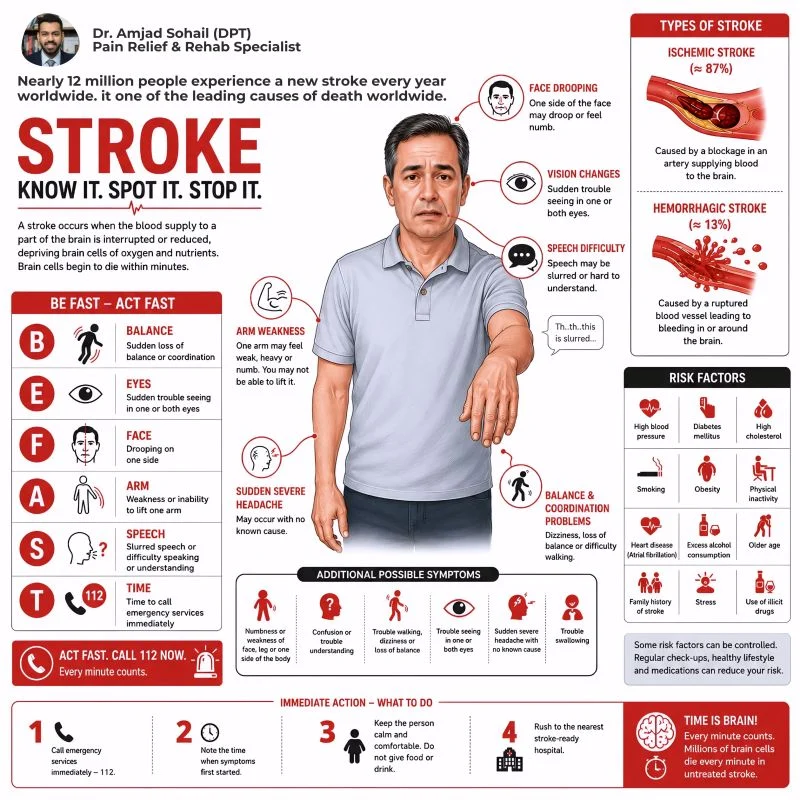
Nearly 12 million people experience a new stroke every year worldwide. it one of the leading causes of death worldwide.
1 in 4 adults over the age of 25 will experience a stroke during their lifetime. Driven by risk factors such as diabetes, obesity, and physical inactivity, the global number of people living with the consequences of stroke has increased by 86%, leaving millions with lifelong disability.
A stroke occurs when blood flow to a part of the brain is interrupted, depriving brain tissue of oxygen and nutrients. Brain cells begin to die within minutes, making stroke a true medical emergency.
The easiest way to recognize a stroke is to remember ‘BE FAST‘:
- B – Balance: Sudden loss of balance or coordination
- E – Eyes: Sudden vision changes in one or both eyes
- F – Face: Facial drooping or asymmetry when smiling
- A – Arm: Weakness or numbness in one arm
- S – Speech: Slurred speech or difficulty speaking/understanding
- T – Time: Time is critical—seek emergency medical attention immediately
Stroke is broadly classified into:
- Ischemic Stroke (approximately 85–87% of cases), caused by blockage of a blood vessel supplying the brain.
- Hemorrhagic Stroke (approximately 13–15% of cases), caused by rupture of a blood vessel leading to bleeding in or around the brain.
Common risk factors include:
- Hypertension
- Diabetes mellitus
- High cholesterol
- Smoking
- Obesity and physical inactivity
- Atrial fibrillation and other cardiovascular diseases
Research consistently shows that rapid recognition and early treatment significantly improve outcomes and reduce long-term disability. The phrase ‘Time is Brain‘ reflects the reality that millions of neurons can be lost every minute during an untreated stroke (Powers et al., 2019).
Whether you are a healthcare professional, student, or member of the public, knowing these warning signs can help save a life.
Learn it. Recognize it. Act Fast.”
Stay updated with Hemostasis Today.
-
Sep 22, 2026, 09:18Shamee Shastry: How Transfusion Medicine Research Is Evolving in India
-
Sep 22, 2026, 09:11Tarique Shahzad Chachar: Why Warfarin Remains the Gold Standard for Mechanical Heart Valves
-
Sep 22, 2026, 09:04Bianca Rocca: Thromboinflammatory Injury in Ischemic Limb Necrosis During Severe Shock
-
Sep 22, 2026, 09:01Ash Paul: Comparing Left Atrial Appendage Occlusion and Oral Anticoagulation
-
Sep 22, 2026, 08:50Emily Horner: Lipoprotein(a) Links Oxidized Phospholipids to Platelet Hyperactivity
-
Sep 22, 2026, 08:42Sally Mandour: Bone Marrow Needle Gauge Explained
-
Sep 22, 2026, 08:39Alessandro Sionis: Navigating Anticoagulation in Mechanical Circulatory Support
-
Sep 22, 2026, 08:28Raghavendra Rao: The Latest Research on Varicose Veins
-
Sep 22, 2026, 08:23Aravind Palraj: Three Essential Tests in Antiphospholipid Syndrome