


Omar Adwan: Summary of Blood Smear Examination Process
Omar Adwan, Medical Laboratory Technologist at Modawah lab center, shared a post on LinkedIn:
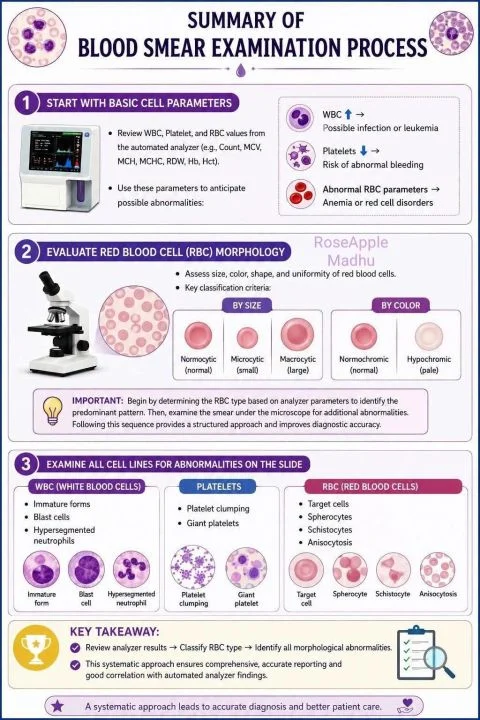
“Summary of Blood Smear Examination Process
1.Start with Basic Cell Parameters
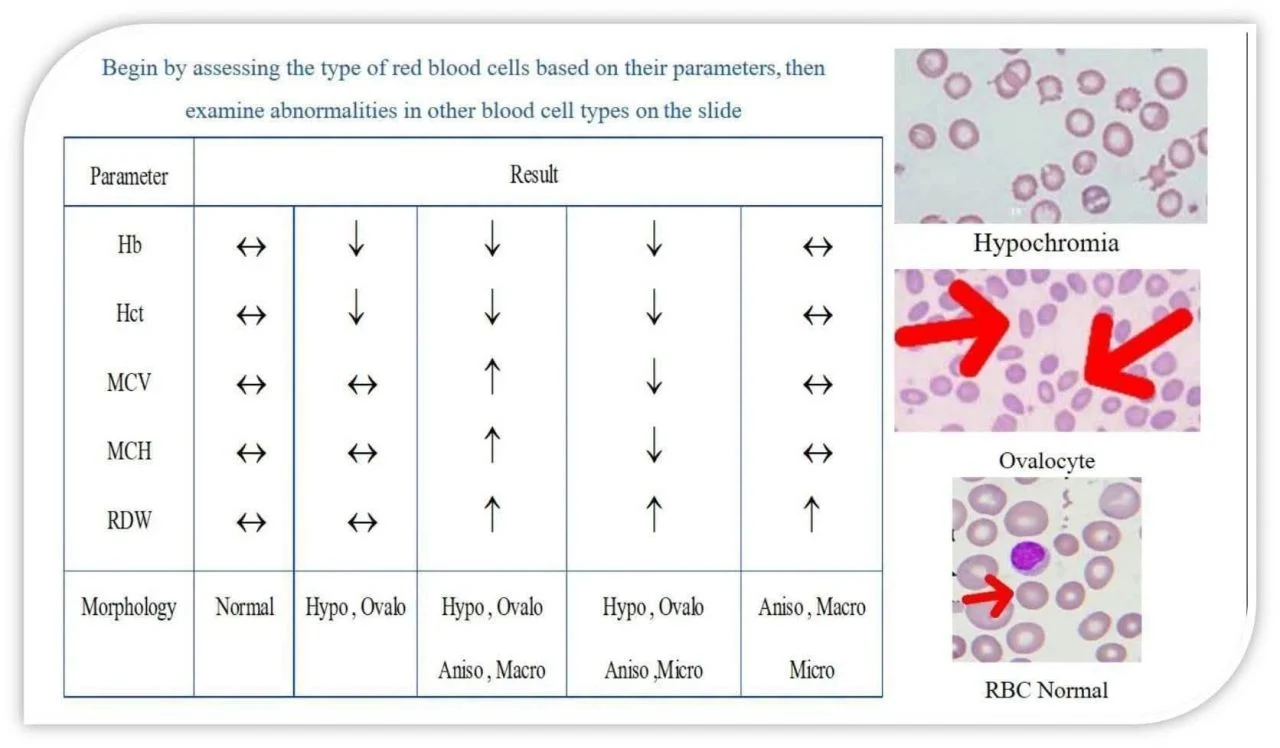
Review WBC, Platelet, and RBC values from the automated analyzer (e.g., Count, MCV, MCH, MCHC, RDW, Hb, Hct).
Use these parameters to anticipate possible abnormalities:
- High WBC – Possible infection or leukemia
- Low Platelets – Risk of abnormal bleeding
- Abnormal RBC parameters – Anemia or red cell disorders
2.Evaluate Red Blood Cell (RBC) Morphology
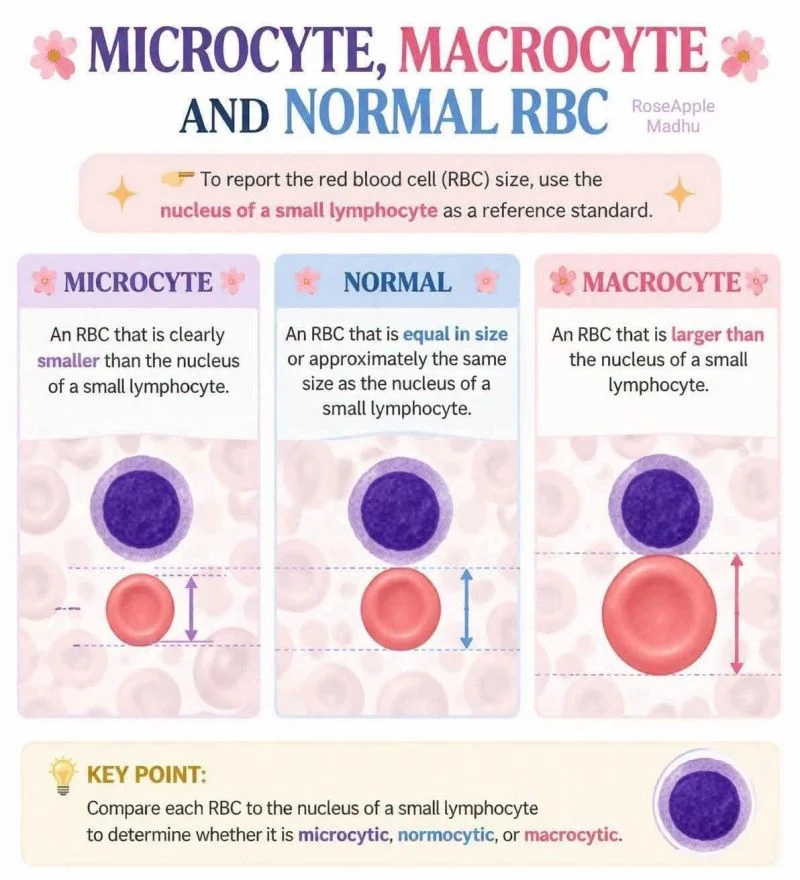
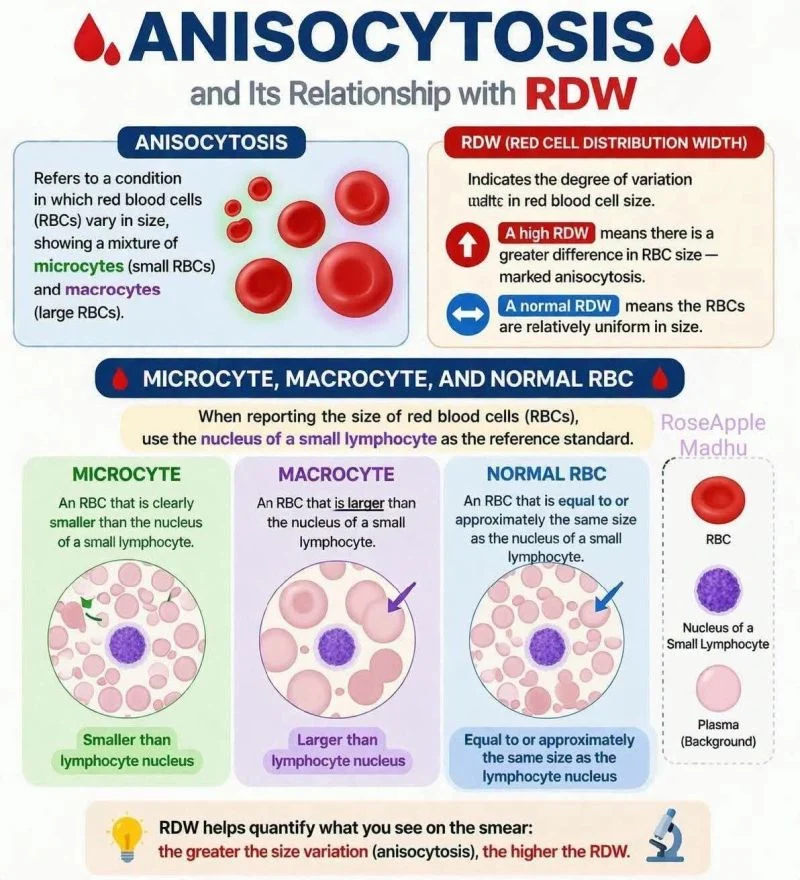
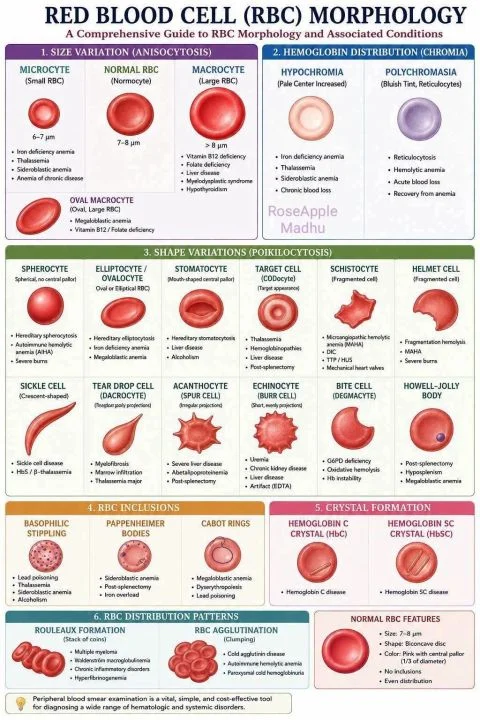
Assess size, color, shape, and uniformity of red blood cells.
Key classification criteria:
By size:
- Normocytic (normal)
- Microcytic (small)
- Macrocytic (large)
By color:
- Normochromic (normal)
- Hypochromic (pale)
Important:
Begin by determining the RBC type based on analyzer parameters to identify the predominant pattern. Then, examine the smear under the microscope for additional abnormalities.
Following this sequence provides a structured approach and improves diagnostic accuracy.
3.Examine All Cell Lines for Abnormalities on the Slide
WBC (White Blood Cells):
- Immature forms
- Blast cells
- Hypersegmented neutrophils
Platelets:
- Platelet clumping
- Giant platelets
RBC (Red Blood Cells):
- Target cells
- Spherocytes
- Schistocytes
- Anisocytosis
Key Takeaway:
Review analyzer results, than classify RBC type, after that identify all morphological abnormalities.
This systematic approach ensures comprehensive, accurate reporting and good correlation with automated analyzer findings.”
Other posts featuring Omar Adwan on Hemostasis Today.
-
Sep 30, 2026, 22:28Recent Mechanical Risk Factors and Young-Onset Cryptogenic Ischemic Stroke – American Heart Association International
-
Sep 30, 2026, 22:22Expert Consensus on Inferior Vena Cava Thrombosis – Thrombosis and Haemostasis Journal
-
Sep 30, 2026, 22:21Markus Abeln: How Platelets, Coagulation, Glycosylation, and Complement Regulate Placental Blood Flow
-
Sep 30, 2026, 22:19Fatma Al Arbawi: Studying Blood Clot Mechanics to Understand Aspirin Resistance and Thrombosis
-
Sep 30, 2026, 22:17Sudhir Kumar: Stroke is a Medical Emergency – and Every Minute Matters
-
Sep 30, 2026, 22:15Luisa Medeiros Visentini: Our Research on Cognitive Impairment After CVT Cited in the International Journal of Stroke
-
Sep 30, 2026, 21:50Jagat Narula: Connecting Cardiovascular Health and Sickle Cell Disease on World Heart Day 2026
-
Sep 30, 2026, 21:38John Kastelein: Exploring the Biology of Cardiovascular Disease at BioCentury Grand Rounds Europe
-
Sep 30, 2026, 21:36Mark Murphy: Irish Heart Foundation Meets With Senator Teresa Costello on World Heart Day